Your kid wants to play Mario Kart on the porch, and you’re standing in front of two nearly identical little sheets of glass. One says matte. One says glossy. The box art doesn’t tell you much, and the price difference is usually a couple of dollars. But the choice between a matte and glossy screen protector shapes how the Switch feels to play outdoors — how it handles sunlight, fingerprints, and the general chaos of backyard life. This guide breaks down the tradeoffs honestly, so you can pick once and stop thinking about it.
A quick note on context: this comparison assumes outdoor play means a screened-in porch, a patio table, a beach chair under an umbrella, or a car ride — not direct sun on the console for hours. Nintendo’s LCD doesn’t love extreme heat, and no screen protector changes that. What a protector does change is glare, touch response, and how well the surface shrugs off sand, sunscreen, and sticky fingers.
As an Amazon Associate we earn from qualifying purchases at no extra cost to you.



Our Top Picks
 Jngnpn 3-Pack Matte Tempered Glass Screen Protector forSwitch-6.2 inch9.4 x 5.1 x 0.5 inches0.25 poundsCheck on Amazon


Top 3 picks at a glance
Quick Verdict
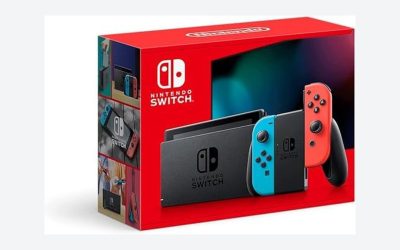
For outdoor play specifically, matte wins for most families. Anti-glare coatings are the single biggest factor in whether a screen stays readable on a sunny patio — glossy panels act like mirrors when the light source is behind you, and the 6.2-inch screen on the original Switch leaves no room to lean away from reflections. Choose glossy only if you mostly play in shade or indoors and you prioritize maximum color punch and a “factory glass” feel. Budget roughly $9 to $15 for a quality three-pack of matte tempered glass, versus $8 to $13 for glossy equivalents.
Side by Side
| Factor | Matte Protector | Glossy Protector |
|---|---|---|
| Sunlight visibility | Diffuses glare; readable in most shade and indirect sun | Reflective; hard to read when sun hits from behind |
| Fingerprint resistance | Excellent; oils spread invisibly | Poor; shows every smudge within minutes of play |
| Touch feel | Slightly textured, pencil-on-paper glide | Smooth glass, closest to bare screen |
| Image clarity | Softens contrast slightly; mild sparkle effect | Full saturation and sharpness |
| Scratch resistance | Comparable — most tempered options run 9H hardness | Comparable at the same glass quality |
| Sand and grit handling | Micro-scratches blend into the texture | Visible scuffs accumulate on the smooth surface |
| Installation difficulty | Same process; many kits include alignment frames | Same process; dust bubbles are more visible |
| Price range | $9–$15 for a 3-pack | $8–$13 for a 3-pack |
| Best for | Patio, beach, travel, kids | Shaded docks, indoor-first households |
Where Switch Screen Protector Matte Wins
Outdoor readability. The matte finish scatters incoming light instead of bouncing it back at your eyes. On a bright deck, that’s the difference between playing comfortably and cupping your hands around the screen like a visor. If you’re sitting near a sandbox — say, supervising kids in a 48-inch wooden cedar sandbox while they dig — you want a screen that doesn’t demand perfect positioning.
Fingerprint and grime control. Outdoor play means sunscreen hands, popsicle fingers, and playground dust. Matte surfaces hide oils remarkably well. Glossy screens after thirty minutes of kid play look like a crime scene.
Forgiveness over time. Fine scratches from sand or grit are absorbed into the matte texture. On glossy, each one catches light. Since protectors are sacrificial anyway, matte makes the wear less noticeable between replacements.
Value in multipacks. Budget matte tempered glass is cheap and plentiful. A three-pack around $10 means you can reapply after a bad scratch or a botched install without guilt, and alignment frames make it a two-minute, bubble-free job even with a toddler “helping.”
Newer-console compatibility. If you’ve upgraded to the Switch 2, matte options like auto-alignment kits designed for its 7.9-inch screen make the same case — glare control matters even more on a larger, brighter panel taken outside.
Where Glossy for Outdoor Play Wins
Color and contrast. Matte diffusion costs you a little pop. Glossy delivers the image exactly as the artists intended, which matters for games with rich art direction. In deep shade — a covered porch on an overcast day, a beach umbrella — glossy looks better and doesn’t suffer much glare penalty.
Touch responsiveness feel. Some players describe matte as slightly “grabby” during fast swipes. Glossy glass offers zero friction. For rhythm games or Joy-Con-free touch play, that smoothness is genuinely nicer.
No sparkle effect. Under certain LED or sunlight conditions, matte finishes can show a faint grainy shimmer. Glossy never does.
Slightly lower cost. Glossy multipacks sometimes run a dollar or two cheaper, though the gap is small enough that it shouldn’t drive the decision.
Easier to judge installation quality. On glossy, you can see every dust speck and fix it before the adhesive sets. Matte hides imperfections — great long-term, slightly riskier during the install itself.
Cost Over 5 Years
Assume a kid-heavy household plays outdoors regularly and scratches or wears a protector every 12 to 18 months. A three-pack of matte tempered glass at $10 to $15 covers roughly three years; you’d buy two packs over five years, totaling $20 to $30. Glossy follows the same replacement curve at $16 to $26 total. The difference is trivial — under $5 over half a decade.
The real cost driver isn’t the film; it’s the screen underneath. A $10 protector that prevents one scratched LCD saves you a $150-plus repair or console replacement. Both finishes do that job equally at 9H hardness. If budget forces a choice, spend the savings from either option on accessories that matter more outdoors: a carrying case with a hard shell, or even a second set of the whole afternoon’s entertainment — a two-pack of 20-inch vinyl beach balls runs about $10, the same as one protector.
Which One for Your Home
Small Apartment
Your “outdoor” play is likely a balcony or a rooftop bench, and the console lives on a shelf the rest of the time. Glossy is a legitimate pick here — glare exposure is limited and occasional, and you’ll appreciate the full image quality in a compact space where the Switch doubles as your main gaming screen. A single quality pack at $8 to $13 lasts years at this usage level.
Family with Kids or Pets
Matte, no contest. Between juice-box residue, dog fur drifting onto the screen, and play sessions that migrate from couch to backyard, you want the surface that hides messes and shrugs off abuse. Buy the three-pack, apply one, and store the spares in the drawer with the spare Joy-Con thumb grips. Pair the console time with genuinely outdoor toys — a wood sandbox with bench seats keeps kids busy in the yard while older ones game on the porch — and everyone wins.
Rental or Short-Term Home
You’re probably moving within a couple of years and want zero-fuss durability. Matte tempered glass with an alignment frame is ideal: fast install, easy removal (gentle heat from a hairdryer lifts tempered glass cleanly), and no adhesive residue issues at move-out. Nothing here damages the console or affects a security deposit — it’s the most reversible option on the list.
Long-Term Home
If this is your forever house with a real patio setup, think of the Switch as part of your outdoor-living kit. Matte still makes sense for daytime play, but consider your habits honestly: if most sessions happen after dinner under a covered porch, glossy’s image quality payoff grows. A reasonable compromise is matte on the kids’ console and glossy on yours — with three-packs costing about $10, running both is affordable. Heading into 2026, both formats remain cheap, mature, and easy to find for every Switch model.
FAQ
Does a matte screen protector make games look blurry?
Not blurry, but slightly softened. You lose a small amount of contrast and may notice a faint graininess in bright light. Most players adapt within a day, and outdoor readability more than compensates. If you’re sensitive to image softness, look for “ultra-thin” matte glass around 0.3 mm, which minimizes the effect.
Do matte protectors affect touch sensitivity?
Tempered glass protectors — matte or glossy — have negligible impact on capacitive touch response. The Switch’s touchscreen registers input through both without noticeable lag. The only difference is friction: matte adds slight resistance, which some players actually prefer for precision.
Can I use a matte protector with a dock and case?
Yes. Protectors are thin enough (typically 0.3 to 0.4 mm) to fit under dock cradles and most snap-on cases without lifting at the edges. Apply the protector centered and let the adhesive fully cure for 24 hours before docking for best results.
How do I install a screen protector without dust bubbles?
Do it in a steamy bathroom — running a hot shower for a few minutes settles airborne dust. Use the included wet and dry wipes, peel the backing only halfway while aligning, and use an alignment frame if the kit includes one. Squeegee from the center outward. Any remaining micro-bubbles usually disappear within two to three days.
Related guides
- Best Free MMOs on Steam: Subscription Limits, Pay-to-Win and Time Cost (2026)
- Best Free Horror Games on Steam: How to Pick One That Fits Your PC and Your Nerves (2026)
- Black Frame Insertion vs VRR: Which Smoothness Feature Should You Use?
- Best Webcams for Streaming: 11 Listings Compared by Resolution, Focus and Light (2026)