Our Short List of 3
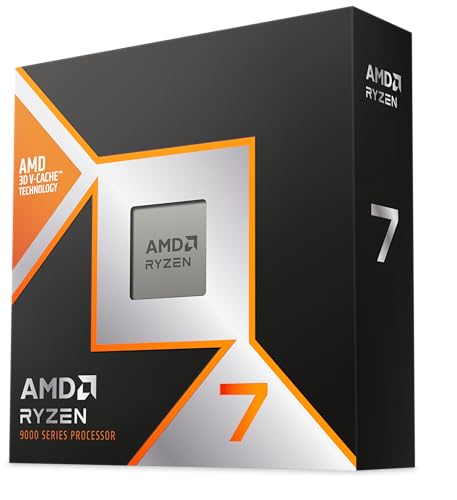
- Best for: New AM5 builds aimed at VR and simulation, where the CPU budget is not the binding constraint.
- 8 cores / 16 threads
- 4.7 GHz base, up to 5.2 GHz boost
- 96MB L3 cache (104MB total cache)
- 120W TDP

- Best for: AM5 builders who want the 3D-cache design without buying the newest generation — and current owners deciding whether to upgrade.
- 8 cores / 16 threads
- 4.2 GHz base clock
- 104MB total cache (8MB L2 + 96MB L3)
- 120W TDP

- Best for: Mixed-use AM5 builds and small or warm cases where 65W is much easier to cool than 120W.
- 8 cores / 16 threads, Zen 5
- 3.8 GHz base, 5.5 GHz boost
- 40MB cache
- 65W TDP
All 3 Picks at a Glance
| Product | Specs | Action |
|---|---|---|
| AMD Ryzen 7 9800X3D |
| Check price on Amazon |
| AMD Ryzen 7 7800X3D |
| Check price on Amazon |
| AMD Ryzen 7 9700X |
| Check price on Amazon |
For a VR or simulation rig, the processor question is narrower than it is for flat-screen gaming. A headset punishes inconsistent frame delivery, and a flight or racing simulator leans on the CPU for its world simulation, so the chip under consideration — an 8-core AM5 processor carrying 96MB of L3 cache — is aimed at that kind of load. Whether it is worth it, though, depends less on the chip itself than on what is already in your socket and what else the purchase drags along with it.
This verdict is built only from the facts on the listings: cores, clocks, cache, power draw and platform. It weighs the 9800X3D against the two alternatives in the same socket — its predecessor, the 7800X3D, which carries the same total cache, and the 9700X, which trades most of that cache away for a lower power rating. It is written for VR players and sim builders deciding whether to build around this chip, upgrade to it, or sit this generation out.
Our Top Picks
Top 3 picks at a glance
Quick Picks
As an Amazon Associate we earn from qualifying purchases.
| Subject | Verdict angle | Key spec from title |
|---|---|---|
| AMD Ryzen 7 9800X3D | Worth it for new AM5 VR and sim builds | 8 cores, 96MB L3 cache, up to 5.2 GHz boost |
| AMD Ryzen 7 7800X3D | The same cache design, one generation back | 8 cores, 104MB total cache, 120W TDP |
| AMD Ryzen 7 9700X | Worth it when gaming is not the only job | Zen 5, 65W TDP, up to 5.5 GHz boost |
How to Choose
The Cache Is the Whole Argument
Strip away the branding and the 9800X3D’s case rests on one number: 96MB of L3 cache, 104MB of cache in total, sitting next to eight cores. That stacked cache is the design feature AMD built this chip around, and it matters most in exactly the workloads this site cares about — simulation-heavy games and VR titles where the processor feeds a demanding, latency-sensitive pipeline. The honest limit is the other half of the system: at high headset resolutions the graphics card does most of the work, and no CPU changes that. Judge this chip as a frame-consistency purchase, not a resolution purchase.
The Platform Bill Arrives With the Chip
The 9800X3D is a socket AM5 part, which means an AM5 motherboard and DDR5 memory are part of the real purchase. Coming from AM4, you are replacing the platform, not swapping a processor. The listing also makes clear there is no cooler in the box, so cooling is a third line item before the machine runs at all. None of this makes the chip a bad buy — AM5 is the current platform with a future upgrade path — but the verdict changes completely depending on whether you are pricing one component or three. Add the whole platform up first, then decide.
Your Starting Point Decides More Than the Spec Sheet
If you already run a 7800X3D, you already own most of this design: the same total cache, the same 120W power rating, the same socket and memory. The 9800X3D is the newer, faster-clocked evolution of that idea, not a new tier above it, and an in-socket upgrade buys refinement rather than transformation. If you are building new, the logic flips — starting a fresh AM5 build on the older chip only makes sense when the saving is real, because the platform cost is identical either way. Start from what you own, not from the product name.
Heat and Power in Long Sessions
VR and sim sessions run long, often in a room that is already warm from the PC and the player. The 9800X3D is a 120W TDP part and ships with no cooler, so its thermal behaviour in your case depends entirely on the cooler you add — budget for a substantial one and for case airflow to match. The contrast in this roundup is the 9700X at 65W: half the rated power, far easier to keep cool in a small or quiet case, bought at the cost of the big cache. In a dedicated cockpit build with room for cooling, the trade favours the X3D chip.
The 3 Best Options
AMD Ryzen 7 9800X3D
- Best for: New AM5 builds aimed at VR and simulation, where the CPU budget is not the binding constraint.
- 8 cores / 16 threads
- 4.7 GHz base, up to 5.2 GHz boost
- 96MB L3 cache (104MB total cache)
- 120W TDP
New AM5 builds aimed at VR and simulation, where the CPU budget is not the binding constraint.
No cooler is included, and AM5 means a new motherboard and DDR5 if you are coming from AM4 — judge the whole platform cost, not the chip alone.
The subject of this verdict is AMD’s current cache-heavy gaming flagship: eight cores and sixteen threads, a 4.7 GHz base clock boosting to 5.2 GHz, and 96MB of L3 cache under the cores, in a 120W package for socket AM5. For a new VR or simulation build it is the straightforward recommendation — the chip the platform’s gaming line is organised around, with PCIe 5.0 support for current and next graphics cards. Its small integrated Radeon graphics are genuinely useful in a rig context too: they can drive a display for setup and troubleshooting while the main card is occupied with the headset.
AMD Ryzen 7 7800X3D
- Best for: AM5 builders who want the 3D-cache design without buying the newest generation — and current owners deciding whether to upgrade.
- 8 cores / 16 threads
- 4.2 GHz base clock
- 104MB total cache (8MB L2 + 96MB L3)
- 120W TDP
AM5 builders who want the 3D-cache design without buying the newest generation — and current owners deciding whether to upgrade.
Make sure you are looking at the standalone boxed processor listing; bundle listings pairing this CPU with other parts circulate under different codes.
The predecessor is the reason the verdict is not automatic. The 7800X3D matches the newer chip on the figures that define the design — eight cores, 104MB of total cache split between 8MB of L2 and 96MB of L3, the same 120W rating, the same AM5 socket — and it has been the default gaming recommendation since it first went on sale in April 2023. It gives up clock speed to the 9800X3D and belongs to the earlier generation, but for a builder choosing between the two today, it remains the same idea at a lower level of commitment, and for current owners it is the chip to keep.
AMD Ryzen 7 9700X
- Best for: Mixed-use AM5 builds and small or warm cases where 65W is much easier to cool than 120W.
- 8 cores / 16 threads, Zen 5
- 3.8 GHz base, 5.5 GHz boost
- 40MB cache
- 65W TDP
Mixed-use AM5 builds and small or warm cases where 65W is much easier to cool than 120W.
The cache is a fraction of the X3D chips’ — for a pure VR or simulation build, that is precisely the feature you are giving up. No cooler is included here either.
The 9700X is the alternative for builders whose PC does more than drive a headset. It is a Zen 5 eight-core chip with a higher boost clock than either X3D part, but its 40MB of cache is a fraction of theirs, and that is the honest trade at the centre of this verdict. What it returns is efficiency: a 65W TDP that suits small cases, warm rooms and quiet builds, on the same AM5 platform with DDR5-5600 support. For a mixed-use machine that games at ordinary resolutions more than it simmers in VR, that trade can be the right one.
Which One Fits Your Situation
You Are Building a New VR Rig From Scratch
Buy the 9800X3D. A new build already carries the AM5 motherboard and DDR5 costs whichever chip you choose, so the saving from starting on the older 7800X3D is the only argument against the current flagship — and it buys you the faster, newer version of the cache design your headset workload is there to exploit. Add a serious cooler to the same order.
You Already Own a 7800X3D
Keep it. Your chip has the same total cache, the same power rating and the same socket, so the upgrade buys refinement rather than a new class of performance. The money an in-socket swap would consume does more for a VR rig spent on the graphics card or the headset itself, where high-resolution VR is actually limited.
You Are Building a Dedicated Sim Cockpit
Flight and racing simulation is the strongest case for the 9800X3D outside VR: sustained simulation workloads, long sessions, and a fixed rig you intend to keep for years. Build it on AM5 with cooling sized for a 120W chip running for hours. If the cockpit PC must share a small, hot enclosure, the 9700X is the fallback — accept the smaller cache as the price of the 65W rating.
One PC Has to Do Everything
If the machine splits its life between gaming, work and everything else, weigh the 9700X seriously: it is the efficient, high-boost generalist and far easier to cool quietly. Choose the 9800X3D only if VR and simulation are genuinely the primary job, because the big cache is a gaming feature you pay for whether your other workloads use it or not.
Common Mistakes
- Budgeting for the processor alone and forgetting the AM5 motherboard and DDR5 memory the purchase actually requires.
- Ordering any of these three chips without a cooler, when none of the listings includes one in the box.
- Upgrading from a 7800X3D expecting a new tier of performance, when both chips share the same cache total and socket.
- Pairing the flagship CPU with an underpowered graphics card for a high-resolution headset, where the card is the real limit.
- Buying an import or bundle listing instead of the standalone boxed processor, then finding support and contents differ.
Frequently Asked Questions
Is the 9800X3D worth it for VR?
For a new build, yes. VR rewards consistent frame delivery, and the 96MB of L3 cache is the feature this chip exists for; it is also the current AM5 flagship, so a new rig starts at the top of the platform rather than a generation behind it. The qualification is your graphics card: at high headset resolutions the card does most of the work, so the CPU should be bought as part of a balanced build, not instead of one.
Is it worth upgrading from a 7800X3D?
Generally, no. The two chips share the same socket, the same 120W rating and the same 104MB total cache; the 9800X3D is the newer and faster-clocked version of the same design, not a step to a different class. Owners of the older chip will feel an upgrade far more by putting the money toward the graphics card or headset, which is where a VR rig’s limits usually sit.
Does the 9800X3D come with a cooler?
No. The listing is for the processor alone — the model suffix and listing copy both indicate no cooler is included — so a cooler is a separate, mandatory purchase, and at a 120W TDP it should be a substantial one. The same applies to the 9700X alternative in this roundup. Factor the cooler into the build cost before comparing any of these chips against a rival that bundles one.
What else do I need to buy with it?
An AM5 motherboard and DDR5 memory if you do not already run the platform, plus the cooler mentioned above. Coming from AM4, treat this as a platform rebuild: board, memory and chip together. Your graphics card, storage and power supply carry over. The chip’s small integrated Radeon graphics can drive a setup or troubleshooting display, which is handy mid-build, but the headset itself runs from your graphics card as always.
Related guides
More from Amazon
Programs that pair well with the guide above. Offers and eligibility are set by Amazon and may change.
Free shipping on eligible items, Prime Video and more. Eligible new members can start with a free trial.
Start a Prime free trialAd-free music streaming. Eligible new subscribers can start with a free trial.
Try Music Unlimited freeA Prime membership for ages 18-24 with a trial period. Eligibility is set by Amazon.
See Prime for Young AdultsAudiobooks and podcasts to listen to on the go. Eligible new members can start with a free trial.
Try Audible freeAs an Amazon Associate we earn from qualifying purchases.