A keyboard’s sound is easy to dismiss until you spend eight hours a day listening to it. The difference between a thin, rattly board and a deep, muted one is no small luxury; it is the difference between typing that fades into the background and typing that grates by lunchtime. The sound comes from the whole construction — the case, the mounting, the switches, the stabilizers — and a board that gets all of those right feels as good as it sounds.
This guide is for typists, writers, and home-office workers who want a mechanical keyboard chosen for its acoustic profile rather than its gaming specs. Both picks below are Keychron boards with the same switch family, compared on the build details that shape the sound: gasket mounting, foam dampening, pre-lubed switches, and screw-in stabilizers. Neither board is framed as a competitive gaming keyboard, and neither is judged on actuation speed.
Quick Picks
As an Amazon Associate we earn from qualifying purchases
| Product | Best for | Key spec from title |
|---|---|---|
| Keychron Q1 Max | A typist who wants a full-metal board with a deep, damped sound | Gateron Jupiter Red, assembled |
| Keychron V1 Max | A typist who wants the same acoustic recipe for less | Gateron Jupiter Red, assembled |
How to Choose
Listen for the case and the mount first
The deepest-sounding boards start with the case and the way the plate sits inside it. A full-metal body adds mass that damps vibration, while a gasket-mounted plate lets the assembly flex slightly instead of ringing against a rigid frame. That combination is what produces the low, muted tone people describe as a thock, rather than the higher-pitched clack of a tray-mounted plastic board. When you read a listing, look for the mount type and the case material before the switch name, because those two details set the ceiling for how good the board can sound no matter which switches sit on top. A listing that names the mount type is telling you the maker cares about sound.
Switches decide the character of the sound
Switches are the second half of the acoustic equation, and the details that matter are lubrication and consistency. A pre-lubed linear switch glides without the scratchy friction that makes cheap boards sound gritty, and a consistent switch across the whole board means no single key stands out with a different pitch. The Gateron Jupiter Red switches in both picks below are pre-lubed linears, which suits a smooth, even sound. Avoid judging a switch from a single keypress in a video; the sound that matters is the one you hear across a whole paragraph of typing. Lubrication also evens out the sound from key to key, so no single key develops a squeak that draws the ear.
Stabilizers and foam separate good from great
Two details separate a board that sounds good from one that sounds great: the stabilizers under the long keys and the foam inside the case. Rattly stabilizers make the spacebar and enter key buzz, and no amount of switch quality fixes that. Screw-in stabilizers, which both picks here use, hold the long keys steady and keep their sound in line with the rest of the board. Internal foam layers absorb the hollow echo that empty cases produce. A listing that mentions foam dampening and screw-in stabilizers is signalling that the maker thought about sound, not just looks. Foam fills the empty space inside the case that would otherwise echo. A board with both has covered the two noisiest failure points.
Layout and connectivity decide whether the board fits your desk
Sound is the point of this guide, but a board still has to fit the way you work. A 75 percent layout keeps the function row and arrows while dropping the number pad, which suits most desks and most typists. Connectivity matters too: a board that offers wired, 2.4 GHz wireless, and Bluetooth covers a desktop, a laptop, and a second device without a cable swap. Hot-swappable sockets are worth having even if you never change a switch, because they mean a single faulty switch is a five-minute fix rather than a dead board. Check the listing for the assembled version, not a barebone kit, so the board arrives ready to type on. Detachable cables are a small bonus.
The 2 Best Options
Keychron Q1 Max

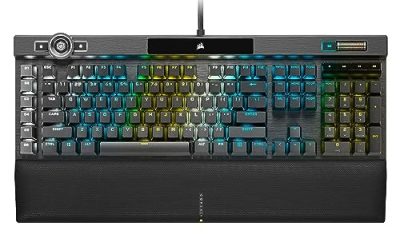
The Q1 Max is the fuller expression of the acoustic recipe in this guide, and the full-metal body is the reason it leads. A metal case gives the board the mass that damps vibration, and the double-gasket design lets the plate float just enough to soften each keypress without feeling mushy. The Gateron Jupiter Red switches arrive pre-lubed, so the sound is smooth and even from the very first day of typing, and the board supports QMK and VIA for remapping. Three connection modes — 2.4 GHz wireless, Bluetooth, and wired — mean it fits a desktop, a laptop, and a tablet without fuss, and hot-swappable sockets keep it repairable.
Specs
- Full-metal body
- Double-gasket design
- Gateron Jupiter Red switches, assembled
- QMK/VIA support
- 2.4 GHz wireless, Bluetooth, and wired connections
- Hot-swappable sockets
Best for: A typist who wants a full-metal board with a deep, damped sound and is willing to pay for the heavier case.
Watch out for: Confirm the listing is the assembled board with Gateron Jupiter Red switches, not a barebone kit or a different switch.
Keychron V1 Max
The V1 Max takes the same acoustic thinking and puts it in a lighter, more affordable board, which is why it belongs beside the Q1 Max rather than below it. The gasket mount and internal foam do the same job here — softening each keypress and absorbing the hollow echo — and the pre-lubed Gateron Jupiter Red switches give the same smooth, even sound. Screw-in stabilizers keep the spacebar and enter key in line with the rest of the board instead of rattling above it. For a typist who cares about sound but does not need a metal case, the V1 Max delivers most of the acoustic experience for less.
Specs
- Gateron Jupiter Red switches, assembled
- Gasket-mount design
- Internal foam dampening
- Pre-lubed switches
- Screw-in stabilizers
Best for: A typist who wants the same deep, damped sound as the Q1 Max in a lighter board at a lower outlay.
Watch out for: Confirm on the listing that the board is the V1 Max assembled board, not a barebone and not the Q1 Max.
Which One Fits Your Situation
Typing all day in a home office
The Q1 Max is the pick for a home office where the keyboard is the main tool. Its metal body and double-gasket design make long sessions sound softer and feel more solid under the fingers, and the three connection modes cover a desktop and a laptop without cable swaps. The hot-swappable sockets mean one tired switch never ends the board’s life. If the desk is shared with a partner, the damped sound is a kindness to everyone in the room.
A shared flat or late-night typing
The V1 Max suits a shared flat, where a deep, muted sound matters more than a metal case. Its gasket mount and foam keep the volume down, and the pre-lubed switches avoid the scratchy edge that carries through thin walls. Pair it with a desk mat for a little extra dampening, and the board stays quiet enough for evenings. A mat also protects the desk surface, and it costs almost nothing for the extra quiet it adds.
A recording or streaming setup
The Q1 Max is the safer choice when a microphone sits near the keyboard. A full-metal case and foam dampening reduce the hollow echo that microphones pick up, and the screw-in stabilizers keep the spacebar from buzzing into the recording. Test the board with the microphone in its usual position before a first session, since room acoustics still play a part. Keep the microphone on a boom arm, since distance from the keys matters as much as the board.
A first premium board
The V1 Max is the better first step into acoustic-first keyboards. It teaches the ear what a gasket mount, foam, and pre-lubed switches sound like, without the outlay of a metal case. If the sound wins you over, the Q1 Max is the upgrade path; if it does not, the V1 Max is still a fine daily board. The money saved can go toward a desk mat or a wrist rest, which improve daily comfort more than a heavier case.
Common Mistakes
- Buying a barebone kit by accident and discovering the board arrives without switches or keycaps, when the listing for the assembled version was the one to order — check the title for the word assembled, since switches and keycaps then cost extra on top of the board.
- Judging a keyboard’s sound from a single keypress in a video, when the real test is a full paragraph of typing across every key. A board can sound different on a desk mat than on a bare desk, too, and the room itself changes what you hear.
- Chasing a switch name while ignoring the case and mount, which set the ceiling for how deep any switch can sound. The case and mount set the ceiling; no switch can rescue a hollow case.
- Forgetting the stabilizers, so the spacebar and enter key rattle while the letter keys sound perfect. Listen to the long keys first when testing a board, since they betray a bad stabilizer immediately.
- Choosing a board for competitive actuation speed when the goal was a pleasant typing sound, and ending up with a board built for a different job entirely. Rapid-trigger switches and 8K polling rates are built for competitive play, not for a pleasant sound, and they cost more for features a typist will never use.
Frequently Asked Questions
What makes a keyboard sound deep instead of clicky?
The depth comes from the whole construction, not one part. A heavier case damps vibration, a gasket mount lets the plate flex instead of ringing, foam inside the case absorbs hollow echo, and pre-lubed switches remove the scratchy friction. A board that gets all four right sounds low and muted, while one that gets only one right usually sounds thin, because the weakest part dominates what you hear.
Are pre-lubed switches worth it for sound?
Yes, for most typists they are the single most audible upgrade a board can offer. Lubrication smooths the travel of each switch, removing the gritty friction that makes unlubed boards sound scratchy. Both picks in this guide use pre-lubed Gateron Jupiter Red switches, so the sound stays even across the whole board from the very first day, without the buyer having to open the switches and lubricate them by hand.
Does a metal case really change the sound?
It does, because mass damps vibration. A full-metal case absorbs the energy of each keypress instead of letting the case ring, which is why the Q1 Max sounds deeper than a plastic board. The difference is audible in a quiet room. That said, a plastic case with a gasket mount and foam, like the V1 Max, can still sound very good, so metal is an advantage, not a requirement.
Can I change the switches later if I want a different sound?
Both boards in this guide are hot-swappable, which means a switch can be pulled out and replaced without soldering. That makes experimenting with a different switch easy and turns a single faulty switch into a five-minute fix. Check the listing for hot-swappable sockets before ordering, since the barebone and assembled versions of a board can differ in what they include. A spare switch in a drawer covers the rare failure.
Related guides
More from Amazon
Programs that pair well with the guide above. Offers and eligibility are set by Amazon and may change.
Free shipping on eligible items, Prime Video and more. Eligible new members can start with a free trial.
Start a Prime free trialAd-free music streaming. Eligible new subscribers can start with a free trial.
Try Music Unlimited freeA Prime membership for ages 18-24 with a trial period. Eligibility is set by Amazon.
See Prime for Young AdultsAudiobooks and podcasts to listen to on the go. Eligible new members can start with a free trial.
Try Audible freeAs an Amazon Associate we earn from qualifying purchases.