Virtual reality has officially transitioned from a niche tech hobby tucked away in basement offices to a mainstream staple of modern living rooms, family dens, and shared home offices. But integrating a Meta Quest headset into your living space brings an unexpected design and lifestyle challenge: how do you manage the physical clutter, the charging cords, and the ergonomics of your gear without turning your home into a messy server room? Out of the box, the stock Quest strap is notoriously front-heavy and limited to about two hours of battery life, making an aftermarket power solution an absolute necessity for comfortable play.
When upgrading, you face a fundamental design choice: a head strap with an integrated battery versus a neck-worn power bank. This decision goes far beyond simple battery capacity. It dictates how your headset is stored on your shelves, how easy it is to share between family members of different sizes, how much heat and weight you feel on your body, and how many cables sit draped across your furniture. Choosing the right power accessory is about finding the perfect balance between personal physical comfort and the visual harmony of your home.
As an Amazon Associate we earn from qualifying purchases at no extra cost to you.


Our Top Picks

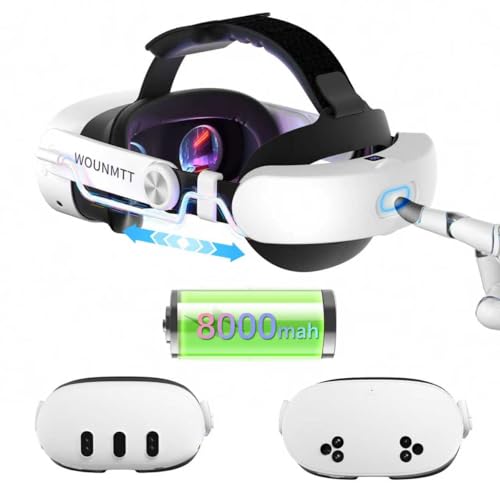
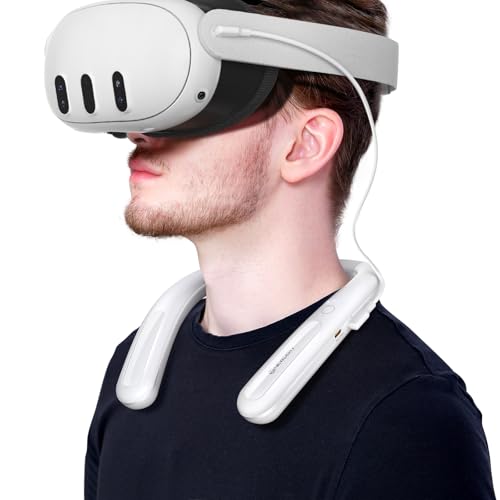

Top 3 picks at a glance
Quick Verdict
For most dedicated, single-user home setups where clean aesthetics and a wire-free experience are paramount, a head strap with a battery is the superior choice. It consolidates the headset and power source into a single, rigid unit that sits neatly on a charging stand. However, if your household features multiple users of varying ages, or if you prioritize keeping your headset as lightweight as possible to prevent neck fatigue, a neck power bank is the more versatile, future-proof, and storage-friendly investment.
Side by Side
To help you visualize how these two power formats fit into your physical space and daily routines, we have broken down their key characteristics across several home-focused categories:
| Category | Head Strap with Battery | Neck Power Bank Quest |
|---|---|---|
| Comfort & Weight Distribution | Acts as a counterweight on the back of the head; increases total headset weight to around 800–900 grams. | Removes battery weight entirely from the head, transferring 300–400 grams to the shoulders and collarbone. |
| Durability & Wear | Rigid plastic arms can crack under heavy pressure; moving adjustment dials can wear down over time. | Flexible silicone or impact-resistant plastic; highly durable with fewer structural stress points. |
| Price Range | Typically ranges from $25 to $120 depending on build quality and battery capacity. | Typically ranges from $30 to $60, offering high capacity per dollar spent. |
| Maintenance & Cleaning | Requires wiping down fabric, foam, or PU leather padding that absorbs sweat. | Simple silicone or smooth plastic surfaces are incredibly easy to sanitize with a damp cloth. |
| Space Needed & Storage | Requires a large footprint; demands a deep drawer, a dedicated shelf, or a specialized headset stand. | Compact and flexible; can be hung on a coat hook, coiled in a small decorative basket, or tucked in a shallow drawer. |
| Visual Look in the Home | Looks like a cohesive, high-tech piece of athletic equipment when resting on a console table. | Looks like a pair of neckband headphones; requires a dangling cable when in active use. |
| Resale & Future-Proofing | Device-specific; molded connectors mean a Quest 2 strap rarely fits a Quest 3 or future headset models. | Universally compatible with any device that charges via USB-C, including phones, tablets, and future headsets. |
| Best For | Immersive, active room-scale gaming and sleek, minimalist display setups. | Multi-user households, movie watching, casual sit-down play, and homes with limited storage. |
Where Head Strap with Battery Wins
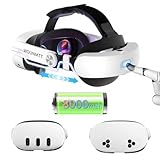
The primary appeal of the battery head strap lies in its elegant, self-contained design. By replacing the flimsy stock fabric strap with a rigid, adjustable “elite” style frame, you transform your VR setup into a single, unified device. Premium options, such as the Battery Head Strap Compatible with Oculus Meta Quest 3S/3/2,10000mAh Battery VR Headset Strap Enhanced Support and Comfort, Adjustable Elite Strap Replacement- MV1001 (around $39), distribute the weight of the front-heavy headset by placing a heavy battery pack directly at the base of your skull. This counter-balance effect actually makes the entire unit feel lighter and more stable on your face during rapid head movements.
From a home decor and organization perspective, the battery head strap is exceptionally tidy when not in use. There are no loose, dangling cables running down your neck or catching on your shirt. If you invest in a budget-friendly option like the Head Strap for Meta Quest 3/3S with Battery, Adjustable One-Click Fit (around $25), you can quickly adjust the fit with a single rear dial, and when you are done, the entire assembly rests cleanly on a desktop charging dock. It functions as a singular sculptural object on your media console, free of the visual clutter associated with separate charging bricks and loose wires.
Furthermore, because the battery is hardwired into the strap’s frame, the connection is incredibly stable. You do not have to worry about a cable pulling loose from your headset mid-game if you turn your head too quickly, which is a common frustration with external power banks. For active room-scale gaming where you are ducking, dodging, and spinning around your living room, the self-contained security of a battery head strap is unmatched.
Where Neck Power Bank Quest Wins
While head straps focus on structural integration, neck power banks prioritize physical freedom and utility. By placing the battery weight (which can be substantial for high-capacity cells) onto your shoulders, you drastically reduce the physical load on your neck muscles. Devices like the JSAUX Battery Pack for Meta Quest 3/3S, 10000mAh Hanging Neck VR Power Bank (around $38) rest naturally around your collarbone, keeping the headset itself incredibly light. For users who suffer from neck strain or tension headaches during long sessions, moving those extra ounces off the skull is a game-changer.
Storage and home organization are where neck power banks truly shine. Unlike rigid plastic head straps, which require massive carrying cases or dedicated shelf space, a neck bank can be coiled up and slipped into a small drawer or hung on a decorative wall hook alongside your keys. This makes it ideal for minimalist living rooms where you want the VR gear completely out of sight when guests arrive.
Additionally, neck power banks are highly versatile household assets. Because they output power via a standard USB-C cable, they are not locked into a single VR headset. You can use a wearable unit like the NEWDERY Battery Pack for Meta Quest 3S/3 (around $35) to charge your smartphone while lounging on the patio, power a portable desk fan, or juice up your tablet during a flight. This multi-device utility prevents the accessory from becoming a single-use piece of plastic waste when your gaming habits shift.
Cost Over 5 Years
When evaluating the true cost of ownership over a five-year horizon, we have to look past the initial purchase price and analyze durability, battery degradation, and hardware compatibility cycles. Both categories require a modest upfront investment, with quality entry-level models starting around $25 to $40, but their long-term financial trajectories look very different.
Rigid battery head straps are highly susceptible to wear and tear. They contain mechanical adjustment dials, plastic gears, and tension joints that must withstand constant flexing as users put the headset on and take it off. If a family member accidentally sits on a rigid strap or over-tightens the dial, the plastic frame can snap, rendering the entire unit useless. Furthermore, because these straps are molded to fit the exact physical contours and USB-C port placement of specific headsets, they are rarely forward-compatible. As we look toward the tech landscape of 2026 and the inevitable release of newer headset generations, a custom-fitted Quest 3 strap will almost certainly not fit a next-generation device, forcing you to purchase a brand-new strap.
In contrast, a neck power bank has virtually no moving structural parts to snap. The outer casing is typically made of flexible, impact-resistant silicone or heavy-duty matte plastic that can survive being dropped onto hardwood floors. Because it connects to your headset via a standard, replaceable USB-C cable, its compatibility is universal. If your headset’s charging port design changes, or if you upgrade your VR hardware down the road, your neck power bank remains fully functional. Over a five-year period, a single neck power bank can easily outlast multiple headset upgrades and physical strap replacements, making it the far more economical and sustainable choice for your home budget.
Which One for Your Home?
Your living situation, storage space, and family dynamic should play a major role in deciding which accessory to bring into your house. Here is how both options stack up across different home profiles:
Small Apartment
If you live in a cozy studio or a one-bedroom apartment where shelf space is at a premium and clutter accumulates quickly, the neck power bank is the clear winner. A rigid battery head strap turns your VR headset into a bulky, awkward object that is difficult to tuck away discreetly. A neck bank, however, can be coiled up and kept in a small media drawer, or even hung on a entryway coat rack, leaving your limited counter space completely clear.
Family with Kids or Pets
For bustling homes with young children or active pets, durability and quick adjustments are essential. A neck power bank is highly recommended here. Children often struggle with the weight of a battery-laden head strap, and the rigid plastic adjustment gears are easily stripped by excited hands. A neck bank allows kids to play with a lightweight headset, can be easily sanitized with a quick disinfectant wipe after a sweaty session, and won’t shatter if dropped on the floor during a chaotic afternoon.
Rental Home
Renters who cannot mount heavy shelving or dedicated headset brackets to their walls should lean toward the head strap with a battery. Because it forms a sturdy, self-contained structure, you can sit your headset upright on any existing flat surface—like a desk, bookshelf, or dresser—without it tipping over or needing a specialized wall mount. It keeps your rental looking organized and neat without requiring any permanent wall modifications.
Long-Term Home with a Dedicated Game Room
If you have a dedicated home office, a finished basement, or a gaming den where you can display your tech with pride, the head strap with a battery is the ultimate choice. It looks incredibly sleek when paired with a custom desktop charging stand, showcasing your VR gear as a premium piece of modern home entertainment. In a dedicated space where storage is not an issue, the seamless, wire-free convenience of an integrated head strap elevates the entire room’s aesthetic.
FAQ
Do neck power banks get hot against your skin during long play sessions?
Quality neck power banks are designed with thermal barriers and insulating materials to prevent direct heat transfer to your skin. While they may feel slightly warm to the touch after hours of continuous high-wattage charging, they do not reach temperatures that cause discomfort or sweating, especially when worn over a t-shirt collar.
Can I use a neck power bank with other household devices?
Yes, this is one of their greatest advantages. Because they utilize standard USB-C output ports, you can use a neck power bank to charge your smartphone, wireless headphones, e-readers, or tablet while moving around your home, making them a versatile household utility tool rather than a single-use gaming accessory.
Which option is easier to clean and sanitize for shared family use?
The neck power bank is significantly easier to clean. It features smooth, non-porous silicone or plastic surfaces that can be sanitized in seconds with a damp microfiber cloth or disinfectant wipe. Integrated head straps, on the other hand, often feature fabric, open-cell foam, or textured PU leather paddings that trap sweat and hair oils, requiring more intensive, specialized cleaning to keep fresh.
Do rigid battery head straps fit inside standard travel cases or decorative storage baskets?
Generally, no. Upgrading to a rigid battery head strap significantly increases the physical height, width, and depth of your Meta Quest. It will no longer fit inside the original box or standard compact travel cases. If you prefer to store your VR gear in decorative baskets or small drawers, you will likely need to source a much larger, specialized storage bin to accommodate the rigid frame.
Related guides
- Best Free MMOs on Steam: Subscription Limits, Pay-to-Win and Time Cost (2026)
- Best Free Horror Games on Steam: How to Pick One That Fits Your PC and Your Nerves (2026)
- Black Frame Insertion vs VRR: Which Smoothness Feature Should You Use?
- Best Webcams for Streaming: 11 Listings Compared by Resolution, Focus and Light (2026)