
Board game geeks face a specific problem that casual buyers never encounter. There is a gap between party-friendly filler games and the heavyweight eurogames that demand a full weekend afternoon. Most people land somewhere in between: a game that scratches the strategic itch without monopolizing the entire evening. The frustration comes from spending good money on a box that promises depth, only to find the mechanics fall flat after three plays, or worse, that the component quality does not justify the price tag. The best picks in this roundup close that gap. They deliver meaningful decisions, high replayability, and tactile quality that rewards repeated plays without requiring a dedicated gaming group of six who can commit four hours on a Saturday.
What separates a worthwhile purchase from a shelf ornament in this category is a combination of mechanical elegance, player interaction, and scalability. A game that only works with exactly four players, or that collapses into one person solving a puzzle while others scroll their phones, will gather dust. Owner feedback consistently highlights the same failure points: rulebooks that are impossible to reference mid-game, components that feel like they belong to a cheaper product, and replayability that evaporates once the initial novelty wears off. The picks below are ones where the published specs, component counts, and community consensus all point toward games that hold up under scrutiny. Here is the lineup for 2026, ordered from abstract strategy to social deduction to cooperative play.
As an Amazon Associate we earn from qualifying purchases at no extra cost to you. Product prices and availability are accurate as of the date shown and are subject to change.


Top 3 picks at a glance
Quick Picks
| Product | Best for | Price |
|---|---|---|
| Thames & Kosmos Ingenious | Abstract strategy with variable scoring | $29.59 |
| CATAN (6th Edition) | Gateway to territory-building games | $39.99 |
| Ticket to Ride | Route-building for families with kids | $39.99 |
| The Mind | Cooperative card play with zero communication | $12.31 |
| Twisted Cryptids | Humorous drafting for quick sessions | $19.98 |
| The Chameleon | Social deduction in under 15 minutes | $25.99 |
| LOTR: Duel for Middle-Earth | Two-player asymmetry with a shared deck | $39.98 |
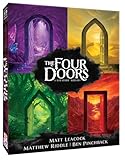
| The Four Doors | Solo-friendly cooperative puzzle adventure | $19.99 |
How We Picked
We narrowed this list using four criteria that matter most to a board game geek audience. First, mechanical depth relative to teaching time: a game should reward mastery without requiring a 20-page rulebook read before the first session. Second, replayability through randomized setup, modular boards, or variable win conditions that prevent solved-game stagnation. Third, component quality that matches or exceeds the price point, since geeks notice when cardboard feels like it belongs to a two-dollar novelty. Fourth, player interaction that keeps everyone engaged between turns, because a game where players solve their own engine in silence will not survive a second playthrough in most groups.
The 8 Best Board Game Geek in 2026
Thames & Kosmos Ingenious
Ingenious is a tile-laying abstract that hides surprising strategic depth beneath deceptively simple rules. Players draft hexagonal tiles to score across six colored tracks, and the variable scoring mechanism keeps every turn tense. It suits geeks who want a two-player duel that still works in a group setting. Owners praise how the golden Geek Award recognition is warranted by the elegance of the scoring tracks, and the compact footprint makes it ideal for smaller tables.
- Pro: Golden Geek Award winner with genuine strategic depth that rewards repeated play.
- Pro: Scales cleanly from 1 to 4 players, unusual for an abstract title.
- Con: The abstract nature means it lacks narrative or thematic flavor for story-driven gamers.
Skip it if your group insists on a theme or a modular board with terrain and resources.
CATAN (6th Edition)
The 6th Edition refresh keeps the trade, build, and settle loop intact while updating components and rules clarity. It remains the most recommended gateway to medium-weight strategy for families with kids ages 10 and up. The 60 to 90 minute playtime is well-calibrated for a post-dinner session. Owners who grew up with earlier editions appreciate the cleaner box art and improved resource tokens.
- Pro: Modular board ensures no two sessions play identically.
- Pro: The trading phase generates genuine negotiation and table talk that keeps all players engaged.
- Con: Four-player games can drag when one player falls behind and has no catch-up mechanism.
Skip it if you want tighter playtime or find random dice rolls frustrating as a sole resource driver.
Ticket to Ride
The refreshed edition maintains the cross-country route-building formula that made this a family staple. At 30 to 60 minutes for 2 to 5 players, it hits a sweet spot for age 8 and up without feeling like a children’s game to adults. Collecting colored train cards and planning destination routes offers just enough tension for a geek palate while remaining welcoming to first-timers.
- Pro: One of the most teachable medium-weight games ever published; rulebook questions are rare.
- Pro: The map and card-draft system create meaningful blocking decisions in multiplayer.
- Con: Experienced geeks may find the strategic ceiling low after a dozen plays.
Skip it if your group prefers resource engines or worker placement over route-building.
The Mind
The Mind is a cooperative card game where players must play cards in ascending order with absolutely no communication. It sounds gimmicky, but owner feedback consistently describes the first successful completion as a genuine emotional payoff. At under thirteen dollars and a 2 to 4 player count, it is the cheapest meaningful game on this list. Pandasaurus has kept the design lean and elegant.
- Pro: Extraordinary value; a full game concept for a price lower than most single expansions.
- Pro: Sessions are extremely short, making it an ideal filler or palate cleanser between heavier titles.
- Con: The silence mechanic is polarizing; players who want table talk or negotiation will bounce off immediately.
Skip it if your group enjoys talking strategy out loud and finds enforced silence stressful rather than fun.
Twisted Cryptids
Unstable Games built a drafting card game around absurd monster combos. You draft cryptid body parts to assemble the weirdest creatures for points. It is quick, funny, and genuinely clever in how the drafting tension maps onto silly subject matter. At just under twenty dollars, it undercuts most card games while offering more personality than a typical deck-builder filler.
- Pro: Humor and art style make it a conversation piece even among players who do not usually enjoy card games.
- Pro: Drafting mechanics create player interaction every single turn with no downtime.
- Con: The strategy ceiling is low; experienced geeks may solve the optimal draft patterns within a few sessions.
Skip it if you want a game that rewards long-term planning over quick laughs.
The Chameleon
The Chameleon is a hidden-role deduction game for groups where one player knows a secret word and the others do not. Each round is a grid of category clues, and players vote to identify the chameleon before the word is revealed. Sessions wrap up fast, often under fifteen minutes, which makes it ideal for geeks who want a social game without the commitment of a full werewolf campaign.
- Pro: Extremely low teaching overhead; a new player understands the concept in under a minute.
- Pro: The deduction mechanic rewards reading people and bluffing, adding a layer beyond pure logic.
- Con: Scales poorly below four players; the deduction math stops working with smaller groups.
Skip it if you typically game in pairs or threes.
Lord of the Rings: Duel for Middle-Earth
Asmodee delivers a genuine two-player asymmetric strategy game built around a shared deck. One side plays the Free Peoples, the other Shadow, and the single-deck mechanism means both players are drafting from the same pool. At 30 minutes and a compact footprint, it is one of the tightest head-to-head designs available at this price. The Middle-Earth theme is present without being overwhelming.
- Pro: Asymmetric win conditions mean the game plays differently from each seat, doubling perceived variety.
- Pro: The shared-deck draft eliminates randomness complaints common in other two-player games.
- Con: The card pool is finite, so long-term replayability may plateau for geeks who want modular or expansion-driven content.
Skip it if your group is larger than two or you want a game that supports expansions.
The Four Doors
Happy Camper designed this cooperative game for solo play, two players, or small groups, and the portable card-based system delivers a satisfying adventure-puzzle loop. It comes from the creator behind Pandemic and Forbidden Island, and that pedigree shows in how cleanly the cooperative tension works without a dominant-player problem. The component set is compact enough to travel in a jacket pocket.
- Pro: Solo-play support is built into the design rather than bolted on as a variant, which is rare in cooperative card games.
- Pro: The modular scenario structure keeps puzzle solutions from becoming memorized too quickly.
- Con: The puzzle-solving format means failure is permanent within a scenario, which can frustrate groups that dislike restarting from scratch.
Skip it if you prefer games where a bad early decision can be mitigated later rather than cascading into a loss.
Buying Guide
Player Count Flexibility
The most common regret among board game geeks is buying a game that only works with a specific group size. Look at the stated player range and the community consensus on whether the game holds up at the edges. A 2 to 5 player title does not necessarily play equally well at two and five. Route-builders like Ticket to Ride tend to lose blocking tension at two players, while cooperative games like The Four Doors are explicitly designed for that gap. Match the stated range to your actual regular group, not your ideal one.
Teaching Time versus Strategic Depth
A game that takes 45 minutes to teach will be pulled from the shelf far less often than one you can explain in five. But geeks also reject shallow mechanics. The sweet spot is a game with simple core rules and an emerging complexity layer, like Ingenious with its multi-track scoring or The Mind with its silence constraint. When reading specs, look for games described as “easy to learn, hard to master” and cross-reference with owner reviews about whether that promise holds after ten plays.
Replayability Through Randomization vs. Modularity
There are two engines of replayability. Randomization, like CATAN’s board layout or The Chameleon’s word grid, gives you variety from the same components. Modularity, like The Four Doors’ scenario system or LOTR’s asymmetric roles, offers structural variety baked into the design itself. Neither is superior, but geeks who play the same title weekly should lean toward modularity, since randomization patterns become predictable over time while modular systems present genuinely new configurations.
Our Verdict
The top pick is Lord of the Rings: Duel for Middle-Earth. It offers the best ratio of strategic depth to teaching time and session length on this list, and the shared-deck asymmetry means both players feel genuine tension every turn. For a budget pick, The Mind at $12.31 delivers a fully realized cooperative experience for less than half the price of most entries here. However, if your group skews heavily toward social interaction and table talk rather than engine-building or deduction, The Chameleon becomes the better purchase despite the similar price point, because its hidden-role format generates exactly the kind of conversational energy that geeks sometimes undervalue in pure strategy titles.
FAQ
Do I need expansions for these games to stay interesting?
Most of these titles are designed as complete experiences. The Mind, The Chameleon, and The Four Doors have no meaningful expansion ecosystem. LOTR: Duel for Middle-Earth also stands alone, though its finite card pool is the main long-term concern. Ticket to Ride and CATAN have strong expansion catalogs if you want to extend play, but they are not required.
Are any of these good for gaming with children?
Ticket to Ride is rated for ages 8 and up and is the most family-friendly option here. CATAN suits kids age 10 and up, particularly in three- or four-player games where the trading mechanic feels social rather than punishing. The Mind works with older children who can handle the frustration of cooperative failure.
How do I know which abstract game has enough depth?
Look at whether the game has variable win conditions or multiple scoring paths rather than a single optimal strategy. Ingenious uses six scoring tracks where the optimal path shifts each game, which prevents the solved-game problem that plagues simpler abstractions. If community reviews describe “new strategies” or “different feels each game” for the same components, the depth is real.
Can a board game geek enjoy these as a solo player?
The Four Doors is explicitly built for solo play and handles it well. Ingenious also supports a one-player variant. Most other titles here are multiplayer-dependent, and their solo modes, if they exist, are typically afterthoughts rather than designed experiences. If solo play is a priority, weight the list toward cooperative puzzle formats over competitive strategy.


