
Our Top Picks
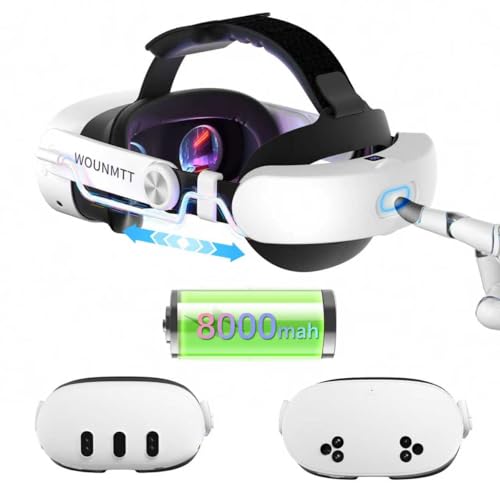


Top 3 picks at a glance
The Short Answer
When shopping for a Meta Quest battery strap, the ideal capacity for most users is between 5,000 mAh and 10,000 mAh (milliamp hours). This range offers the best balance between extended playtime and ergonomic comfort. A 5,000 mAh battery strap typically adds 2 to 3 hours of extra playtime, while a larger 10,000 mAh battery strap can extend your VR sessions by 4 to 6 hours.
While you can find ultra-high-capacity options up to 20,000 mAh, these larger batteries add significant physical bulk and weight to your head strap. From a home storage and ergonomic perspective, bigger is not always better. The key is finding a battery size that counterbalances the front-heavy Meta Quest headset without straining your neck or cluttering your entertainment center.
As an Amazon Associate we earn from qualifying purchases at no extra cost to you.


Standard Sizes
The physical size and weight of a Meta Quest battery strap scale directly with its milliamp-hour capacity. As you plan your storage setup, media console drawers, or charging docks, use this standard size guide to understand the physical footprint of different battery capacities.
| Battery Capacity (mAh) | Physical Dimensions (Inches) | Physical Dimensions (cm) | Average Weight (Ounces / Grams) | Estimated Price Range |
|---|---|---|---|---|
| 5,000 mAh (Compact / Clip-on) | 3.5″ L x 1.8″ W x 1.0″ D | 8.9 cm x 4.6 cm x 2.5 cm | 4.5 oz / 128 g | around $15 – around $30 |
| 8,000 mAh (Standard Integrated) | 4.3″ L x 2.1″ W x 1.1″ D | 10.9 cm x 5.3 cm x 2.8 cm | 7.2 oz / 204 g | around $25 – around $45 |
| 10,000 mAh (Extended Play) | 5.0″ L x 2.4″ W x 1.2″ D | 12.7 cm x 6.1 cm x 3.0 cm | 9.8 oz / 278 g | around $40 – around $65 |
| 20,000 mAh (Dual / Heavy Duty) | 6.2″ L x 3.0″ W x 1.4″ D | 15.7 cm x 7.6 cm x 3.6 cm | 16.5 oz / 468 g | around $55 – around $90 |
How to Measure Your Space
Integrating a VR headset with an aftermarket battery strap into your home requires careful physical planning. You must measure both the human element (your head size and comfort limits) and the spatial element (your home storage and docking areas).
- Step 1: Measure Head Circumference and Strap Expansion: Most rigid elite-style battery straps utilize a rear adjustment dial. Measure your head circumference using a flexible measuring tape. Ensure the strap you select accommodates your measurements—most standard straps adjust from 19.5 inches to 27 inches (49.5 cm to 68.5 cm).
- Step 2: Calculate the Ergonomic Counterweight: A standard Meta Quest 3 or Quest Pro headset weighs approximately 18 to 24 ounces (510 to 680 grams) on the front of your face. To achieve a perfect 50:50 weight distribution, look for a rear battery strap weight that closely matches this. A 10,000 mAh battery (weighing around 9.8 ounces plus the strap frame) acts as an excellent physical counterbalance.
- Step 3: Measure Storage and Drawer Clearance: Adding a rigid battery strap significantly increases the overall footprint of your VR headset. Measure the depth and height of your media console drawers or storage baskets. A Quest headset with a standard strap requires a storage space of at least 12″ L x 8.5″ W x 6″ H (30.5 cm x 21.6 cm x 15.2 cm).
- Step 4: Check Charging Dock and Cable Reach: If you use a vertical desktop charging stand, measure the distance from the rear battery port to the dock’s USB-C connection. Ensure the integrated cable on your battery strap is long enough to route cleanly along the side rails without putting tension on the headset’s USB-C port.
By Room or Use Case
The Living Room Media Console
If your VR headset lives in the family living room, aesthetics and clutter management are key. A compact 5,000 mAh to 8,000 mAh integrated battery strap is ideal for this space. These options maintain a sleek, low-profile silhouette that fits easily inside standard decorative storage baskets or media console drawers. Keeping the physical footprint under 11 inches in length ensures the headset can be tucked away out of sight when guests arrive, keeping your living room clean and organized.
The Dedicated Home Office & Gaming Desk
For a dedicated home office desk or gaming station, ergonomics and maximum uptime are the priorities. Here, a robust 10,000 mAh battery strap shines. Because you likely have dedicated desk space, hook mounts, or a pegboard system, you can accommodate the larger physical profile. This setup allows you to hang the headset securely under your desk or on a wall mount, where the extra bulk of a high-capacity strap won’t interfere with your workspace layout.
The Travel and Portable VR Setup
If you frequently pack your VR gear for travel, family gatherings, or business trips, physical dimensions are your primary constraint. Heavy-duty 20,000 mAh battery straps are often too bulky for standard travel cases, forcing you to carry them separately. For on-the-go use, a compact 5,000 mAh clip-on battery pack or a modular, magnetic battery strap system is the smartest choice. These allow you to detach the battery cell, packing the slim strap into a compact travel shell while slipping the battery into your carry-on pocket.
Common Sizing Mistakes
Avoid these common pitfalls when selecting a battery strap capacity and physical size:
- Buying Too Much Capacity (The Weight Trap): Many users assume that more milliamp hours are always better. However, buying a massive 20,000 mAh strap adds nearly a pound of dead weight to the back of your head. This can cause severe neck fatigue during active gameplay.
- Ignoring Case Compatibility: If you already own an official Meta carrying case or a compact third-party hardshell case, a rigid, non-folding 10,000 mAh battery strap will likely not fit inside. Always check the folded height and length of the strap against your case’s internal dimensions.
- Neglecting Headset Port Strain: Choosing a battery strap with a stiff, poorly measured USB-C cable can put constant upward or downward pressure on your Quest’s charging port. Over time, this physical tension can damage the internal solder joints of your headset’s USB-C port, leading to costly repairs.
FAQ
How many milliamp hours (mAh) do I need for 4 hours of playtime?
To achieve a total of 4 hours of continuous playtime, you need a battery strap with a capacity of at least 5,000 mAh to 6,000 mAh. This capacity, combined with the Meta Quest’s internal battery, will easily push your total runtime past the 4-hour mark.
Can I take a 20,000 mAh Meta Quest battery strap on an airplane?
Yes. Federal Aviation Administration (FAA) and international aviation guidelines permit lithium-ion batteries in carry-on luggage if they are rated under 100 watt-hours (Wh). A 20,000 mAh battery at a standard 3.7V output equals 74 watt-hours, which is well below the legal limit for air travel in 2026.
Does a larger battery strap make the headset feel heavier?
While a larger battery increases the total weight on your scale, it actually makes the headset feel lighter on your face. By acting as a counterweight at the back of your head, a 7 to 10-ounce battery balances the front-heavy design of the Meta Quest, relieving painful pressure on your forehead and cheeks.
What is the physical size difference between an integrated strap and a clip-on battery?
An integrated battery strap replaces your original head strap entirely, adding about 2 to 3 inches of rigid depth to the back of the headset. A clip-on battery pack attaches directly to your existing original fabric strap, keeping the overall storage footprint smaller but concentrating the weight in a single, less stable point.
Related guides
- Best Free MMOs on Steam: Subscription Limits, Pay-to-Win and Time Cost (2026)
- Best Free Horror Games on Steam: How to Pick One That Fits Your PC and Your Nerves (2026)
- Black Frame Insertion vs VRR: Which Smoothness Feature Should You Use?
- Best Webcams for Streaming: 11 Listings Compared by Resolution, Focus and Light (2026)








