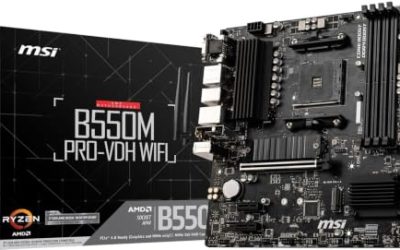
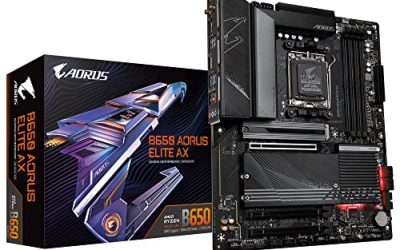
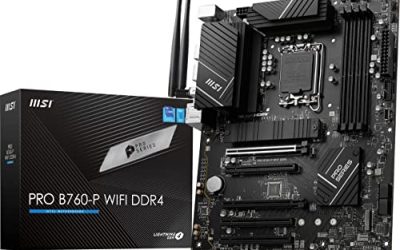
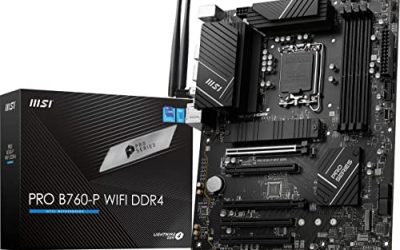
Our Short List of 3

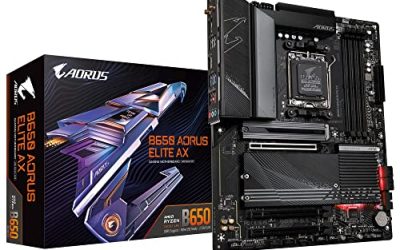
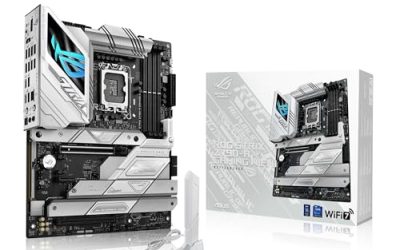
- Socket: LGA1200
- Chipset: Intel Z490
- Form factor: ATX, 30.5 x 24.4 cm
- Memory: 4 x DDR4 DIMM, up to 128GB, DDR4 4800 (O.C.)

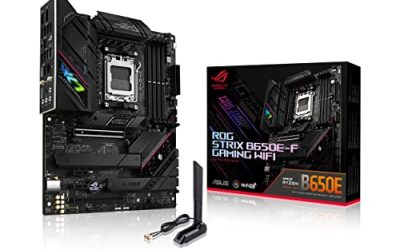
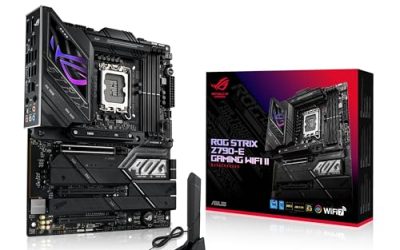
- Socket: AM4
- Chipset: AMD B450
- Form factor: ATX, 30.5 x 24.4 cm
- Memory: 4 x DDR4 DIMM, up to 64GB, DDR4 4133 (O.C.)
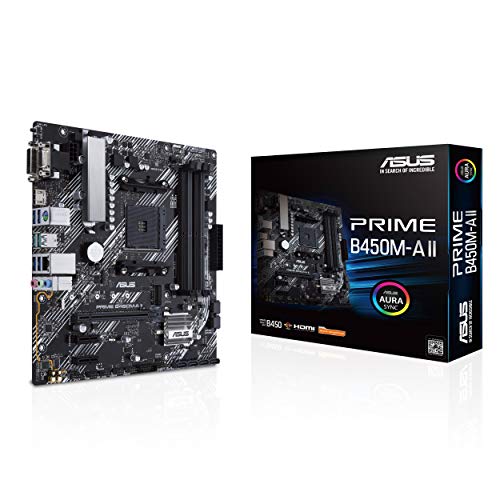
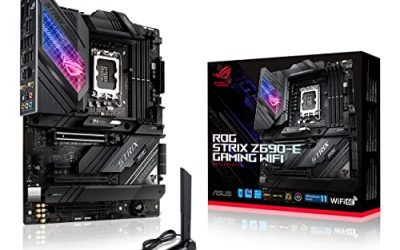
- Socket: AM4
- Chipset: AMD B450
- Form factor: Micro-ATX, 24.4 x 24.0 cm
- Memory: 4 x DDR4 DIMM, up to 128GB, DDR4 4400 (O.C.)
All 5 Picks at a Glance
| Product | Specs | Action |
|---|---|---|
| MSI MPG Z490 Gaming Plus |
| Check price on Amazon |
| MSI B450 Tomahawk MAX |
| Check price on Amazon |
| ASUS Prime B450M-A II |
| Check price on Amazon |
 Gigabyte B450M DS3H |
| Check price on Amazon |
 Gigabyte B450M DS3H WiFi |
| Check price on Amazon |
The “400” in this guide refers to two chipset families from the same era: Intel’s 400 series for the LGA1200 socket (Z490, H470, B460 and H410, built for 10th Gen Core processors) and AMD’s 400 series for the AM4 socket (X470 and B450, built for Ryzen processors). Both platforms have been discontinued for years, and none of the boards below is still in production. What remains on sale is remaining warehouse stock and third-party seller inventory, which is exactly why these boards still matter: a working Z490 or B450 board is the only way to keep a 10th Gen Intel or AM4 Ryzen gaming system running, and both processor families remain easy to find second hand.
This roundup covers both platforms, with the strongest Intel option first, followed by the AMD boards that still sell in the largest numbers. Every board here is a gaming model in the maker’s own line, with the power delivery, heatsinks and connectivity that role implies. Because supply on a discontinued platform changes hands often, the buying guide at the end covers the checks that matter most: BIOS versions and CPU support, the difference between the chipsets, and what to confirm on a listing before ordering a board that no maker still produces.
Disclosure: As an Amazon Associate, we earn from qualifying purchases made through links on this page, at no extra cost to you.
Our Top Picks
Top 3 picks at a glance
MSI MPG Z490 Gaming Plus
- Socket: LGA1200
- Chipset: Intel Z490
- Form factor: ATX, 30.5 x 24.4 cm
- Memory: 4 x DDR4 DIMM, up to 128GB, DDR4 4800 (O.C.)
The MPG Z490 Gaming Plus is the Intel pick for anyone rebuilding or repairing an LGA1200 gaming system. Z490 is the chipset that unlocks multiplier overclocking on K-series 10th Gen processors, and MSI built this board around that role: a 12+1+1 phase power design with an extended heatsink, an 8-pin plus 4-pin CPU power arrangement, and support for DDR4 speeds up to 4800 MHz with overclocking profiles. Storage runs to two M.2 slots, each covered by MSI’s M.2 Shield Frozr heatsink, alongside six SATA ports, and the rear panel carries a USB 3.2 Gen 2×2 Type-C port alongside the 2.5 Gigabit LAN port, which is the fastest wired networking in this guide.
For a 10th Gen build this is the most complete board still circulating in steady numbers. The full ATX layout gives two x16-length PCIe slots for a graphics card plus a capture or network card, the pre-installed I/O shield removes one fiddly step from a rebuild, and Mystic Light headers cover case lighting. There is no onboard Wi-Fi, so plan on the wired port or a separate adapter. As with every board here, current supply comes from remaining and third-party stock, so confirm the accessory set, including the M.2 screws and SATA cables, against the listing before ordering.
MSI B450 Tomahawk MAX
- Socket: AM4
- Chipset: AMD B450
- Form factor: ATX, 30.5 x 24.4 cm
- Memory: 4 x DDR4 DIMM, up to 64GB, DDR4 4133 (O.C.)
The B450 Tomahawk MAX is the AMD board that defined its generation, and it remains the easiest B450 recommendation for a gaming build. The MAX refresh exists because of one component: a 32 MB BIOS chip, double the capacity of the original Tomahawk, which lets the board hold microcode for every Ryzen generation at once and run Ryzen 3000 processors out of the box, with later BIOS releases adding Ryzen 5000 support. The hardware underneath is the proven Tomahawk layout, with an extended PWM heatsink, a steel-reinforced primary PCIe slot and a Flash BIOS Button that updates the firmware from a USB stick with no processor installed.
That last feature matters more on a discontinued platform than almost any other. A Tomahawk MAX bought today can be updated to the newest BIOS before a Ryzen 5000 chip goes anywhere near the socket, which removes the classic AM4 problem of a board that cannot boot the processor it was bought for. Memory support runs to DDR4-4133 with overclocking on Ryzen 3000 and newer, storage pairs one M.2 slot with six SATA ports, and the rear panel includes USB 3.2 Gen 2 in both Type-A and Type-C forms. Wired networking is Gigabit rather than 2.5G, and there is no onboard Wi-Fi, but as a foundation for a Ryzen gaming system this board’s support lifespan is the longest of any B450 model here.
ASUS Prime B450M-A II
- Socket: AM4
- Chipset: AMD B450
- Form factor: Micro-ATX, 24.4 x 24.0 cm
- Memory: 4 x DDR4 DIMM, up to 128GB, DDR4 4400 (O.C.)
The Prime B450M-A II is the B450 board that never really left the shelves. ASUS kept this Micro-ATX model in production longer than most of the range, and it shows in the details: a 256 MB BIOS chip with support spanning the full AM4 processor stack from the first Ryzen generation to Ryzen 5000, BIOS FlashBack for updating firmware with nothing but a power supply connected, and a VRM heatsink that the original Prime B450M-A lacked. Four DIMM slots take up to 128GB of DDR4 at speeds up to 4400 MHz with overclocking profiles, which is generous memory headroom for a board of this size.
Connectivity is where this board quietly outclasses older B450 designs. The rear panel carries USB 3.2 Gen 2 Type-A ports at 10 Gbps, a generation newer than the USB on most B450 boards, plus HDMI 2.0b, DVI-D and D-Sub outputs for Ryzen G-series processors with integrated graphics. Storage is one M.2 slot running PCIe 3.0 x4 alongside six SATA ports. ASUS positions the Prime line as its mainstream range rather than a gaming line, but the spec sheet tells a different story for a compact gaming build: the power design, heatsinks, FlashBack and memory ceiling are all here, and Aura Sync headers cover lighting. For a small AM4 system that needs to accept any Ryzen chip you pair with it, this is the safest pair of hands in the guide.
Gigabyte B450M DS3H
- Socket: AM4
- Chipset: AMD B450
- Form factor: Micro-ATX, 24.4 x 21.5 cm
- Memory: 4 x DDR4 DIMM, up to 128GB, DDR4 3600 (O.C.)
The B450M DS3H is the compact workhorse of the B450 range, a Micro-ATX board that pairs four DIMM slots with the essentials a gaming system needs and nothing it does not. Four memory slots on a board this size is the headline: many compact boards settle for two, which caps both capacity and later upgrades, while the DS3H takes up to 128GB of DDR4 with overclocked speeds to 3600 MHz. Storage is a single M.2 slot wired for PCIe Gen3 x4 NVMe drives plus four SATA ports, and the rear panel covers HDMI and DVI-D outputs for APUs, with Realtek Gigabit LAN for wired networking.
Gigabyte’s Smart Fan 5 system, with multiple temperature sensors and hybrid fan headers, gives this small board proper control over cooling, and RGB Fusion support with an LED header covers case lighting. Later board revisions and BIOS releases extend processor support well beyond the first two Ryzen generations printed on early boxes, up to Ryzen 5000 on the current BIOS, so check the revision and firmware notes on the listing if a 5000-series chip is the plan. There is no onboard Wi-Fi on this version; the otherwise identical DS3H WiFi below covers that need. For a compact Ryzen build with wired networking, this is the straightforward choice, and its long production run means listings remain plentiful.
Gigabyte B450M DS3H WiFi
- Socket: AM4
- Chipset: AMD B450
- Form factor: Micro-ATX
- Memory: 4 x DDR4 DIMM, up to 128GB, DDR4 3600 (O.C.)
The B450M DS3H WiFi takes the DS3H layout above and adds the one feature the standard board lacks: an Intel wireless module with 802.11ac Wi-Fi and Bluetooth, on antenna connectors at the rear panel. For a gaming system that sits somewhere an Ethernet cable cannot reach, that single change removes the need for a USB adapter or a PCIe card, and it is the only board in this guide with wireless networking built in. Everything else mirrors the wired model: the same B450 chipset, four DDR4 slots with 128GB ceiling, one M.2 slot and four SATA ports in a Micro-ATX footprint.
That makes the choice between the two DS3H versions a simple one about desk placement rather than performance, since the power design, memory support and expansion layout are shared. Ryzen 5000 support again depends on the BIOS version the board ships with, and this model has no BIOS flashback button, so a build around a 5000-series processor should confirm the firmware level with the seller first, or plan the first boot around an older AM4 chip. With that single caveat handled, this is the pick for a compact Ryzen gaming system that needs to connect without a cable, and the Bluetooth radio covers wireless controllers and headsets without extra hardware.
Buying Guide: Choosing a 400-Series Board in 2026
Start with the processor, because the two platforms in this guide do not overlap at all. Intel 400-series boards take 10th Gen Core processors on the LGA1200 socket, with Z490 adding 11th Gen support on most models through later BIOS releases. AMD 400-series boards take Ryzen processors on AM4, and a current BIOS stretches that from the original Ryzen 1000 series all the way to Ryzen 5000. A board from one family is never a substitute for the other, so the chip you own, or plan to buy used, decides the shortlist before any other feature does.
Within the Intel family, the chipset sets the ceiling. Z490 is the only tier that unlocks processor overclocking and fast memory profiles, which is why the Z490 board above is the Intel pick; H470, B460 and H410 boards give up overclocking and, on B460 and H410, cap memory speed at the processor’s native figure. On the AMD side, B450 allows overclocking across the range, so the differences between B450 boards come down to power design, heatsinks, BIOS capacity and ports rather than locked features. The BIOS point deserves emphasis on AM4: boards with a flashback feature, the Tomahawk MAX and the Prime B450M-A II here, can be updated for Ryzen 5000 with no processor installed, while boards without one may need an older chip for the first boot.
Everything else follows the usual build logic, with two era-specific notes. All of these boards use DDR4, none of them uses DDR5, and memory from a newer platform will not carry over in either direction. Storage and expansion are PCIe 3.0 throughout, so the fastest current NVMe drives run at half their rated link speed; that is no hardship in games, but it is worth knowing before pairing a flagship drive with a 400-series board. Finally, treat the listing itself as part of the product on a discontinued platform: confirm the I/O shield, antennas on Wi-Fi models, M.2 screws and SATA cables are included, check whether the seller is the maker, a retailer clearing stock or a marketplace seller, and read the firmware and revision notes where they are given. Supply of these boards is remaining stock, and the details vary from one listing to the next.
FAQ
What does the 400 in these motherboard names actually mean?
It is the chipset generation. Intel’s 400 series covers Z490, H470, B460 and H410 for the LGA1200 socket and 10th Gen Core processors. AMD’s 400 series covers X470 and B450 for the AM4 socket and Ryzen processors. The two families share nothing but the number, so the first step is always deciding which processor family the build is based on.
Can a Z490 motherboard run an 11th Gen Intel processor?
In most cases, yes. Z490 launched with 10th Gen support, and the major makers added 11th Gen Core support through BIOS updates during 2021. The board in this guide follows that pattern, but the firmware version decides the outcome, so update the BIOS with the existing processor first, and confirm your exact chip on the maker’s CPU support list before swapping.
Will a B450 board work with a Ryzen 5000 processor?
Yes, with a current BIOS. Every B450 board in this guide supports Ryzen 5000 on its latest firmware, and the Tomahawk MAX and Prime B450M-A II can update with no processor installed thanks to their flashback features. Boards without flashback may arrive on an older BIOS that cannot boot a 5000-series chip, so confirm the shipped firmware with the seller when that pairing is the plan.
Does it make sense to build a gaming PC on a 400-series board now?
It makes sense in two situations: keeping an existing 10th Gen Intel or AM4 system alive after a board failure, and building around the large pool of used processors and DDR4 memory that both platforms left behind. Neither socket has an upgrade path to current processors, so treat the build as a finished system rather than a starting point, and choose the board with the strongest support lifespan, which on these platforms means BIOS capacity and flashback features.
Related guides
More from Amazon
Programs that pair well with the guide above. Offers and eligibility are set by Amazon and may change.
Free shipping on eligible items, Prime Video and more. Eligible new members can start with a free trial.
Start a Prime free trialAd-free music streaming. Eligible new subscribers can start with a free trial.
Try Music Unlimited freeA Prime membership for ages 18-24 with a trial period. Eligibility is set by Amazon.
See Prime for Young AdultsAudiobooks and podcasts to listen to on the go. Eligible new members can start with a free trial.
Try Audible freeAs an Amazon Associate we earn from qualifying purchases.