Our Short List of 3

- Best for: Beginners who want a balanced piano that feels and sounds like the real thing, with room to grow.
- 88 keys with Graded Hammer Standard action
- 24 instrument voices
- 192-note polyphony
- Built-in speakers

- Best for: Learners who want the most realistic key action in a portable piano they can carry to lessons.
- 88 keys with PHA-4 Standard action
- 56 tones
- 256-note polyphony
- Bluetooth audio and MIDI

- Best for: Small spaces where a full-size piano will not fit, including apartments and shared bedrooms.
- 88 keys with Smart Scaled Hammer Action
- 192-note polyphony
- 18 tones
- Bluetooth audio
All 4 Picks at a Glance
| Product | Specs | Action |
|---|---|---|
| Yamaha P-125a |
| Check price on Amazon |
| Roland FP-30X |
| Check price on Amazon |
| Casio PX-S1100 |
| Check price on Amazon |
 Alesis Recital Pro |
| Check price on Amazon |
Learning piano starts with the feel of the keys, because weighted keys teach your fingers the control that a flat synth keyboard never will. A good beginner piano pairs that weighted action with enough voices to keep practice interesting, built-in speakers for playing anywhere, and lesson features that guide you through your first songs. The wrong keyboard frustrates beginners with mushy keys and thin sound, while the right one invites daily practice. A responsive piano builds confidence quickly, while a flat one makes simple melodies sound dull.
This guide is for adults starting piano for the first time, parents choosing an instrument for a child, and returning players who want a practice piano at home. Every product below was chosen from the name and specifications shown on its Amazon page, with attention to key action, sound quality, lesson features, and how easily the piano fits a home. It compares four beginner pianos side by side, so you can match key feel, sound, and lesson tools to your practice style.
Our Top Picks
Top 3 picks at a glance
Quick Picks
As an Amazon Associate we earn from qualifying purchases
| Product | Best for | Key spec from title |
|---|---|---|
| Yamaha P-125a | Best all-round learner for adults | 88 weighted keys |
| Roland FP-30X | Most realistic piano feel | 88 weighted keys |
| Casio PX-S1100 | Slim portable design for small rooms | 88 weighted keys |
| Alesis Recital Pro | Budget beginner and first piano | 88 hammer-action keys |
How to Choose
Key Action Matters Most
Key action decides whether practice transfers to a real piano, and weighted hammer-action keys are the standard every beginner should aim for. Graded action makes lower keys feel heavier and higher keys lighter, just like an acoustic piano, which trains finger strength evenly across the keyboard. Semi-weighted keys feel lighter and faster but teach less control, so they suit players who already own a piano and want a portable second instrument. Sit at the keyboard before buying if you can, because action is the one feature no specification sheet fully captures. Graded action also keeps both hands developing evenly as pieces get harder.
Sound Quality Keeps You Practicing
Sound quality decides whether you look forward to practice or dread it, and a piano with rich sampled tones rewards every session. Listen for a grand piano voice that stays warm across soft and loud playing, since a thin sample turns expressive playing into a flat buzz. Built-in speakers matter when you practice without headphones, and a piano with clear speakers sounds inviting in a living room. A headphone jack lets you practice late without waking the house, so check that the piano includes one. A piano with several strong voices also lets you explore styles beyond classical, which keeps lessons fresh over months.
Lesson Features Guide Beginners
Lesson features turn a keyboard into a teacher, and the best beginner pianos include built-in songs, a metronome, and modes that split the keyboard for lessons. A metronome builds steady timing from the first week, while a record function lets you hear your own progress and catch mistakes. Companion apps add guided lessons and sheet music, which help self-taught players stay on track. Features cannot replace a teacher, but they keep practice structured between lessons. Duet mode matters for young learners, because a teacher can play alongside the student on the same keyboard. Built-in songs with graded difficulty give beginners a clear path forward.
Size and Portability Shape Practice
Size decides where the piano lives and whether it gets played daily or gathers dust in a corner. A full 88-key piano needs a stand and a dedicated spot, while a slim model tucks against a wall or slides under a bed. Weight matters when the piano moves between rooms or travels to lessons, so check the dimensions and weight on the product page. A piano that fits your space gets played, while one that fights the room becomes furniture. Measure the space before you buy, and leave room for a bench so your posture stays correct.
The 4 Best Options
Yamaha P-125a
- Best for: Beginners who want a balanced piano that feels and sounds like the real thing, with room to grow.
- 88 keys with Graded Hammer Standard action
- 24 instrument voices
- 192-note polyphony
- Built-in speakers
Beginners who want a balanced piano that feels and sounds like the real thing, with room to grow.
The stand and pedal unit sell separately, so budget for them if you want a full setup before you start playing.
The P-125a is the most balanced beginner piano in this group, with graded hammer action that feels close to an acoustic piano and a grand piano voice that stays warm across the keyboard. Twenty-four instrument voices keep practice varied, from strings to electric piano, and the built-in speakers fill a room without extra gear. Its compact body fits a living room or bedroom easily, and the simple controls mean a beginner spends time playing rather than reading a manual. The touch response feels natural across soft and loud playing, which helps beginners learn dynamics early.
Roland FP-30X
- Best for: Learners who want the most realistic key action in a portable piano they can carry to lessons.
- 88 keys with PHA-4 Standard action
- 56 tones
- 256-note polyphony
- Bluetooth audio and MIDI
Learners who want the most realistic key action in a portable piano they can carry to lessons.
The piano weighs more than slimmer models, so moving it between rooms takes effort and a second pair of hands helps.
The FP-30X suits learners who care most about realistic key feel, because its PHA-4 Standard action reproduces the weight and escapement of an acoustic piano better than most portable models. Fifty-six tones cover piano, electric piano, strings, and organ, while Bluetooth audio and MIDI connect the piano to lesson apps on a phone or tablet. The sound stays rich at low volumes, which helps late-evening practice, and the solid build survives years of daily use. The keys return quickly after each press, so fast passages stay clean and repeated notes sound even.
Casio PX-S1100
- Best for: Small spaces where a full-size piano will not fit, including apartments and shared bedrooms.
- 88 keys with Smart Scaled Hammer Action
- 192-note polyphony
- 18 tones
- Bluetooth audio
Small spaces where a full-size piano will not fit, including apartments and shared bedrooms.
The slim keys feel different from a traditional piano, so try the action first if you can before committing.
The PX-S1100 is the slimmest piano here, with a modern design that fits small rooms, apartments, and desks where a full piano would dominate. Its Smart Scaled Hammer Action gives weighted resistance in a body barely deeper than a laptop, and eighteen tones cover the essentials for practice and performance. Bluetooth audio streams lesson tracks through the piano speakers, so you can play along with a teacher’s recording without extra speakers. The touch panel controls stay out of the way until you need them, and the piano pairs quickly with a phone for lesson apps.
Alesis Recital Pro
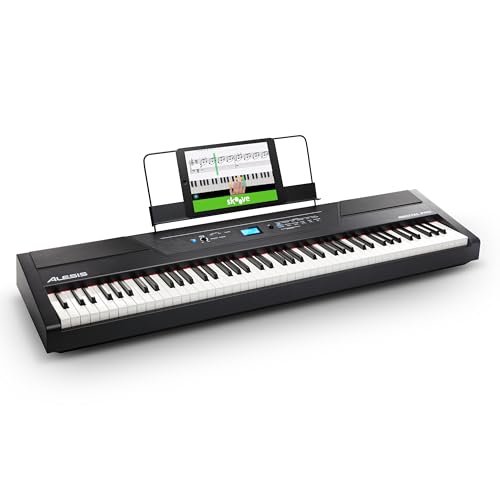
- Best for: Budget beginners and families buying a first piano for a child who is just starting out.
- 88 hammer-action keys
- 12 voices
- 128-note polyphony
- Built-in 20W speakers
Budget beginners and families buying a first piano for a child who is just starting out.
The action feels lighter than premium models, so advancing players may outgrow it within a year or two.
The Recital Pro is the friendly entry point for beginners on a budget, with hammer-action keys and twelve voices at a price that leaves room for lessons. Lesson mode splits the keyboard so teacher and student can play the same notes side by side, and the built-in speakers make practice easy without extra gear. It suits families buying a first piano for a child and adults testing whether piano is for them before investing more. The keys feel firm enough to build good habits, and the simple layout means a child can start playing without help.
Which One Fits Your Situation
You Are Starting as an Adult
Pick the P-125a when you want a piano that feels right from the first lesson and stays rewarding as you improve. The graded action trains proper technique, the grand piano voice sounds warm enough to enjoy, and the compact body fits a home without dominating a room. It is the safest first piano for an adult who plans to practice daily and wants an instrument that grows with them. It also holds value well.
You Want the Most Realistic Feel
Pick the FP-30X when key action matters more than anything else, because its PHA-4 action comes closest to an acoustic piano in this group. The extra tones and Bluetooth connection to lesson apps add value for self-taught players, and the solid build lasts through years of practice. It suits serious learners who expect to keep the piano for a long time. The action stays even across the keyboard, so scales feel smooth throughout.
Your Space Is Small
Pick the PX-S1100 when the piano must fit an apartment, a bedroom corner, or a desk that already holds a computer. Its slim body slides into spaces other pianos cannot, while the weighted keys still teach proper technique. Bluetooth audio turns it into a speaker for lesson tracks, which saves buying separate audio gear for practice sessions. The piano moves easily between rooms, and its slim shape leaves space for a bench beside it.
You Are Buying for a Child
Pick the Recital Pro when the player is a child trying piano for the first time and the budget must cover lessons too. Hammer-action keys teach proper finger control, lesson mode lets a teacher play alongside, and the friendly price means the family is not locked in if interest fades. If the child sticks with piano, the instrument serves well for the first year or two. Its simple controls let a child play alone.
Common Mistakes
- Buying unweighted keys and then struggling to play a real piano at a lesson, where the heavier action feels completely foreign.
- Choosing a piano without a headphone jack and losing evening practice time, which matters most when the house is quiet and you finally have a free hour.
- Skipping the stand and pedal, then playing with the keyboard sliding across a table and your wrists bent at the wrong angle.
- Picking the cheapest model with thin sound that makes practice feel like a chore, so the piano sits untouched after the first month.
- Ignoring size and weight, then finding the piano will not fit the room you planned and blocking a doorway or window.
Frequently Asked Questions
How many keys do I need to learn piano?
Eighty-eight keys cover the full piano range and suit every lesson book and song you will meet, so a full-size keyboard is the best choice for learning. Smaller keyboards force you to shift octaves mid-song, which breaks the flow of practice and teaches bad habits. Plan to move to 88 keys as soon as you can.
Are weighted keys really necessary for beginners?
Weighted keys teach finger strength and control that transfer directly to an acoustic piano, while unweighted keys build habits that fall apart on a real instrument. A teacher notices the difference within minutes, and hammer-action keys are the single most important feature for anyone serious about learning. They cost more, but they are worth it.
Can I learn piano without a teacher?
You can start without a teacher using lesson apps, built-in songs, and video courses, and many adults make real progress this way. A teacher catches bad habits early, corrects hand position, and keeps you moving through plateaus that stall self-taught players. Use apps as a supplement, not a replacement for lessons.
Do I need a stand and pedal for a digital piano?
A stand keeps the piano at the right height and stops it sliding during practice, while a sustain pedal is essential for playing most piano music expressively. Many pianos sell the stand and pedal separately, so check what the box includes before buying. A sturdy X-stand suits portable setups well.
Related guides
More from Amazon
Programs that pair well with the guide above. Offers and eligibility are set by Amazon and may change.
Free shipping on eligible items, Prime Video and more. Eligible new members can start with a free trial.
Start a Prime free trialAd-free music streaming. Eligible new subscribers can start with a free trial.
Try Music Unlimited freeA Prime membership for ages 18-24 with a trial period. Eligibility is set by Amazon.
See Prime for Young AdultsAudiobooks and podcasts to listen to on the go. Eligible new members can start with a free trial.
Try Audible freeAs an Amazon Associate we earn from qualifying purchases.