Our Short List of 3

- Best for: Everyday desktops and game libraries that need a responsive 2TB storage drive.
- Capacity: 2TB
- Form factor: 3.5 inch
- Interface: SATA 6Gb/s
- Rotational speed: 7200 RPM

- Best for: Gaming PCs and performance builds that want the fastest spindle in a 4TB desktop drive.
- Capacity: 4TB
- Form factor: 3.5 inch
- Interface: SATA 6Gb/s
- Rotational speed: 7200 RPM

- Best for: Quiet family and office desktops that need 4TB of dependable general storage.
- Capacity: 4TB
- Form factor: 3.5 inch
- Interface: SATA 6Gb/s
- Rotational speed: 5400 RPM
All 5 Picks at a Glance
| Product | Specs | Action |
|---|---|---|
| Seagate BarraCuda 2TB (ST2000DM008) |
| Check price on Amazon |
| WD Black 4TB (WD4006FZBX) |
| Check price on Amazon |
| WD Blue 4TB (WD40EZAX) |
| Check price on Amazon |
 WD Red Plus 4TB (WD40EFPX) |
| Check price on Amazon |
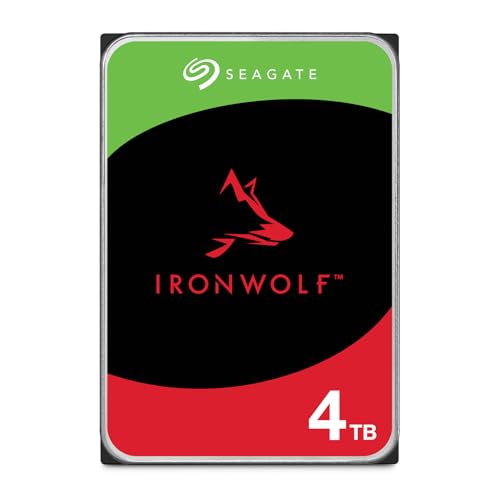 Seagate IronWolf 4TB (ST4000VN006) |
| Check price on Amazon |
A desktop hard drive decision usually comes down to one question: how much bulk storage does the PC need once the SSD fills up? Games, video projects and photo archives keep growing, and a 3.5-inch SATA hard drive is still the simplest way to add several terabytes inside the case. The five drives below are all internal desktop HDDs that mount in a standard bay and connect with ordinary SATA cables, so the real choice is capacity, spindle speed and how the drive is tuned.
Two of the picks suit everyday desktops and game libraries, one is a performance model aimed at gaming rigs, and two are NAS-class drives that also work well in a tower that stays on around the clock. Each entry lists the exact model and capacity sold under its ASIN, with specifications taken from the product page, so what is described here matches the drive that arrives in the box.
Our Top Picks
Top 3 picks at a glance
Quick Picks
As an Amazon Associate we earn from qualifying purchases.
| Product | Best for | Key spec from title |
|---|---|---|
| Seagate BarraCuda 2TB (ST2000DM008) | Everyday desktop storage | 7200 RPM, 256MB cache |
| WD Black 4TB (WD4006FZBX) | Gaming and performance builds | 7200 RPM, 256MB cache |
| WD Blue 4TB (WD40EZAX) | Quiet general-purpose storage | 5400 RPM, 256MB cache |
| WD Red Plus 4TB (WD40EFPX) | Always-on desktop and home server use | CMR recording, NASware 3.0 |
| Seagate IronWolf 4TB (ST4000VN006) | Multi-bay and RAID setups | CMR recording, up to 180MB/s |
How to Choose
Capacity for the library you actually have
Start by adding up what the drive has to hold. A modern game library, a few years of phone photos and a folder of video projects can pass two terabytes faster than most people expect, which is why the 4TB models in this roundup are the safer default for a main storage drive. A 2TB drive still makes sense as a second disk in a smaller build or for a single-purpose archive. Also check the case before ordering: a 3.5-inch drive needs a free 3.5-inch bay, a spare SATA port on the motherboard and a SATA power lead from the power supply.
Spindle speed and cache size
Spindle speed is the clearest performance split among desktop hard drives. A 7200 RPM drive such as the BarraCuda 2TB or WD Black 4TB spins faster, which shortens seek times and helps when a game or application pulls lots of small files from the disk. A 5400 RPM drive runs cooler and quieter, and for sequential work such as video playback or backups the gap is small. Cache works as a small buffer between the platters and the PC; the 256MB cache on most of these models helps with bursts of transfers, although it does not change the underlying speed of the disk itself.
CMR versus SMR recording
Most buyers never see the recording method on the box, but it matters for write-heavy work. CMR, or conventional magnetic recording, writes tracks side by side and keeps write speeds steady when the drive is nearly full or rebuilding an array. SMR overlaps tracks to raise capacity and can slow down during long sustained writes. The WD Red Plus and IronWolf models below are CMR drives, and the WD Blue 4TB listed here is also a CMR model. If the drive will sit in a RAID set or absorb large backups every day, CMR is the safer specification to insist on.
Desktop, gaming and NAS tuning
Drive families differ in firmware as much as in hardware. Desktop lines such as WD Blue and BarraCuda are tuned for one drive in one PC, with an emphasis on low noise and low power draw. Gaming lines such as WD Black add a faster spindle and a longer warranty. NAS lines such as WD Red Plus and IronWolf are built for machines that run around the clock, often with several drives mounted together, and their firmware is set up for RAID error recovery and vibration from neighbouring disks. A NAS drive works perfectly well in a normal desktop, so the choice is about duty cycle, not compatibility.
The 5 Best Options
Seagate BarraCuda 2TB (ST2000DM008)
- Best for: Everyday desktops and game libraries that need a responsive 2TB storage drive.
- Capacity: 2TB
- Form factor: 3.5 inch
- Interface: SATA 6Gb/s
- Rotational speed: 7200 RPM
Everyday desktops and game libraries that need a responsive 2TB storage drive.
The 2TB capacity fills quickly with large modern game installs, so heavy libraries should look at the 4TB models instead.
The BarraCuda 2TB is the straightforward pick for a desktop that needs more room without changing anything else about the build. It pairs a 7200 RPM spindle with a 256MB cache, a combination that keeps everyday file handling and game loading as responsive as a mechanical drive gets at this capacity. The listing covers the ST2000DM008 and ST2000DMZ08 model numbers in frustration-free packaging, and the drive uses the standard SATA 6Gb/s connection found on every modern motherboard. For a single storage drive in a gaming or family PC, it is the simplest fit in this roundup.
WD Black 4TB (WD4006FZBX)
- Best for: Gaming PCs and performance builds that want the fastest spindle in a 4TB desktop drive.
- Capacity: 4TB
- Form factor: 3.5 inch
- Interface: SATA 6Gb/s
- Rotational speed: 7200 RPM
Gaming PCs and performance builds that want the fastest spindle in a 4TB desktop drive.
A 7200 RPM performance drive makes more noise and vibration than the 5400 RPM models, which matters in a quiet case.
WD Black is Western Digital’s performance desktop line, and the 4TB model is the gaming pick of this group. It combines a 7200 RPM spindle with a 256MB cache and is sold as a desktop performance gaming hard drive for gamers, system builders and creative professionals. The listing names StableTrac and Dynamic Cache Technology among its features, and the drive carries a five-year limited warranty, the longest coverage in this roundup. Paired with a fast SSD boot drive, it gives a gaming rig a deep library disk that still loads from a quick spindle.
WD Blue 4TB (WD40EZAX)
- Best for: Quiet family and office desktops that need 4TB of dependable general storage.
- Capacity: 4TB
- Form factor: 3.5 inch
- Interface: SATA 6Gb/s
- Rotational speed: 5400 RPM
Quiet family and office desktops that need 4TB of dependable general storage.
The 5400 RPM spindle is the slowest here for random access, so it suits storage duty better than running demanding applications directly.
The WD Blue 4TB is the general-purpose option, built for the office and everyday applications Western Digital designs the Blue line around. This WD40EZAX model spins at 5400 RPM with a 256MB cache and uses CMR recording, so long writes stay consistent even though the spindle is the slower, quieter type. It weighs about 1.26 pounds and follows the standard 3.5-inch desktop format, dropping into any free bay with a SATA data cable and power lead. For documents, photos, music and a moderate game library, it covers the brief without paying for performance features that bulk storage rarely uses.
WD Red Plus 4TB (WD40EFPX)
- Best for: Desktops that run around the clock as file servers, media hubs or backup targets.
- Capacity: 4TB
- Form factor: 3.5 inch
- Interface: SATA 6Gb/s
- Rotational speed: 5400 RPM
Desktops that run around the clock as file servers, media hubs or backup targets.
Its firmware is tuned for multi-drive NAS work, so single-drive desktop buyers pay for features they may never use.
The WD Red Plus 4TB is a NAS-class drive that also earns its place inside a regular tower, especially one that doubles as a home server or media box. It uses CMR recording with a 256MB cache and NASware 3.0 firmware, and Western Digital rates the Red Plus line for systems with up to eight bays running around the clock. In a desktop that stays on to share files, record security footage or host a media library, that always-on tuning is worth more than a faster spindle. The drive carries a three-year limited warranty.
Seagate IronWolf 4TB (ST4000VN006)
- Best for: Multi-bay desktops and small RAID arrays that need NAS-tuned CMR storage.
- Capacity: 4TB
- Form factor: 3.5 inch
- Interface: SATA 6Gb/s
- Rotational speed: 5400 RPM
Multi-bay desktops and small RAID arrays that need NAS-tuned CMR storage.
Health monitoring features need a compatible NAS or software environment, so desktop-only users will not see all of them.
The IronWolf 4TB is Seagate’s NAS entry in this roundup, designed for multi-user environments with up to eight bays. The listing highlights CMR recording, transfer speeds of up to 180MB/s and IronWolf Health Management, which lets a compatible NAS monitor drive condition, alongside a bundled Rescue data recovery service term and a three-year limited warranty. Rotational vibration sensors help it behave in a crowded tower where several drives spin at once. In a single desktop it behaves like a calm 5400 RPM storage drive; in a small array it is the most specialised tool here.
Which One Fits Your Situation
A game library that outgrew the SSD
Keep the operating system and the two or three games in rotation on the SSD, and move the back catalogue to a hard drive. The WD Black 4TB suits this best because its 7200 RPM spindle shortens load waits on the titles stored there, while the BarraCuda 2TB covers smaller libraries. Either drive installs beside the SSD rather than replacing it.
A quiet family or office desktop
Noise matters more than spindle speed when the PC sits in a living room or a shared office. The WD Blue 4TB spins at 5400 RPM, runs gently and still holds a large photo and document archive. It is the natural main storage drive for a machine used for browsing, schoolwork, office files and media playback.
A tower that doubles as a home server
A desktop that shares files, streams media or records camera footage all day needs a drive rated for continuous duty. The WD Red Plus 4TB brings CMR recording and NAS firmware to that job, and its eight-bay rating leaves room to add more drives later. It also suits a backup target that never really sleeps.
A multi-drive backup or RAID build
When two or more drives share one case, vibration and error recovery behaviour start to matter. The Seagate IronWolf 4TB is built for exactly that environment, with CMR recording and rotational vibration sensors for bays of up to eight drives. Match identical models in an array so every disk behaves the same way during a rebuild.
Common Mistakes
- Ordering a 2.5-inch laptop drive or an external USB drive when the build needs a bare 3.5-inch internal disk with SATA connectors.
- Ignoring the recording method, then putting an SMR drive into a RAID set where rebuilds and long writes slow down sharply.
- Expecting any mechanical drive to load games like an SSD; a hard drive is bulk storage, and the boot drive should stay solid state.
- Forgetting the small parts: many cases and motherboards need a SATA data cable and mounting screws that are not always in the drive box.
- Treating a new hard drive as a backup plan by itself; important files still need a second copy somewhere else.
Frequently Asked Questions
Can a desktop hard drive work alongside an SSD?
Yes, and that is the most common arrangement in gaming PCs. The SSD holds the operating system and favourite applications, while the hard drive stores the game library, downloads and media. Both connect to SATA ports on the motherboard, and the PC treats the hard drive as an extra storage volume once it is initialised in the operating system.
What changes between 5400 RPM and 7200 RPM in daily use?
A 7200 RPM drive finds and reads scattered data a little faster, which shows up when games load levels or large folders open. A 5400 RPM drive is quieter and uses less power, and for playing back video or copying large single files the difference is minor. Neither speed turns a hard drive into an SSD, so the choice is about noise and responsiveness at the margins.
Can a NAS drive be used in a regular desktop?
Yes. Drives such as the WD Red Plus and Seagate IronWolf use the same 3.5-inch format and SATA connection as any desktop drive, and they install and format the same way. Their firmware adds features for multi-drive, always-on systems, which simply go unused in a single-drive PC. The only real downside is that NAS models can cost more than a plain desktop drive of the same capacity.
What does installing a 3.5-inch internal drive involve?
The drive slides into a free 3.5-inch bay and is fixed with screws or the case’s tool-free rails. One SATA data cable runs to the motherboard and one SATA power lead comes from the power supply. After the PC boots, the new disk needs to be initialised and formatted in the operating system’s disk management tool before files can be stored on it.
Related guides
More from Amazon
Programs that pair well with the guide above. Offers and eligibility are set by Amazon and may change.
Free shipping on eligible items, Prime Video and more. Eligible new members can start with a free trial.
Start a Prime free trialAd-free music streaming. Eligible new subscribers can start with a free trial.
Try Music Unlimited freeA Prime membership for ages 18-24 with a trial period. Eligibility is set by Amazon.
See Prime for Young AdultsAudiobooks and podcasts to listen to on the go. Eligible new members can start with a free trial.
Try Audible freeAs an Amazon Associate we earn from qualifying purchases.