Our Short List of 3
All 5 Picks at a Glance
| Product | Specs | Action |
|---|---|---|
 TP-Link Archer AX73 | Check price on Amazon | |
 ASUS RT-AXE7800 | Check price on Amazon | |
 NETGEAR Nighthawk RAXE300 | Check price on Amazon | |
 ASUS RT-BE86U | Check price on Amazon | |
 TP-Link Archer BE800 | Check price on Amazon |
As an Amazon Associate we earn from qualifying purchases.
Verizon Fios is unusual, and that is why buying your own router works so well on it. There is no modem to buy. Verizon installs an Optical Network Terminal, or ONT, where the fiber enters your home, and that box converts the fiber signal into a connection a normal router can use. If the ONT delivers internet over Ethernet, almost any modern standalone router can take over from the Verizon gateway — so you can stop paying a monthly rental and choose hardware that fits your home.
That freedom comes with Fios-specific checks a general high-speed router guide does not cover: the WAN port has to match your plan, older homes may feed the router over coax instead of Ethernet, and Fios TV adds a MoCA wrinkle internet-only households never face. Every pick below is a standalone router with an Ethernet WAN port that connects directly to the ONT, rather than a mesh system sold as a multi-node kit.
The short version: at gigabit speed or below, a strong Wi-Fi 6 router such as the TP-Link Archer AX73 covers the job. For the cleaner 6 GHz band, the ASUS RT-AXE7800 and NETGEAR Nighthawk RAXE300 add Wi-Fi 6E and a multi-gig port. For the 2 Gig plan or a wired home lab, the ASUS RT-BE86U and TP-Link Archer BE800 bring Wi-Fi 7 and 10-gigabit-class ports.
Our Top Picks
- ASUS RT-AXE7800 Tri-Band WiFi 6E199.97 cubic inches8.27 x 9.49 x 2.44 inches2.28 poundsCheck on Amazon
Top 3 picks at a glance
How to Choose a Router for Verizon Fios
Start at the ONT, not at the router shelf
The ONT is the fixed point in a Fios installation. It is Verizon equipment, it stays in place whether you rent a gateway or not, and it is the device that actually talks to the fiber network. Your router never connects to fiber directly. It connects to the ONT, and the type of cable used for that short link decides how easy a third-party router swap will be.
On most current installations, the link is an ordinary Ethernet cable from the ONT to the router’s WAN port. Replacing the gateway is then mostly a wiring task: disconnect the old router as Verizon instructs, connect the new router’s WAN port to the same Ethernet run, power up in order, and complete the setup wizard. The new router requests an address from Verizon just as the gateway did.
Ethernet versus coax and the MoCA question
Older Fios installations delivered internet from the ONT to the router over coaxial cable using MoCA instead of Ethernet. That matters because third-party routers have no coax WAN input — they expect an Ethernet feed. If your gateway connects to the ONT only by coax, you generally need the ONT switched to Ethernet output and a cable run to the router’s location. Where the ONT sits in a garage and the router belongs two floors away, that cable run is the real project, not the router purchase.
MoCA also shows up on the TV side. Fios TV boxes rely on a MoCA network over coax for guide data and on-demand features, and the Verizon gateway bridges that network to your internet connection. With Fios TV, removing the gateway can affect those features unless you plan around it, for example with a MoCA adapter so the boxes still reach the network through your router. Internet-only homes skip all of this. Before ordering, check whether your gateway is connected by Ethernet, coax or both — that five-minute check prevents the most common Fios router mistake.
Match the WAN port to your Fios tier
Fios tiers make the WAN port the most important specification on the box. A router can advertise huge wireless numbers and still cap your connection at the front door if its WAN port is slower than your plan. On a 300 or 500-megabit plan, any gigabit WAN port here is sufficient. On the gigabit plan, a gigabit port remains appropriate, though real throughput sits a little below the headline figure, so a 2.5-gigabit WAN port gives cleaner headroom.
The 2 Gig plan changes the maths. Feeding it into a gigabit WAN port throws away roughly half of what you pay for before Wi-Fi enters the picture. For that tier, look for a WAN port rated at 2.5 gigabits or faster, and check the LAN side if a wired desktop or NAS should enjoy full speed. The RT-AXE7800 and RAXE300 include a 2.5-gigabit port; the RT-BE86U and Archer BE800 go further with 10-gigabit-class connectivity.
Choose the Wi-Fi generation your devices can use
Wi-Fi 6 is the sensible baseline for homes whose devices are a few years old; it handles gigabit-class service well, and OFDMA and MU-MIMO help when many devices share the air. Wi-Fi 6E adds the wide, uncrowded 6 GHz band for compatible laptops and phones in nearby rooms. Wi-Fi 7 adds 320-megahertz channels on 6 GHz and multi-link operation, but only with Wi-Fi 7 clients — otherwise its value here is the faster ports and processors that come with it.
Consider coverage honestly too. Square-footage figures assume favourable layouts, and placement on Fios follows the ONT’s Ethernet run, so think about where that cable lands. A very large or awkward home may eventually need mesh expansion; several picks below support their maker’s mesh ecosystem, so a compatible node can join later without discarding the main unit.
Check the features that replace gateway habits
Households also rely on the gateway for parental controls, guest networks, VPN support and security tools, and these differ by brand. ASUS models here include AiProtection and AiMesh; TP-Link models list HomeShield and OneMesh or EasyMesh; NETGEAR centres on its own app and services, some subscription-based. Note which tools are built in and which are paid extras, so the rental saving is not handed back in subscriptions.
Finally, plan the swap itself: note your current settings, expect a short outage, and keep the Verizon gateway nearby until the new network is stable. If the new router does not come online, the usual causes are the ONT still set for coax output, the old lease not yet clearing, or a cable seated in a LAN port instead of the WAN port — setup issues, not compatibility failures.
The Best Routers for Verizon Fios
TP-Link Archer AX73
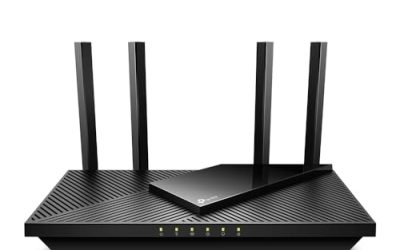
The Archer AX73 is the straightforward pick for the most common Fios situation: an internet-only home on a plan at gigabit speed or below that wants to retire the rental gateway without overbuying. It is a dual-band Wi-Fi 6 router in the AX5400 class, rated by TP-Link at up to 4804 megabits per second on 5 GHz and 574 megabits per second on 2.4 GHz, with six external antennas, a triple-core processor and gigabit Ethernet ports. Connected by Ethernet to the ONT, it covers the 300, 500 and gigabit tiers in the configuration those plans actually need, which is a capable 5 GHz radio for nearby rooms and enough processing capacity for a busy family network.
Its appeal is proportion. There is no 6 GHz band and no multi-gig port, and on a gigabit-or-lower plan neither omission costs real internet speed. You get a mature Wi-Fi 6 platform with MU-MIMO and OFDMA, beamforming, USB sharing and OneMesh support if an extender is needed later. The honest limit is the upgrade path: on the 2 Gig tier the gigabit WAN port becomes the ceiling. For everyone staying at gigabit or below, it is the cleanest value lane here.
ASUS RT-AXE7800
The RT-AXE7800 is the step up for Fios homes that want the 6 GHz band and a faster front door. It is a tri-band Wi-Fi 6E router in the AXE7800 class, splitting its rated capacity across 2.4 GHz, a strong 5 GHz radio and a 6 GHz radio with 160-megahertz channels, and its listing highlights a 2.5-gigabit port alongside gigabit LAN ports and USB connectivity. On Fios, that port pairing matters twice: the 2.5-gigabit port removes the tight headroom of a gigabit WAN on the gigabit plan, and it keeps the router relevant if you upgrade to a multi-gig tier later.
ASUS also covers the software side of gateway replacement: AiProtection Pro, parental controls, Safe Browsing, Instant Guard and built-in VPN features are in the listed package, and AiMesh support means a second compatible ASUS unit can extend coverage later. For a gaming household, the story is a quiet 6 GHz lane for a compatible PC or console near the router and a strong 5 GHz band for everything else. Choose it over the AX73 when you own Wi-Fi 6E gear or expect a tier upgrade.
NETGEAR Nighthawk RAXE300
The Nighthawk RAXE300 gives Fios households a different brand’s take on the same Wi-Fi 6E step. It is a tri-band router in the AXE7800 class with eight streams, rated coverage of up to 2,500 square feet and support for up to 40 devices in NETGEAR’s listing, with a 2.5-gigabit port among its wired connections. The 6 GHz band serves the same purpose here as on the ASUS: a cleaner lane for Wi-Fi 6E phones, laptops and VR headsets close to the router, while the 5 GHz band carries the wider household. Its folding-wing design hides six antennas in a shape that sits more discreetly than a forest of upright aerials, which matters when the ONT’s Ethernet run lands the router in a living room rather than a closet.
For a Fios swap, the RAXE300 suits a mid-size home on the gigabit plan that wants headroom and a polished app-led setup. NETGEAR leans on its own security services, so check which protections are included and which are subscription extras before assuming parity with the ASUS, and install the latest firmware during setup. Pick it if you prefer the Nighthawk platform and want Wi-Fi 6E plus a multi-gig port without stepping to Wi-Fi 7.
ASUS RT-BE86U
The RT-BE86U is the Wi-Fi 7 option for Fios homes that think in terms of wired speed as much as wireless. It is a dual-band Wi-Fi 7 router in the BE6800 class, with support for 4096-QAM and multi-link operation in its listing, and its wired side is the headline: a 10-gigabit port, a 2.5-gigabit port and additional 2.5-gigabit LAN ports, plus USB connectivity. On the 2 Gig Fios plan, that layout lets the WAN link run without a port bottleneck and lets a wired workstation or NAS share multi-gig speeds locally, which no gigabit-LAN router can offer even if its Wi-Fi numbers look large.
Because it is dual-band, there is no 6 GHz radio; its Wi-Fi 7 gains come from more efficient use of 5 GHz and 2.4 GHz and from multi-link features with compatible clients. That trade suits a home office or gaming den where the most demanding machine is wired anyway. AiMesh, AiProtection, comprehensive VPN features and Guest Network Pro round out the package. If your Fios life centres on a desk, a NAS and a fast tier, this is the most purposeful pick here.
TP-Link Archer BE800
The Archer BE800 is the flagship lane, built for the Fios household that wants everything at once: tri-band Wi-Fi 7, multi-gig wiring in depth and capacity for a large, device-heavy home. It is a tri-band router in the BE19000 class with twelve streams, a 6 GHz band with 320-megahertz channels, two 10-gigabit ports, four 2.5-gigabit ports and USB 3.0, along with eight high-performance antennas, an LED screen, EasyMesh support, VPN tools and HomeShield features in TP-Link’s listing. On a 2 Gig plan it treats the WAN connection as a starting point rather than a limit, and its LAN depth means a switch is optional even with several wired rooms, consoles and storage devices.
That capacity suits only the homes it is aimed at — a small apartment on a 500-megabit plan would use a fraction of it. But for a large Fios home with a home lab, multi-gig local transfers, Wi-Fi 7 laptops and dozens of devices competing at once, the BE800 is the one pick that asks for no compromise on bands, ports or expansion, and it will still look current after the next tier upgrade.
Which Router for Verizon Fios Should You Buy?
Match the router to the plan and wiring first, the Wi-Fi label second. Internet-only on a 300, 500 or gigabit plan, with Ethernet already at the router position? The Archer AX73 is the proportionate buy. On an older install, check the coax question before ordering, because the Ethernet run — not the router — is what can delay the swap.
If you own Wi-Fi 6E devices or expect a faster tier, step up to the RT-AXE7800 or RAXE300. Both add 6 GHz and a 2.5-gigabit port; ASUS emphasises its included security suite, VPN depth and AiMesh path, while NETGEAR offers the Nighthawk app experience and hidden antennas.
On the 2 Gig plan, or where wired networking matters as much as wireless, the choice narrows to the Wi-Fi 7 pair: the RT-BE86U for the wired-first home, the Archer BE800 for tri-band Wi-Fi 7 and the deepest port selection. Fios TV households should decide one extra thing first — how the TV boxes keep their features, via a MoCA adapter or by keeping Verizon equipment in the chain.
Frequently Asked Questions
Can I use my own router with Verizon Fios and return the rental?
Yes. Connect your router’s WAN port to the ONT by Ethernet and return the rented gateway once your network is running, following Verizon’s return process so the charge stops. Keep the rental until the setup is stable, and note that Verizon support for third-party routers is limited — the router maker’s support becomes your first stop for Wi-Fi issues.
Do I need a modem or a special Fios router?
No modem is involved. The ONT that Verizon installs performs the conversion from the fiber network, so the device you buy is an ordinary router with an Ethernet WAN port. There is no separate Fios certification to shop for in a standalone router; what matters is that the WAN and LAN port speeds match your plan, the Wi-Fi generation suits your devices, and your ONT is delivering internet over Ethernet rather than only over coax.
My Verizon gateway connects by coax. Will these routers still work?
They will once the internet feed reaches them by Ethernet. These routers have no coax WAN input, so an installation where the ONT feeds the gateway only over coax generally needs the ONT switched to Ethernet output and a cable run to the router’s location. If running that cable is impractical, that constraint, rather than router choice, is the problem to solve first. Homes with Fios TV also use coax for the TV boxes’ MoCA network, which is a separate consideration from the internet feed itself.
Will a third-party router break my Fios TV service?
Internet-only households have nothing to break. With Fios TV, the boxes rely on a MoCA connection over coax for guide and on-demand functions, and the gateway normally provides that bridge. Replacing it without a plan can degrade those features; common approaches are adding a MoCA adapter or keeping Verizon equipment in place for the TV side. Decide before the swap.
Which of these routers handles the Fios 2 Gig plan properly?
Look at the WAN port before anything else. The ASUS RT-BE86U and TP-Link Archer BE800 offer 10-gigabit-class connectivity and are the most comfortable fits, with multi-gig LAN ports for wired devices as well. The ASUS RT-AXE7800 and NETGEAR RAXE300 include a 2.5-gigabit port, which clears the 2 Gig tier’s requirement at the WAN while leaving gigabit or more limited LAN ports for wired gear. The TP-Link Archer AX73, with gigabit ports, is capped below the plan and belongs on gigabit-or-lower tiers.
Should I choose Wi-Fi 6, 6E or 7 for Fios?
Choose for the devices you own. Wi-Fi 6 covers gigabit-class service well and costs the least. Wi-Fi 6E adds a clean 6 GHz lane for compatible devices in busy housing. Wi-Fi 7 adds wider channels and multi-link operation for Wi-Fi 7 clients and tends to arrive with the fastest ports, which is why the 2 Gig picks here are Wi-Fi 7 models. Your tier sets the floor through the WAN port; your devices decide the rest.
Conclusion
Replacing the Verizon gateway is one of the cleaner upgrades in home networking, because Fios puts the hard part — fiber conversion — in the ONT that stays put. Get three things right: confirm the ONT feeds your router position by Ethernet, plan for MoCA if you have Fios TV, and match the WAN port to your tier. On gigabit or below, the Archer AX73 does the job. For 6 GHz and headroom, the RT-AXE7800 and RAXE300 sit in the middle. For 2 Gig and serious wired networks, the RT-BE86U and Archer BE800 earn their place — any of them turns a monthly rental into hardware you own.
Disclosure
Disclosure: This article contains affiliate links. If you buy through those links, a commission may be earned at no additional cost to you. Product information was taken from the listings and manufacturer details available at the time of writing, and specifications should be confirmed on the live listing before purchase.
Related guides
More from Amazon
Programs that pair well with the guide above. Offers and eligibility are set by Amazon and may change.
Free shipping on eligible items, Prime Video and more. Eligible new members can start with a free trial.
Start a Prime free trialAd-free music streaming. Eligible new subscribers can start with a free trial.
Try Music Unlimited freeA Prime membership for ages 18-24 with a trial period. Eligibility is set by Amazon.
See Prime for Young AdultsAudiobooks and podcasts to listen to on the go. Eligible new members can start with a free trial.
Try Audible freeAs an Amazon Associate we earn from qualifying purchases.