Our Short List of 3

- Best for: MacBook owners who want the proven plug-and-play default for everyday calls.
- Resolution: Full HD 1080p at 30 fps
- Autofocus: HD autofocus
- Light correction: yes
- Microphones: dual stereo mics
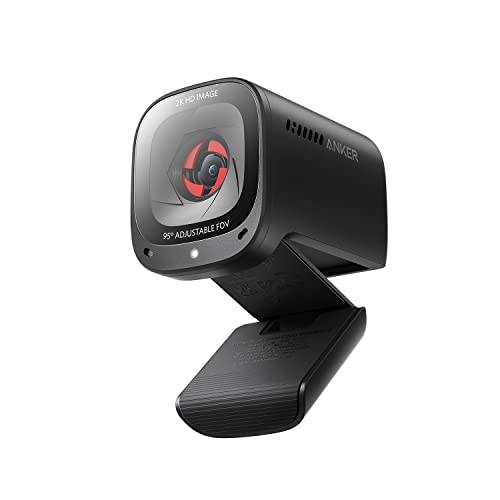
- Best for: MacBook users who want sharper-than-1080p calls without jumping to 4K money.
- Resolution: 2K, up to 2560×1440 at 30 fps
- Autofocus: yes
- Field of view: adjustable 65° / 78° / 95°
- Microphones: AI noise-canceling stereo mics

- Best for: MacBook users who want native USB-C and auto-framing in a modern design.
- Resolution: Full HD 1080p at 30 fps (720p at 60 fps)
- Sensor: 4 MP
- Field of view: adjustable 90° / 78° / 65°
- Framing: auto-framing and Show Mode
All 3 Picks at a Glance
| Product | Specs | Action |
|---|---|---|
| Logitech C920s HD Pro |
| Check price on Amazon |
| Anker PowerConf C200 |
| Check price on Amazon |
| Logitech Brio 500 (Graphite) |
| Check price on Amazon |
Adding a webcam to a MacBook sounds simple until the details bite. Every current MacBook Pro and Air ships with USB-C ports only, macOS gives third-party cameras no driver install and no settings panel, and plenty of well-known webcams are specced for Windows first. The real decision is matching a camera whose own listing states macOS support to the ports on your machine and the calls you make, from FaceTime with family to a day of Zoom and Teams meetings.
The three cameras below were chosen from their Amazon listings, not from spec sheets: each one names Mac or macOS compatibility on its product page, and together they cover the honest sub-4K ladder. There is a proven 1080p default with a privacy shutter, a 2K model with an adjustable field of view for sharper calls, and a 1080p design with auto-framing and a native USB-C cable. Buyers who need true 4K should look at a different shortlist; this one puts Mac fit first.
Our Top Picks
Top 3 picks at a glance
Quick Picks
As an Amazon Associate we earn from qualifying purchases.
| Product | Best for | Key spec |
|---|---|---|
| Logitech C920s HD Pro | The proven plug-and-play default | Full HD 1080p/30 with privacy shutter |
| Anker PowerConf C200 | Sharper calls without going 4K | 2K 2560×1440 at 30 fps |
| Logitech Brio 500 (Graphite) | Native USB-C and auto-framing | 1080p with 90°/78°/65° field of view |
How to Choose
Check the cable against your MacBook’s ports
Port reality decides more MacBook webcam purchases than resolution does. Current MacBook Pro and Air models carry USB-C ports only, so a camera with a USB-A cable cannot plug in directly, however good its sensor is. Two of the cameras here use USB-A cables and need a USB-C hub or adapter between camera and laptop, which is a small cost and one more thing to carry. Only the Brio 500 ships with a USB-C cable and connects natively. Before ordering anything, look at the ports on your own machine and count what the camera’s cable demands.
Match resolution to the apps you actually use
Resolution ladders in this shortlist run 1080p, then 2K, then stop — deliberately. FaceTime, Zoom and Teams all work happily at 1080p, and the C920s and Brio 500 deliver exactly that at 30 frames per second. The Anker C200 steps up to 2560×1440, which buys extra sharpness and cropping headroom on calls that support it. What none of these cameras does is 4K: if your work genuinely needs a 4K sensor, that is a different shortlist of cameras. Choosing inside the sub-4K range keeps the decision honest — you pay for Mac compatibility and call quality, not for a resolution badge your meeting apps may never use.
Pick a field of view that fits your room
Field of view controls how much of the room sits behind you on screen. A narrower angle around 65° frames head and shoulders and hides a messy background, while a wide 90° view suits two people sharing one camera or a presenter who moves around. The C920s sits near 78°, a middle setting that suits most solo desks. Both the C200 and the Brio 500 let you switch between 65°, 78° and wider settings — 95° on the Anker, 90° on the Logitech — so one camera can cover a tight home office and a shared table without being replaced.
Weigh microphones and light correction together
Most laptop rooms fail webcams on sound and light before they fail on pixels. All three cameras here carry dual microphones: the C920s records clear stereo audio, the C200 adds AI noise cancelling for homes with fans, traffic or children nearby, and the Brio 500 uses dual noise-reducing mics. Light handling matters just as much. Each model includes automatic light correction — RightLight 4 on the Brio 500 — which lifts a face sitting against a bright window. If your desk faces poor light, treat correction features as a core spec, not a bonus.
The 3 Best Options
Logitech C920s HD Pro
- Best for: MacBook owners who want the proven plug-and-play default for everyday calls.
- Resolution: Full HD 1080p at 30 fps
- Autofocus: HD autofocus
- Light correction: yes
- Microphones: dual stereo mics
MacBook owners who want the proven plug-and-play default for everyday calls.
the cable is USB-A, so a MacBook with only USB-C ports needs a hub or adapter before this camera can connect at all.
The C920s is the default recommendation for MacBook owners who want a camera that simply works: its listing states Mac among its hardware platforms and names FaceTime alongside Skype, Zoom and Hangouts. You get Full HD 1080p video at 30 frames per second, HD autofocus and light correction, so the picture stays locked and readable through a normal working day. Dual microphones handle stereo audio without a separate mic, and the physical privacy shutter closes over the lens when the calls end — a reassuringly mechanical answer to privacy that software toggles cannot match.
Anker PowerConf C200
- Best for: MacBook users who want sharper-than-1080p calls without jumping to 4K money.
- Resolution: 2K, up to 2560×1440 at 30 fps
- Autofocus: yes
- Field of view: adjustable 65° / 78° / 95°
- Microphones: AI noise-canceling stereo mics
MacBook users who want sharper-than-1080p calls without jumping to 4K money.
this is a 2K camera — if a listing or headline implies 4K, it is describing a different model, so check the resolution line before ordering.
The C200 is the step up for MacBook users who find 1080p soft on larger external monitors. Its listing states macOS 10.11 or later among its supported systems and tops out at 2560×1440 at 30 frames per second — a genuine 2K sensor, not an upscaled badge. The adjustable field of view switches between 65°, 78° and 95°, so the same camera frames a tight solo shot or a wider two-person call. AI noise-canceling stereo microphones suit busy households, low-light correction keeps evening calls presentable, and a built-in privacy cover closes the lens between meetings.
Logitech Brio 500 (Graphite)
- Best for: MacBook users who want native USB-C and auto-framing in a modern design.
- Resolution: Full HD 1080p at 30 fps (720p at 60 fps)
- Sensor: 4 MP
- Field of view: adjustable 90° / 78° / 65°
- Framing: auto-framing and Show Mode
MacBook users who want native USB-C and auto-framing in a modern design.
availability signals for this exact Graphite listing are a few weeks old, so confirm a live featured offer for this exact ASIN before ordering — and check the listing is the Graphite unit, since other colours are sold under separate listings.
The Brio 500 is the modern-design pick, built around how current MacBooks actually connect. It is the only camera here with a USB-C cable, so it plugs straight into a MacBook Pro or Air with no adapter in the chain. The 4 MP sensor delivers Full HD 1080p at 30 frames per second, auto-framing keeps you centred as you shift in your chair, and Show Mode tilts the view down to share sketches or documents on the desk. RightLight 4 corrects harsh backlight automatically, dual noise-reducing mics cover audio, and Logi Tune software runs on macOS for adjustments.
Which One Fits Your Situation
You take calls all day and want zero fuss
Choose the C920s. Its listing names FaceTime, Zoom and macOS outright, the autofocus and light correction need no attention once running, and the physical shutter ends any doubt about whether the camera is off. Just budget for a USB-C hub or adapter, because its USB-A cable is the one piece of friction in an otherwise settled setup.
You present, teach or share a desk with a partner
The C200 and Brio 500 both widen out, but they split on style. The Anker’s 95° setting covers two people at one table and its 2K sensor keeps shared documents legible. The Logitech answers with auto-framing that follows a moving presenter and a Show Mode made for holding work up to the lens. Pick the Anker for width and sharpness, the Logitech for movement.
You travel light with just the MacBook
Take the Brio 500. It is the only camera here that connects over USB-C, so it plugs directly into a MacBook Air in a café or hotel room without a hub riding along in the bag. The rotating privacy cover also travels well, protecting the lens in transit and guaranteeing it is closed when you drop the camera into a pocket.
Your room has difficult light
Any of the three corrects exposure automatically, but the Brio 500’s RightLight 4 is the most deliberate system here, built for faces sitting against bright windows. The C200 counters with low-light correction for evening calls in dim rooms. Match the correction to your problem: backlight by day points to the Logitech, darkness by night points to the Anker.
Common Mistakes
- Buying a webcam whose listing never mentions macOS, then discovering the companion software and controls are Windows-only.
- Forgetting that a USB-A camera cannot plug into a USB-C-only MacBook without a hub or adapter.
- Paying for a 4K camera when your meeting apps and calls run at 1080p anyway.
- Mixing up colour variants at checkout — the Brio 500’s colours are separate listings, and only the Graphite one matches the pick above.
- Leaving the lens uncovered between calls when a physical shutter or rotating cover would settle privacy for good.
Frequently Asked Questions
Do these webcams need drivers on a MacBook?
No. All three are UVC cameras, and macOS handles that class natively, so there is no driver to install — plug the camera in and it appears in FaceTime, Zoom and Teams. Optional software such as Logi Tune, which runs on macOS, only adds settings and framing controls on top of that built-in support.
Will a USB-A webcam work with a MacBook that only has USB-C ports?
Yes, but not directly. The C920s and C200 use USB-A cables, and every current MacBook Pro and Air offers USB-C ports only, so a USB-C hub or a simple adapter has to sit between camera and laptop. Once connected that way, macOS treats the camera exactly as if it were plugged straight in.
Is the Anker C200’s 2K resolution noticeably better than 1080p?
On calls that pass the extra resolution through, yes — 2560×1440 carries visibly more detail than 1920×1080, and the headroom lets you crop tighter without going soft. Many meetings still stream at 1080p, though, so treat 2K as sharper local picture and future headroom rather than a transformation of every call you join.
Which of these cameras connects to a MacBook without any adapter?
Only the Logitech Brio 500. It ships with a USB-C cable and plugs straight into the ports on a current MacBook Pro or Air. The C920s and the Anker C200 both use USB-A connections, so each needs a hub or adapter before a modern MacBook can see it at all.
Related guides
More from Amazon
Programs that pair well with the guide above. Offers and eligibility are set by Amazon and may change.
Free shipping on eligible items, Prime Video and more. Eligible new members can start with a free trial.
Start a Prime free trialAd-free music streaming. Eligible new subscribers can start with a free trial.
Try Music Unlimited freeA Prime membership for ages 18-24 with a trial period. Eligibility is set by Amazon.
See Prime for Young AdultsAudiobooks and podcasts to listen to on the go. Eligible new members can start with a free trial.
Try Audible freeAs an Amazon Associate we earn from qualifying purchases.