When you set up a virtual reality play space in your living room, bedroom, or home office, balancing technical requirements with your home’s visual aesthetic is a constant dance. Meta Quest headsets rely on outward-facing optical sensors to map your room, track controller movements, and maintain hand tracking. However, standard household ambient lighting doesn’t always align with late-night gaming sessions or minimalist interior designs. If you have ever suffered a “tracking lost” error in the middle of a game because a room was too dim—or conversely, felt fatigued by glaring overhead lights turned on late at night—you have encountered the core conflict between room lighting and infrared (IR) light illuminators.
Choosing between an infrared light illuminator vs room lighting for quest tracking comes down to how you use your living space, who shares it with you, and how much visible light pollution you are willing to tolerate. An IR illuminator floods your room with light invisible to the human eye but brightly visible to VR cameras, allowing full tracking in pitch-black conditions. Standard room lighting, on the other hand, utilizes your existing floor lamps, ceiling fixtures, and smart bulbs without adding dedicated tech hardware to your shelving or walls. Here is how both options stack up for home integration, spatial aesthetics, and real-world performance.
As an Amazon Associate we earn from qualifying purchases at no extra cost to you.


Our Top Picks
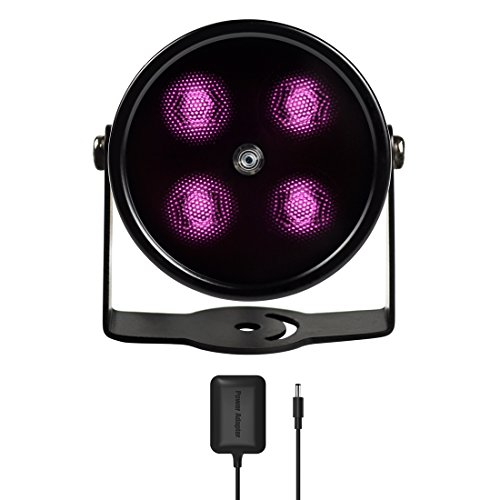

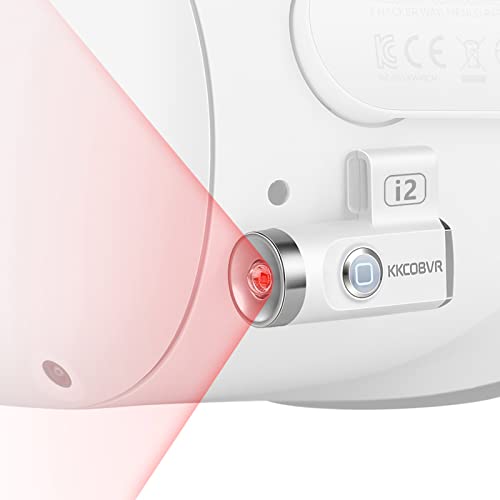
Top 3 picks at a glance
Quick Verdict
For dedicated evening gamers, night owls, and those sharing a bedroom or living space with a partner or sleeping children, an infrared light illuminator is the clear winner. It delivers flawless, high-precision tracking in complete darkness, uses minimal electricity (typically 3W to 10W), and eliminates screen bleed and visible room glare. Compact indoor devices cost between $19 and $26, making them an affordable upgrade to any setup.
For multi-purpose living areas, families with young children or roaming pets, daytime users, and design purists who refuse to add extra black or white plastic boxes to their decor, standard room lighting remains the most practical choice. It costs nothing extra if you already own suitable lamps, supports color pass-through modes on newer headsets, and ensures physical safety by keeping room obstacles visible when you pop your headset off.
Side by Side
| Feature / Attribute | Infrared Light Illuminator | Standard Room Lighting |
|---|---|---|
| Tracking Stability | Exceptional in dark; consistent intensity | Varies with light angle, shadows, and dimmers |
| Visible Light Pollution | None (faint LED indicator glow only) | High (overhead bulbs, lamps illuminated) |
| Price Range | around $19 – around $26 | $0 (existing fixtures) to $150+ (smart lamps) |
| Power Draw | 3 Watt – 10 Watt | 15 Watt – 120 Watt (multi-bulb fixtures) |
| Aesthetic & Look | Requires mounting small tech accessories | Uses existing interior decor and fixtures |
| Space & Footprint | Compact box (2 to 5 inches); needs wall outlet | Zero added footprint |
| Pass-Through Quality | Monochrome / grayscale feed only | Full natural color feed (where supported) |
| Physical Safety | Requires headset removal to see real room | Immediate visible spatial awareness |
| Maintenance | Zero maintenance; plug-and-play | Occasional bulb replacements |
| Best For | Nighttime VR, shared bedrooms, cinema immersion | Daytime play, family rooms, mixed-reality use |
Where Infrared Light Illuminator Wins
Infrared illuminators solve the fundamental flaw of optical tracking: human eyes need visible light to see, but VR tracking cameras only need light within specific electromagnetic wavelengths (typically 850nm). By filling a room with invisible light, an IR illuminator gives the headset’s sensors ideal contrast and spatial depth without turning your cozy, low-lit evening living room into a brightly lit office space.
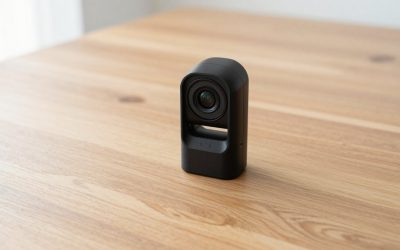
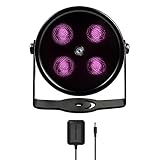
The primary advantage is complete light isolation. If your play area sits in a master bedroom shared with an early-sleeping partner, turning on a ceiling light or floor lamp is out of the question. A dedicated device like the compact Orzero IR Illuminator Infrared Light (available in Black for around $19 or in White for around $25 to blend into lighter trim) projects an intense flood of 850nm IR light across a 15×15 foot play area while keeping the room visually dark. This creates absolute immersion in dark VR games without light leaking around your nose bridge gasket.
From an interior layout standpoint, IR illuminators are tiny. Compact plug-in models such as the KKCOBVR I2 Indoor IR Illuminator (priced at around $19) weigh under 3 ounces and plug directly into wall sockets or power banks, taking up virtually zero visual real estate on your console tables or shelves. For sprawling open-plan spaces, basement home theaters, or wide living rooms up to 80 feet deep, a heavier-duty unit like the Tendelux 80ft IR Illuminator AI4 (around $22) can be hidden behind a sofa or bookshelf, bounced off a white ceiling, and turn an entire floor plan into a zero-light tracking space.
Finally, IR illuminators eliminate dynamic shadow casting. Traditional lamps create moving shadows as your arms swing, which can occasionally confuse Quest optical sensors and lead to hand-tracking drift. Infrared floods provide static, uniform spatial illumination that remains rock-solid regardless of how fast you move.
Where Room Lighting for Quest Tracking Wins
While IR light excels at covert performance, standard room lighting retains several major structural advantages in a lived-in home. The most significant is physical safety and room awareness. When playing active games in a living room, taking off your headset or switching to pass-through mode in a pitch-black room illuminated only by IR light leaves you standing in total darkness. Standard ambient lighting ensures you don’t trip over a coffee table, step on a pet, or knock over a decor vase when step out of your boundary.
Design integration is another area where standard lighting dominates. Adding extra electronic boxes, wall anchors, power bricks, and cable runs works against clean minimalist design. Utilizing existing warm floor lamps, architectural recessed lighting, or smart dimmers keeps your space looking like a curated home rather than a tech lab. As VR software and optical tracking algorithms mature into 2026, headsets are becoming far better at tracking in moderate, warm dim light (around 150 to 300 lux) than previous generations were.
Furthermore, standard lighting is necessary if you frequently use color pass-through for mixed-reality applications. Infrared illuminators project light that VR cameras read in monochrome. Under IR illumination, pass-through mode renders your living room in black and white with high contrast. If you want to view your real-world modern furniture, read phone notifications, or interact with physical objects in natural color while wearing your headset, ambient white room light is essential.
Cost Over 5 Years
Evaluating the financial impact of an infrared illuminator versus standard room lighting involves looking at hardware costs, electricity consumption, and bulb longevity over a 5-year period. Assuming an average power cost of around $0 per kilowatt-hour (kWh) and 2 hours of daily play time (730 hours per year):
Infrared Light Illuminator Setup:
- Initial Hardware: around $19 to around $25 (e.g., Orzero or KKCOBVR indoor models)
- Power Draw: Average 4 Watts (0.004 kW)
- Annual Electricity Cost: 0.004 kW × 730 hrs × around $0 = ~$0 per year
- 5-Year Operating Cost: ~$2
- Total 5-Year Investment: around $22 to around $28
Standard Room Lighting Setup:
- Initial Hardware: $0 (utilizing existing home fixtures)
- Power Draw: Average living room setup (two 10W LED bulbs overhead + one 12W floor lamp = 32 Watts total)
- Annual Electricity Cost: 0.032 kW × 730 hrs × around $0 = ~$3 per year
- Bulb Replacements (5 Years): ~$10 (replacing 1–2 worn LED bulbs)
- Total 5-Year Investment: around $28 to around $48
While the overall cost difference over five years is negligible (a savings of $10 to $20 in favor of IR illuminators due to low power draw), the IR setup requires an upfront hardware purchase, whereas standard lighting utilizes equipment you already own.
Which One for Your Home
Small Apartment / Studio
In a compact apartment where your bedroom, home office, and living room share footprint, light bleed affects everything. An IR illuminator is ideal here. Plugging a small unit into an outlet near your television keeps the rest of the studio dark and comfortable for a partner while giving you 100% tracking precision in a tight space.
Family Home with Kids or Pets
Safety is paramount when children or pets roam the house. Standard room lighting is strongly recommended for family rooms. Playing in pitch darkness with an IR light means that if a dog walks into your guardian play zone or a child drops a toy near your feet, your pass-through view won’t clearly show them in vivid color, and taking the headset off leaves you in total dark. Warm, well-distributed ambient lamp light balances tracking stability with household safety.
Rental Property
Renters often face constraints regarding drilling holes for wall mounts or adding cable management raceways. Plug-and-play IR options like the KKCOBVR I2 mount directly onto existing USB wall blocks without screws or tape. However, if wall outlets are scarce near your play boundary, relying on existing floor lamps and overhead rental fixtures avoids running extra extension cords across walkways.
Dedicated VR Room / Long-Term Home
If you have a dedicated basement play space, bonus room, or home gym, combining both solutions offers the ultimate setup. Install standard dimmable ambient recessed lighting for social gaming and color pass-through, and wall-mount a broad-coverage infrared light (such as the Tendelux 80ft floodlight) wired to a smart switch. This allows you to flick between warm ambient light for casual daytime sessions and invisible IR floodlight for maximum night-time immersion at the touch of a button.
FAQ
Do infrared illuminators cause eye strain or harm pets?
Consumer IR illuminators designed for indoor tracking operate at 850nm or 940nm wavelengths at low power output (typically under 10 Watts). These levels are non-ionizing light equivalent to standard remote controls, spread widely across a room rather than focused into a laser beam. They are harmless to human and animal eyes at typical room distances.
Will an IR illuminator make my Quest pass-through mode full color in the dark?
No. Infrared light operates outside the visible spectrum. Headsets equipped with color pass-through cameras rely on visible RGB light to generate natural colors. When lit solely by an IR illuminator, the camera system defaults to a grayscale, monochrome night-vision view.
Where should I place an IR illuminator for best tracking results?
Place the illuminator at a height of 4 to 6 feet in a corner facing toward the center of your play area, or point it upward toward a white ceiling. Ceiling bouncing diffuses the infrared light evenly across the floor and walls, eliminating harsh shadows and giving your headset’s cameras uniform tracking points.
Can I use an IR illuminator to play VR outdoors at night?
While high-powered IR illuminators like the Tendelux AI4 can flood an outdoor patio or lawn with IR light at night, playing Meta Quest outdoors carries risks. Direct morning or afternoon sunlight can permanently damage the internal lenses and screens of your headset, and uneven outdoor surfaces present tripping hazards. Outdoor IR play should only be attempted in complete nighttime darkness on safe, flat terrain.
Related guides
- Best Free MMOs on Steam: Subscription Limits, Pay-to-Win and Time Cost (2026)
- Best Free Horror Games on Steam: How to Pick One That Fits Your PC and Your Nerves (2026)
- Black Frame Insertion vs VRR: Which Smoothness Feature Should You Use?
- Best Webcams for Streaming: 11 Listings Compared by Resolution, Focus and Light (2026)