
The modern home office is no longer just a temporary workspace carved out of a dining room corner; it has become a permanent, highly curated environment where design meets utility. When organizing your digital life, the physical setup of your workspace matters just as much as the furniture you choose. A cluttered desk with tangles of wires can disrupt your focus and ruin the clean lines of a minimalist room design. Conversely, a completely hidden system might lack the flexibility you need if you frequently move between your living room media center, home office, and backyard patio.
This brings us to a crucial modern dilemma: choosing an internal m2 ssd vs external usb solid state drive. While both options offer incredibly fast solid-state storage, they serve entirely different lifestyles, aesthetic preferences, and physical desk layouts. Deciding between them requires balancing pure performance and structural permanence against portability, ease of use, and physical safety in a busy household.
As an Amazon Associate we earn from qualifying purchases at no extra cost to you.




Our Top Picks


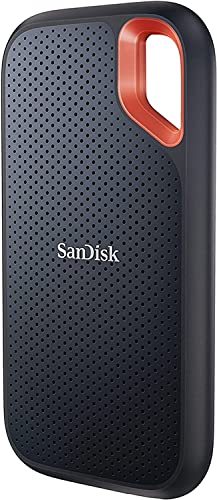
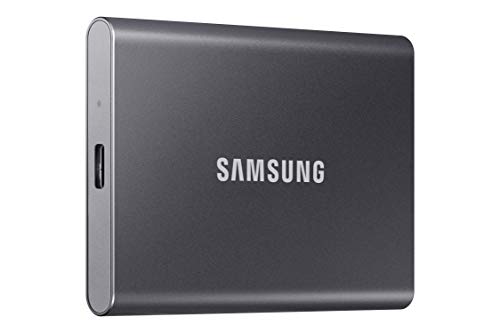
Top 3 picks at a glance
Quick Verdict
For a permanent home office desk setup where speed, zero desk clutter, and safety from physical spills are the top priorities, the internal M.2 SSD is the clear winner. It hides completely inside your computer chassis, draws power directly from the motherboard, and delivers unmatched transfer speeds. However, if you live a dynamic lifestyle, share files among family members, use multiple devices like laptops and tablets, or dread the idea of opening up computer hardware, the external USB solid-state drive is the superior, plug-and-play choice.
Side by Side
To help you visualize how these two storage styles fit into your home, here is a direct comparison of their physical, practical, and economic characteristics:
| Feature | Internal M.2 SSD | External USB Solid State Drive |
|---|---|---|
| Comfort & Usability | Set-and-forget; requires initial hardware installation but zero daily interaction. | Plug-and-play; easy to plug into any device but requires physical handling. |
| Durability | Extremely high; protected inside the computer case from dust, drops, and spills. | Variable; prone to drops, cable wear, and port damage, though rugged models exist. |
| Price Range | $80 to $400+ depending on generation (PCIe 4.0 vs. PCIe 5.0) and capacity. | $70 to $300+ depending on capacity and ruggedization ratings. |
| Maintenance | Virtually zero; occasional firmware updates via software. | Low; requires keeping track of cables and cleaning physical connection ports. |
| Space Needed | Zero desk space; fits directly onto the motherboard (22mm x 80mm footprint). | Small desk footprint; requires a flat surface and a connecting USB cable. |
| Look & Aesthetics | Invisible; perfect for minimalist, cable-free design schemes. | Visible; adds a small device and cable to your desktop surface. |
| Resale Value | Moderate; typically sold as part of a complete computer system upgrade. | High; easy to wipe clean and sell individually as a universal accessory. |
| Best For | Dedicated desktop PCs, high-end gaming consoles, and permanent home offices. | Laptops, multi-device households, creative professionals, and students. |
Where Internal M2 Ssd Wins
The internal M.2 SSD is the ultimate choice for those who view their home office as a sanctuary of productivity and clean design. Because these drives mount directly onto your computer’s motherboard, they require absolutely no desk space, no extra power cables, and no dangling cords. The standard M.2 2280 form factor measures a mere 22mm wide by 80mm long and weighs less than 10 grams, meaning it integrates seamlessly into your system without altering your room’s visual layout.
From a performance perspective, internal drives are unmatched. By utilizing the motherboard’s PCIe lanes, they achieve speeds that external drives simply cannot match due to USB port bottlenecks. For instance, the high-performance Samsung SSD 990 PRO 2TB, PCIe 4.0 M.2 2280, Up to 7,450 MB/s (priced at around $390) delivers blazing-fast load times for creative projects and gaming. If you want to future-proof your home workstation with the absolute latest technology, the state-of-the-art Samsung SSD 9100 PRO 2TB, PCIe 5.0×4 M.2 2280, Up to 14,700MB/s (priced at around $400) offers double those speeds, making light work of massive 8K video rendering or heavy local data archiving.
Another major advantage is safety. Tucked safely inside a computer tower or console chassis, an internal drive is completely immune to the everyday hazards of a busy home. It cannot be knocked off a desk by a curious cat, stepped on by a child, or ruined by a spilled cup of coffee. It also operates efficiently, drawing a modest 3 to 9 Watts of power directly from your system’s power supply, meaning it does not contribute to a mess of wall adapters under your desk.
Where External Usb Solid State Drive Wins
While internal drives excel in permanent, high-performance setups, the external USB solid-state drive wins on sheer versatility, convenience, and ease of deployment. Not everyone wants to grab a screwdriver, static wrist strap, and thermal pads to upgrade their computer’s storage. An external drive offers instant gratification: you simply plug it into a open USB-C or USB-A port, and your storage expands immediately.
This portability is incredibly valuable for dynamic households. If you like to work from the kitchen island in the morning, move to the dedicated desk in the afternoon, and then stream a movie in the living room at night, an external drive travels with you effortlessly. A drive like the Samsung T7 Portable SSD 1TB Titan Gray, USB 3.2 Gen 2, Up to 1,050MB/s (priced at around $230) weighs only about 2 ounces and has a sleek, compact footprint resembling a stack of credit cards. It slips easily into a pocket or desk drawer when not in use, preserving your home’s tidy aesthetic.
Furthermore, external drives are built to withstand the realities of an active home and travel life. The ruggedized Sandisk 2TB Extreme Portable SSD, Up to 1050MB/s, USB-C, USB 3.2 Gen 2, IP65 Water and Dust Resistance, Updated Firmware, External Solid State Drive, SDSSDE61-2T00-G25 (priced at around $290) features a durable silicone shell that offers drop protection up to three meters and resistance to dust and water splashes. This makes it perfect for households with active kids, pets, or for those who like to work outdoors on the patio where dust and sudden rain showers are constant threats.
Cost Over 5 Years
When investing in home technology, it is wise to look past the initial purchase price and calculate the total cost of ownership over a five-year lifecycle. This period typically aligns with the standard warranty length for premium solid-state storage.
An internal M.2 SSD generally offers better long-term financial value per gigabyte, especially when looking at high-end PCIe options. Because internal drives are shielded from physical impacts, temperature swings, and moisture, they rarely fail due to physical accidents. The structural components on the motherboard protect the drive’s delicate controller and NAND flash memory. Over five years, your main cost is simply the initial purchase price of $100 to $400. The drive will likely outlast the computer it was originally installed in, allowing you to transfer it to a new desktop build in the future.
An external USB solid-state drive, while often cheaper upfront for mid-tier speeds, can accumulate hidden costs over five years. The physical USB-C ports on external drives can loosen over time with repeated plugging and unplugging. Connecting cables can fray or get lost, requiring replacements that cost $10 to $25. Additionally, because they sit openly on desks or travel in bags, external drives face a higher risk of physical loss, theft, or catastrophic damage from drops and spills. If an unprotected external drive fails due to a hard drop, you lose not only the hardware investment but also potentially priceless family photos or critical work documents, making the true cost of failure incredibly high.
Which One for Your Home
Small Apartment
In a small apartment or studio, every square inch of tabletop space is premium real estate. A cluttered desk makes the entire living area feel disorganized. For this living scenario, an internal M.2 SSD is highly recommended. It keeps your workspace entirely clean, cable-free, and visually quiet. You can opt for a ultra-compact desktop PC or a clean console setup that sits tucked away on a shelf, with all storage safely contained inside.
Family with Kids and Pets
A busy home filled with energetic children and pets is a zone of unpredictable chaos. Wires dangling from a desk are tempting toys for cats, while external drives left on a coffee table are easily swept away by a wagging dog tail or covered in spilled juice. In this environment, the internal M.2 SSD is the safest choice. It remains locked inside your computer’s case, safe from physical hazards and curious hands.
Rental Home
If you live in a rental home, you might move every year or two. Your desk setup needs to be highly adaptable to different room layouts and lighting situations. An external USB solid-state drive shines here. It allows you to quickly pack up your digital files, unplug your workspace, and re-establish your home office in a new apartment without having to disassemble your computer tower or transport delicate internal components loose.
Long-Term Home
For those living in a long-term, stable home with a dedicated, custom-built home office, the internal M.2 SSD is the premier choice. It allows you to build a high-performance, permanent workstation with integrated cable management channels behind your desk. Looking forward to 2026, our home networks and local storage setups must handle larger 8K media files and complex smart home backups; a fast, permanent internal drive ensures your primary workstation is always ready for heavy-duty tasks.
FAQ
Can I turn an internal M.2 SSD into an external drive?
Yes, you can purchase an external M.2 NVMe enclosure separately. By installing an internal M.2 drive inside the enclosure, you can connect it to your computer via a USB port. While this offers great flexibility, the drive’s transfer speeds will still be limited by the maximum speed of the USB port and the enclosure’s controller chip.
Do internal M.2 SSDs run hotter than external SSDs?
Internal M.2 SSDs, especially fast PCIe 4.0 and 5.0 models, can generate significant heat under heavy workloads. They rely on the computer’s internal airflow and metal heatsinks to stay cool. External SSDs generally run cooler because they operate at lower speeds, though their protective silicone or aluminum casings are designed to dissipate heat safely to the touch.
Can I use an external USB SSD to expand my PS5 storage?
You can use an external USB SSD to store and play PlayStation 4 games, or to store (but not play) PlayStation 5 games. To play PlayStation 5 games directly from expanded storage, you must install a compatible internal M.2 NVMe SSD that meets Sony’s specific speed and heatsink requirements directly into the console’s internal expansion slot.
How much power do external SSDs draw from a laptop?
External USB SSDs typically draw between 2 to 5 Watts of power directly from your laptop’s USB port during active read and write cycles. While this is highly efficient, keeping multiple external drives connected simultaneously can drain your laptop’s battery faster when working away from a wall outlet.
Related guides
- Best Free MMOs on Steam: Subscription Limits, Pay-to-Win and Time Cost (2026)
- Best Free Horror Games on Steam: How to Pick One That Fits Your PC and Your Nerves (2026)
- Black Frame Insertion vs VRR: Which Smoothness Feature Should You Use?
- Best Webcams for Streaming: 11 Listings Compared by Resolution, Focus and Light (2026)








