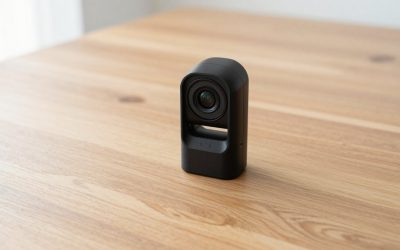
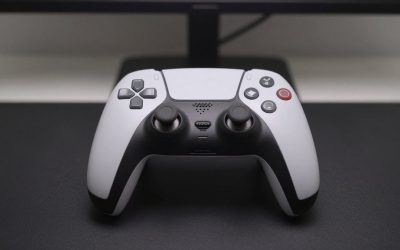
Letting technology seamlessly blend into our living spaces is the ultimate goal of modern home design. Between smart home consoles, streaming hubs, and dedicated gaming setups, controllers have become as ubiquitous on our coffee tables as coasters and art books. Yet, anyone who has spent an evening trying to navigate a media menu or play a game only to watch the on-screen cursor slowly drift to the left knows the sheer frustration of hardware wear-and-tear.
When choosing devices for your living room media center, smart home interface, or gaming den, you will inevitably face a core engineering choice: **hall effect sensors vs potentiometer joysticks for controllers**. This decision directly impacts how long your devices will last, how often you will need to perform tedious maintenance on your living room rug, and whether you will be replacing expensive hardware every year. Understanding this technology ensures your home entertainment setup remains a stress-free sanctuary rather than a source of constant maintenance.
Our Top Picks


Top 3 picks at a glance
Quick Verdict
For a busy household seeking a “set-and-forget” solution, Hall Effect sensors are the undisputed winner. Because they use contact-free magnetic fields to register movement, they are immune to physical wear and the dreaded “stick drift” caused by dust, pet dander, and spill residue. However, if you are a dedicated DIY enthusiast who enjoys maintaining your own gear, or if you prefer a traditional, highly tactile resistance for precise home automation dials, classic potentiometer joysticks remain a highly repairable and cost-effective choice.
Side by Side
To help you visualize how these two technologies integrate into your daily home life, here is a direct comparison of their key performance, maintenance, and design characteristics:
As an Amazon Associate we earn from qualifying purchases at no extra cost to you.



| Feature | Hall Effect Sensors | Potentiometer Joysticks |
|---|---|---|
| Comfort & Tactile Feel | Ultra-smooth, frictionless glide; light tension. | Traditional physical resistance; satisfying mechanical “snap.” |
| Durability & Lifespan | Virtually infinite (up to 10 million+ cycles); no physical wear. | Finite (approx. 1 to 2 million cycles); degrades over time. |
| Price Range (Individual Components) | around $5 to around $15 per module. | around $1 to around $8 per module. |
| Maintenance | None required; sealed against dust and pet hair. | Requires periodic cleaning with contact cleaner; prone to dust build-up. |
| Space Needed (Internal) | Slightly larger footprint due to magnet clearance (approx. 15mm x 15mm). | Compact, highly standardized footprint (approx. 12mm x 12mm). |
| Aesthetic Integration | Found in premium, sleek, modern minimalist controllers. | Found in standard, widely available, budget-friendly controllers. |
| Resale Value of Device | High; holds value well because the sticks do not degrade. | Moderate to low; buyers worry about pre-existing stick drift. |
| Best For | High-traffic family rooms, dusty homes, and longevity-focused buyers. | Budget setups, retro gaming, and DIY home repair enthusiasts. |
Where Hall Effect Sensors Wins
The magic of Hall Effect technology lies in its physics. Instead of relying on two surfaces rubbing together to measure an electrical charge, Hall Effect sensors use a permanent magnet and a semiconductor sensor. As you tilt the joystick, the distance between the magnet and the sensor changes, altering the voltage of the magnetic field. This contact-free design brings massive benefits to the home environment.
First and foremost, Hall Effect sensors are practically immune to physical wear. In a home with pets, children, or open windows that let in pollen and dust, standard joysticks act like magnets for debris. When dust settles inside a Hall Effect sensor, it has zero impact on performance because there are no electrical contacts to block. This makes them exceptionally reliable for smart home control panels that sit on a kitchen counter or living room side table where crumbs and spills are inevitable.
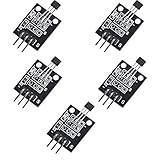
For those who love custom electronics or building their own smart home hubs, individual components are incredibly cheap and accessible. For instance, you can source the ALLECIN 20Pcs A3144 3144 Hall Effect Sensor OH3144 AH3144E 3Pins Magnetic Detector (around $6) to build custom magnetic lid switches or security sensors for your doors. If you are prototyping a smart-car garage sensor or a custom media dial on a breadboard, the HiLetgo 5pcs Hall Effect Magnetic Sensor Module 3144E A3144 Hall Effect Sensor DC 5V for Arduino PIC AVR Smart Cars (around $5) offers an easy, plug-and-play solution that brings the same drift-free magnetic technology to your custom home automation projects.
Where Potentiometer Joysticks for Controllers Wins
Despite the rising popularity of magnetic sensors, potentiometer joysticks remain the industry standard for a reason. A potentiometer uses a tiny, physical metal brush (wiper) that slides across a resistive track (usually made of carbon) to determine the stick’s position. This physical contact creates a natural, subtle resistance that many users prefer. It feels grounded, weighted, and familiar.
The primary advantage of potentiometers is their sheer ubiquity and ease of repair. If you own a premium console controller that has started to drift, you do not have to throw the entire device away. You can easily purchase a repair kit like the Mcbazel 10Pcs 2K3 Ohm Potentiometer Replacement for PS5 Dual Sense Controller, Trimmer Potentiometer Sensor Module for ALPS Analog Joystick, Includes Open Tool Kit for Repair (around $7). For less than eight dollars, you can sit down at your kitchen table, open up your controller, swap out the worn-down carbon tracks, and instantly restore your device to brand-new condition. This level of repairability is highly valued in eco-conscious, sustainable homes.
Furthermore, for specialized home installations—such as controlling a motorized pan-tilt-zoom (PTZ) security camera or a custom home theater AV rack—heavy-duty industrial potentiometers are unmatched. A robust component like the Acxico 1Pcs Joystick Potentiometer JH-D202X-R2/R4 5K 10K ohm 2-axis Sealed PTZ Thermistor (around $13) provides a rugged, sealed, physical control system that feels substantial in the hand and offers precise, tactile feedback that digital magnetic sensors sometimes struggle to replicate.
Cost Over 5 Years
When decorating or equipping a home, we must look at the total cost of ownership rather than just the initial price tag. While a controller featuring Hall Effect sensors might cost more upfront, its long-term value in a busy household is undeniable.
- The Potentiometer Path: A standard, high-quality potentiometer controller typically costs around $60. In an active household, heavy use will likely cause stick drift within 18 to 24 months. If you do not know how to solder, you will end up replacing the controller entirely. Over five years, you may easily purchase three controllers, bringing your total cost to . Even if you choose to repair them yourself using inexpensive parts, you are still spending your valuable weekend time performing meticulous soldering work.
- The Hall Effect Path: A premium controller equipped with Hall Effect sensors generally ranges from around $80 to around $150. Because these magnetic sensors do not wear down, a single controller can easily last five years or more without a single dip in performance. Your total cost over five years remains a flat around $80 to around $150, with zero maintenance hours logged.
Which One for Your Home
Every living space has its own unique rhythm, traffic patterns, and environmental challenges. Here is how to decide which technology matches your specific household dynamic.
Small Apartment
In a cozy, small apartment, multi-use devices are king. Your media controller likely sits on the coffee table, doubling as a remote for your smart TV, your streaming apps, and your gaming console. Because space is limited, you want a single, high-quality controller that can do it all without cluttering your entertainment console with spare parts and repair kits. A Hall Effect controller is ideal here; it is reliable, sleek, and ensures that when you invite friends over for a movie or game night, your controller works flawlessly without embarrassing drift.
Family with Kids and Pets
If your home is filled with children, dogs, or cats, your electronics are constantly under siege. Pet hair drifts through the air and settles into small crevices, while sticky fingers can ruin delicate internal contacts. Standard potentiometers quickly fail under these conditions as hair and grime get ground into the physical resistive tracks. For a chaotic, joyful family home, Hall Effect sensors are a necessity. Their sealed, non-contact design means they will survive dropped controllers, pet dander, and years of enthusiastic play.
Rental
Renters often look for portable, highly adaptable entertainment setups that can easily pack up and move from one apartment to the next. If you are renting, you might not want to invest heavily in permanent smart-home control panels. Standard potentiometer controllers are highly practical here. They are cheap, easy to replace if lost during a move, and widely compatible with almost any device you plug into your temporary entertainment center.
Long-Term Home
For those establishing a permanent residence, the focus shifts to high-end integration, premium finishes, and absolute reliability. As we look toward 2026, the consolidation of home entertainment and smart home automation means your control interfaces will likely be built directly into your custom cabinetry, home theater seating, or bedside tables. In a permanent, long-term home, you should always opt for Hall Effect sensors. They offer a premium, smooth tactile feel that matches the luxury of a custom home, and they guarantee you won’t have to tear apart your custom-built media furniture to replace a drifting joystick a year down the road.
FAQ
What causes joystick drift in standard controllers?
Joystick drift in standard potentiometer controllers is caused by physical friction. Every time you move the stick, a tiny metal brush scrapes across a carbon track. Over time, this scraping wears away the carbon, creating microscopic debris. This debris, combined with household dust and pet hair, interferes with the electrical signal, causing the controller to think the stick is moving even when your hands are off it.
Can I upgrade my existing controller to Hall Effect sensors?
Yes, but it requires advanced DIY skills. You must disassemble your controller, de-solder the existing potentiometer modules from the motherboard, and solder in compatible Hall Effect replacement joysticks. After installation, you will also need to calibrate the magnets to ensure a perfect center point. For most homeowners, purchasing a pre-built Hall Effect controller is much easier.
Do Hall Effect controllers feel different to play with?
Many users describe Hall Effect joysticks as feeling “smoother” and “lighter” because there is no physical rubbing inside the sensor mechanism. However, the spring tension that snaps the stick back to the center is what determines the physical resistance. High-quality Hall Effect controllers use premium springs to mimic the exact weight and feel of traditional controllers, so the adjustment period is virtually instant.
Which sensor type is better for smart home control panels?
For smart home panels, wall-mounted dials, or custom thermostats, Hall Effect sensors are vastly superior. These devices often sit idle for long periods, collecting settling household dust. A potentiometer in a wall panel can become scratchy and unresponsive over time due to dust buildup, whereas a magnetic Hall Effect dial will remain perfectly smooth and accurate for decades.
Related guides
- Best Free MMOs on Steam: Subscription Limits, Pay-to-Win and Time Cost (2026)
- Best Free Horror Games on Steam: How to Pick One That Fits Your PC and Your Nerves (2026)
- Black Frame Insertion vs VRR: Which Smoothness Feature Should You Use?
- Best Webcams for Streaming: 11 Listings Compared by Resolution, Focus and Light (2026)