
A drone shoot fills up, a game library needs a second drive, or a camera dump requires a reader that actually works with your laptop’s port situation — the moment you need an external SD card reader is always inconvenient, and buying the wrong one makes it worse. The category is deceptively simple: you plug a card in, you read files. But in practice, compatibility issues, slot limitations, cable or no-cable design choices, and build quality create a wide gap between the options.
This roundup compares eight affordable options using published specifications, listed prices, and aggregate owner feedback to help you identify which external SD card reader fits your setup. The good ones deliver reliable connections across multiple card formats, match your host device’s ports without adapters, and avoid the firmware glitches that plague no-name units. The bad ones fail on hot-plugging, limit you to one card format, or simply die after a few months of regular use. Below, we break down where each product lands.
As an Amazon Associate we earn from qualifying purchases at no extra cost to you. Product prices and availability are accurate as of the date shown and are subject to change.




Top 3 picks at a glance
Quick Picks
| Product | Best for | Price |
|---|---|---|
| SmartQ C368 | Multi-format flexibility on a budget | $7.99 |
| acer USB-C Dual Slots | USB-C laptops and phones | $9.99 |
| Acer USB-A 3.0 Aluminum | Desktop users who want durability | $14.99 |
| BENFEI 4in1 | Reading four cards at once | $9.49 |
| Anker USB-C Dual Slots | Travel-ready compact setup | $9.99 |
| Wansurs 2-in-1 | Absolute lowest cost | $4.98 |
| 5-in-1 USB-C & USB | iPhone and iPad users | $8.99 |
| SD Card Reader for iPhone 17/16/15 | Apple ecosystem without a dongle | $9.99 |
How We Picked
We filtered these eight readers on four criteria: card-format breadth (does it handle SD, MicroSD, and beyond?), host-port compatibility (USB-A, USB-C, or both?), simultaneous multi-card capability (a real differentiator for photographers who shoot with two slots), and build or design quality reflected in owner reviews. Price was a tiebreaker, not a selection filter — meaning we included the cheapest option and the most expensive because each serves a distinct buyer.
The 8 Best External Sd Card Reader in 2026
SmartQ C368 USB 3.0
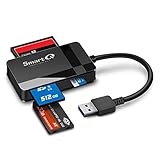
This is the reader for people who refuse to own four different adapters. It accepts SD, Micro SD, MS, and CF cards in one compact body, all via a single USB 3.0 plug with no drivers required. Owners consistently praise the plug-and-play experience across Apple and Windows machines, which eliminates the compatibility roulette that cheaper readers play.
- Pro: Four card formats in one unit, covering legacy CF and MS alongside SD and MicroSD.
- Pro: Works out of the box on both macOS and Windows with zero setup.
- Con: No USB-C option, so newer laptops need a separate dongle.
Skip this if your only host devices have USB-C ports and you cannot be bothered with an adapter.
acer USB-C Dual Slots
Designed for the USB-C world, this adapter plugs directly into a Type-C port on a phone, tablet, or laptop and exposes two Micro SD slots. It is a no-cable design, which means it stays compact and does not dangle or snap off in a bag. Owner feedback highlights reliable detection on Android phones and iPads, making it a solid choice for people who offload dashcam footage or expand a handheld gaming device on the go.
- Pro: Cable-free design keeps the footprint small and snag-free.
- Pro: Dual Micro SD slots let you compare or merge card contents in one pass.
- Con: MicroSD only — no full-size SD support.
Skip this if you shoot with standard SD cards in a camera.
Acer USB-A 3.0 Aluminum
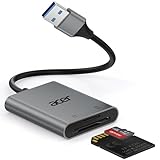
The aluminum shell sets this apart from the plastic competition at a similar price tier. It reads Micro SD cards over a USB-A 3.0 connection, and the metal body dissipates heat during long transfers, a point owners bring up repeatedly when comparing it to their previous plastic readers. The trade-off is a higher price and USB-A-only connectivity.
- Pro: Aluminum chassis resists flex and runs cooler under sustained load.
- Pro: Compact form factor suits a desktop drawer or a tech kit.
- Con: No USB-C path, and it only handles Micro SD, not full-size SD.
Skip this if you need a full-size SD slot or USB-C connectivity.
BENFEI 4in1 USB 3.0 and USB-C
This reader handles four card types (SD, Micro SD, MS, CF) and, critically, reads and writes all four simultaneously. For wedding photographers or anyone dumping a two-card backup setup, that single-pass workflow saves real time. It includes both USB-A and USB-C connectors, and owner reviews confirm native support on iPhone 15 series devices and MacBook Pro or Air models with M-series chips without needing a Lightning adapter.
- Pro: True simultaneous multi-card read and write across four formats.
- Pro: Dual USB-A and USB-C connectors eliminate the adapter problem.
- Con: The cable-based design is bulkier in a travel bag than plug-in options.
Skip this if you carry only one card format and want the smallest possible reader.
Anker USB-C Dual Slots
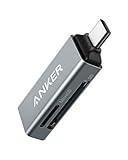
Anker’s take on the compact dual-slot formula mirrors the acer USB-C adapter above: two Micro SD slots, cable-free Type-C plug. Anker’s reputation for consistent build quality and reliable controller chips shows up in long-term owner reports that mention fewer disconnects and faster mount times than generic alternatives. It pairs naturally with modern phones and laptops that dropped USB-A entirely.
- Pro: Trusted brand with fewer reported connection drops than no-name equivalents.
- Pro: Ultra-compact, pocket-sized form factor.
- Con: MicroSD only — no full-size SD support.
Skip this if you regularly transfer from full-size SD or CF cards.
Wansurs 2-in-1 USB 3.0
At under five dollars, this is the floor of the category. It handles SDXC, SDHC, MMC, RS-MMC, Micro SDXC, Micro SD, Micro SDHC, and UHS-I cards over a USB 3.0 5Gbps link in a single compact adapter. Owner feedback confirms it does what it claims for basic file transfers, though the absence of USB-C and the generic build mean it is a utility part rather than a daily carry item.
- Pro: Widest card-format list in this roundup at the lowest price.
- Pro: 5Gbps USB 3.0 rated transfer speed on paper.
- Con: Plastic housing and no USB-C option limit long-term durability.
Skip this if you need something that survives frequent pocket or backpack use.
5-in-1 USB-C and USB Card Adapter
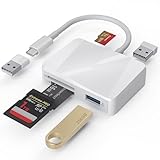
This white multi-port unit combines SD, MicroSD, and MS card reading with two USB-A ports in a single hub, all accessible via USB-C. It is marketed toward iPhone 17, 16, and 15 Pro Max owners who want to pull files off a camera card directly into the phone without a computer in the loop. Owners on iPad and MacBook M4 or M3 machines also report smooth integration. The extra USB-A ports add value for people connecting a keyboard or flash drive simultaneously.
- Pro: Functions as both a card reader and a small USB hub.
- Pro: Explicit Apple compatibility across iPhone and iPad lines.
- Con: More ports means a larger footprint than dedicated single-slot readers.
Skip this if you want the smallest possible reader for one card format.
SD Card Reader for iPhone 17/16/15 Pro Max and Android
This reader targets the specific use case of transferring camera files to a smartphone or tablet with no intermediary computer. It works across iPhone 17, 16, and 15 Pro Max via USB-C, and extends to iPad, MacBook, and Android phones. Owners highlight the simplicity of the workflow: plug the reader into the phone, insert the card, and files appear in the Photos or Files app. Build quality is adequate but unremarkable at this price.
- Pro: Direct-to-phone workflow eliminates the laptop step entirely.
- Pro: Broad device support across Apple and Android ecosystems.
- Con: Lacks simultaneous multi-card capability and premium materials.
Skip this if you need to offload two or more cards at once in a professional shooting session.
Buying Guide
Match the Connector to Your Host Device
Before anything else, confirm whether your primary device has USB-A, USB-C, or both. A reader with the wrong connector turns a plug-and-play experience into a dongle chain. If you own an iPhone 15 or newer, a MacBook with M-series silicon, or a recent Android phone, USB-C is the native path. Desktop towers and older laptops still carry USB-A, making the SmartQ or Acer Aluminum practical picks. Dual-connector readers like the BENFEI cover both without compromise.
Card Format Coverage Determines Versatility
A MicroSD-only adapter cannot help you when you pull a full-size SD out of a camera. If you shoot with a DSLR or mirrorless body that uses SD or CF, you need a reader that explicitly lists those formats. Multi-format units handle SD, MicroSD, CF, and MS simultaneously, which is relevant for people who own older gear or need to ingest mixed media. Count the formats you actually use monthly and buy for the widest set your budget allows.
Simultaneous Read and Write Matters for Professionals
Most budget readers let you insert multiple cards but only read one at a time, or they mount sequentially. If you shoot events and fill two slots in burst mode, a reader that truly reads and writes all inserted cards simultaneously — like the BENFEI 4in1 — cuts your offload time in half compared to a single-slot reader. Hobbyists who dump one card after a session will not notice the difference, but anyone managing dozens of cards per shoot will.
Our Verdict
The BENFEI 4in1 is the top pick overall: it covers four card formats, includes both USB-A and USB-C, reads simultaneously, and works natively with iPhone 15 and newer, MacBook, and Windows machines — all at $9.49. For a budget slot, the Wansurs 2-in-1 at $4.98 covers more card formats than anything else under ten dollars and is a reliable backup if you want to avoid spending more on a secondary reader. The condition that changes the winner: if you exclusively use a USB-C phone or tablet and only handle MicroSD cards, the Anker Dual Slots beats the BENFEI on portability because it has no cable at all.
FAQ
Do I need an external SD card reader if my laptop has a built-in slot?
A built-in slot saves you one purchase but often handles only one format and can wear out over years of use. An external reader gives you redundancy, multi-format support, and the ability to read cards on devices that lack a slot entirely, such as most modern ultrabooks and phones.
Can an external SD card reader work on iPhone?
Yes, as long as your iPhone model has a USB-C port (iPhone 15 and later). Readers that explicitly list iPhone compatibility and use USB-C will mount the card directly in the Files app without a Lightning adapter, which is necessary only for older models.
Why does my card reader show the card but not read files?
This usually indicates a file system your OS does not natively support, such as exFAT or a proprietary format used by certain cameras. Reformatting the card to a supported file system or installing a companion utility typically resolves the issue without replacing the reader.
Is USB 3.0 speed actually noticeable with SD cards?
For small transfers like documents or a few photos, the difference between USB 2.0 and 3.0 is negligible. For video files or full-card dumps from high-resolution cameras, USB 3.0 5Gbps readers remove the host bottleneck so the card’s own write or read speed becomes the limiting factor rather than the connection.


