Our Top Picks
 Cocktail Kingdom® Yarai® Mixing Glass 500ml16.9 Ounces3.5 x 3.5 x 5.25 Inches2.5 PoundsCheck on Amazon
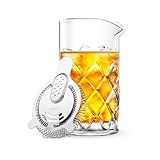
 Final Touch Yarai Mixing Glass & Hawthorne Strainer20.2 Ounces (Pack of 2)1.98 PoundsCheck on Amazon
Best Yarai Mixing Glasses for Stirred Cocktails
The best yarai mixing glass for most home bars is a heavy, 500–700 ml cut-glass model with a thick base, a controlled pouring spout, and a pattern that does not hide the dilution level. Size matters more than decoration: a glass that is too small encourages splashing, while an oversized one makes a two-drink batch unnecessarily awkward to stir and pour.
Quick comparison
| Yarai mixing-glass type | Typical capacity | Approximate empty weight | Best for | Main compromise |
|---|---|---|---|---|
| Compact cut-glass glass | 350–450 ml | 450–700 g | One stirred cocktail at a time | Limited room for ice and a long bar spoon |
| Standard 500 ml Yarai glass | 500 ml | 600–900 g | Most home bars | May be tight for two large drinks |
| Large professional-style glass | 650–750 ml | 800–1,200 g | Two cocktails or large ice | Heavier and less efficient for single servings |
| Thin-wall patterned glass | 500–700 ml | 350–650 g | Lower-cost occasional use | Less resistant to knocks and thermal shock |
Capacity figures describe the vessel to its rim, not a sensible working fill. A practical stirred cocktail uses roughly 180–250 ml of liquid and dilution combined, plus enough ice to leave room for circulation. That is why a 500 ml glass is usually more useful than its name suggests.
As an Amazon Associate we earn from qualifying purchases at no extra cost to you.

Best choices by home-bar situation
| Your situation | Best specification | Why it fits |
|---|---|---|
| You normally make one Martini or Manhattan | 450–550 ml, thick base, moderate Yarai cut | Enough space for ice movement without wasting liquid in a large bowl |
| You often make two drinks | 650–750 ml, wide opening, strong spout | Allows two servings of ice to rotate without spilling |
| You have limited storage | 350–450 ml, compact footprint | Easier to store, but requires more careful stirring |
| You value pouring precision | Clearly defined spout and medium-thick rim | Reduces drips and makes equal pours easier |
| You are buying for frequent use | Heavy base, thick walls, dishwasher-safe construction if stated | Better resistance to knocks, though hand-washing is still gentler |
1. Best all-rounder: a 500 ml Yarai mixing glass
A standard 500 ml Yarai mixing glass is the safest recommendation for most home bars. This size accommodates a single cocktail with a generous amount of ice and can handle a smaller two-drink batch if the ice is not excessively large.
Look for a flat, weighted base rather than a very narrow foot. During stirring, the glass should stay planted while the spoon travels around the outside of the ice. A heavy base also helps when pouring: you can hold the vessel near its center instead of gripping it tightly by the rim.
The traditional diamond or crosshatch cut improves grip, but an extremely deep pattern can make it difficult to judge the liquid level. A medium-depth pattern is the better compromise. It gives the glass its Yarai appearance without turning the outside into a visual barrier.
2. Best for two cocktails: a 650–750 ml large Yarai glass
Choose a larger model if you regularly prepare two Manhattans, Martinis, Negronis, or similar drinks together. The additional capacity is useful only when the bowl is wide enough for the ice to rotate. A tall, narrow 700 ml glass may hold more liquid but can feel less controlled than a shorter, wider 500 ml design.
For a two-drink batch, start with approximately 120–150 ml of combined spirits and modifiers, then add ice. After stirring and dilution, the liquid may reach about 180–220 ml. The remaining space is not wasted: it prevents ice from riding over the rim while the spoon moves.
A large glass is less attractive for single drinks because it usually needs more ice to achieve efficient chilling. If you use only a few cubes in a big bowl, they can skid around rather than form a stable mass, making stirring noisier and less controlled.
3. Best for pouring control: a moderate-cut glass with a pronounced spout
Pouring control depends more on the lip than on the Yarai pattern. A good spout should create a narrow, continuous stream when the glass is tilted slowly. A blunt or uneven lip can cause the drink to run down the outside, particularly when the glass is cold and wet.
Check the transition between the bowl and spout. The best designs keep that area relatively smooth, so liquid does not collect in the cut pattern and drip after the main pour. A deep decorative pattern directly under the lip looks attractive but can make clean pouring harder.
For equal pours, use this simple method:
- Stir until the drink is chilled and diluted to your recipe.
- Pause for two seconds so liquid running down the inside wall can settle.
- Place the spout at the center of the first glass and pour at a steady angle.
- Fill each glass halfway, alternate between them, then complete both pours.
Alternating pours compensates for the small amount of liquid that remains around the ice and prevents the first serving from receiving all the early, less-diluted liquid.
4. Best for durability: thick glass and a reinforced base
Thickness helps with impact resistance, but it is not a guarantee against breakage. Cut-glass vessels can develop chips at the rim or base if they are placed directly onto hard stone, metal, or another glass. A thick base is especially valuable because it takes the repeated force of setting the mixing glass down.
For regular use, favor a model with walls that feel substantial but are not excessively heavy. Very thick walls improve durability but add thermal mass, so the glass may take longer to become cold. They also make the vessel heavier when full, which can reduce pouring precision.
Do not pour boiling water into a cold mixing glass or move a very cold glass directly onto a hot surface. This thermal shock is more dangerous than ordinary cocktail temperatures. Rinse with lukewarm water first if the glass has been chilled heavily.
How much room do you really need?
A useful rule is to keep the liquid and ice below roughly 60% of the vessel’s total visual volume during stirring. For example, a 500 ml glass might contain 120 ml of liquid and 250–300 ml of ice by apparent volume. The ice occupies gaps and does not translate directly into liquid volume, so the bowl can look fairly full while still leaving a clear stirring path.
For one 90 ml pre-dilution cocktail, a 500 ml vessel offers comfortable headroom. For two 90 ml cocktails, a 650–750 ml vessel is more forgiving. A 350 ml glass can work for one drink, but only if the ice is compact and the spoon has enough clearance around it.
Pattern cut: appearance versus function
Shallow cut
Shallow diamonds or crosshatches are easier to clean and leave the liquid level visible. They also tend to produce a lighter vessel. This is a practical choice for people who care more about measuring and pouring than display.
Medium cut
Medium-depth Yarai cutting offers the best balance for a home bar. It provides grip and visual texture while preserving enough transparency to see whether the cocktail is moving smoothly around the ice.
Deep cut
Deep cuts create the boldest traditional appearance and can add weight, but they increase the number of grooves where syrup, vermouth, or citrus residue can remain. If you choose this style, rinse immediately after use and inspect the area around the spout.
Cleaning and care that extend service life
- Rinse the glass soon after use, especially after drinks containing sugar, fruit liqueur, or bitters.
- Use a soft bottle brush only if its head fits without forcing the rim or spout.
- Avoid abrasive powders and metal scouring pads, which can dull the cut surface.
- Wash the glass separately from heavy cookware so it cannot be struck by a pan or tool.
- Dry it upside down only on a soft, stable surface; a narrow rim can chip if it contacts a hard rack.
- Follow the manufacturer’s care instructions before using a dishwasher. Hand-washing is the safer default for heavily cut glass.
What to buy
For the majority of home bars, choose a 500 ml Yarai mixing glass with a weighted base, medium-depth cut, a smooth and visible pouring lip, and walls thick enough to feel stable without making the vessel cumbersome. Move to 650–750 ml if you frequently prepare two drinks, and choose the smaller 350–450 ml class only when compact storage or single-serving use is the priority.
The decorative pattern is part of the appeal, but the practical ranking is different: stable base first, usable capacity second, spout quality third, and pattern depth fourth. That order produces a mixing glass that is easier to stir, cleaner to pour, and more likely to remain useful after the novelty of the cut glass has worn off.
Frequently asked questions
Can a 500 ml Yarai mixing glass make two cocktails?
Yes, a 500 ml Yarai glass can handle a smaller two-drink batch, provided the ice is not excessively large. It is more comfortable for one cocktail with generous ice, while a 650–750 ml model is more forgiving for two drinks. The larger size leaves room for ice circulation and reduces the risk of spilling during stirring.
Should I choose a wide or tall mixing glass?
A shorter, wider mixing glass is generally more controlled than a tall, narrow glass of the same capacity. Width gives the ice room to rotate and helps the spoon travel around it. This matters especially for larger batches, because a tall 700 ml glass may hold enough liquid but still feel awkward to stir and pour.
How can I pour equal servings from a mixing glass?
Pour equal servings by letting the drink settle briefly, then alternating between the glasses. Place the spout at the center of the first glass and pour at a steady angle. Fill each glass halfway, alternate between them, and complete both pours. This helps compensate for liquid remaining around the ice and avoids giving the first serving all the early liquid.
Is a Yarai mixing glass safe to put in the dishwasher?
Follow the manufacturer’s care instructions before using a dishwasher, but hand-washing is the safer default for heavily cut glass. Rinse the vessel soon after use and avoid abrasive powders or metal scouring pads. Wash it separately from heavy cookware, and dry it upside down only on a soft, stable surface to help protect the rim.
Why should I avoid sudden temperature changes with a mixing glass?
Sudden temperature changes can create thermal shock, which is more dangerous than ordinary cocktail temperatures. Do not pour boiling water into a cold mixing glass or place a very cold glass directly onto a hot surface. If the vessel has been chilled heavily, rinse it with lukewarm water first before exposing it to warmer conditions.