The best travel guitars for most players are the Taylor GS Mini for full-feeling acoustic play, the Martin LX1 for the lightest traditional acoustic option, and the Traveler Guitar Ultra-Light Electric when packed size matters more than conventional body shape.
A travel guitar is not simply a smaller guitar: scale length changes string tension and fret spacing, body size affects projection and comfort, and weight matters once the instrument is carried alongside a laptop, charger, and other gear. The right choice depends on whether you need an acoustic for songwriting, an electric for silent practice, or a durable instrument for frequent flights and road trips.
As an Amazon Associate we earn from qualifying purchases at no extra cost to you.



Our Top Picks
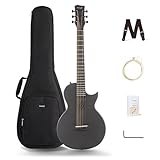
 Enya NOVA GO Carbon Fiber 35-Inch Acoustic Travel35-Inch35.83 x 11.81 x 2.76 inches3.7 poundsCheck on Amazon
 Enya NOVA GO SP1 Carbon Fiber 35-Inch Smart35 Inch-Acoustic Electric35.83 x 11.81 x 2.76 inches4 poundsCheck on Amazon
 Traveler Guitar Ultra-Light Acoustic Acoustic-Electric GuitarGuitar28 x 5.25 x 2 inches2.9 poundsCheck on Amazon

Top 3 picks at a glance
Quick comparison of the best travel guitars
| Model | Type | Scale length | Approx. weight | Why choose it | Main compromise |
|---|---|---|---|---|---|
| Taylor GS Mini | Small-body acoustic | 23.5 in | About 4–5 lb | Best balance of familiar feel, tone, and portability | Larger and heavier than ultra-compact designs |
| Martin LX1 Little Martin | Small-body acoustic | 23 in | About 3–4 lb | Compact traditional acoustic with a short, comfortable neck | Less low-end projection than a full-size dreadnought |
| Yamaha APXT2 | 3/4-size acoustic-electric | 22.825 in | About 4–5 lb | Short scale, built-in electronics, and easy casual playing | Smaller body produces less volume and bass |
| Traveler Guitar Ultra-Light Electric | Compact electric | 24.75 in | About 3 lb | Extremely light and short without a conventional headstock | Requires an amplifier, interface, or headphone setup |
| Steinberger Spirit GT-Pro Deluxe | Headless electric | 25.5 in | About 6–7 lb | Full electric scale in a headless travel-friendly format | Heavier than the smallest travel guitars |
| Enya Nova Go | Carbon-fiber acoustic | About 25.5 in | About 4 lb | Weather-resistant construction and a full-length feel | Tone and neck feel differ from wooden acoustics |
Weights and dimensions can vary by finish, electronics, and production version, so treat these figures as buying guidance rather than laboratory measurements. A padded gig bag can add roughly 1–3 lb, which is enough to change the practical choice for air travel.
Best overall: Taylor GS Mini
The Taylor GS Mini is the strongest all-round recommendation for players who want a travel guitar that still feels like a serious acoustic instrument. Its 23.5-inch scale is shorter than the common 25.4-inch or 25.5-inch scale, reducing reach between frets without making the neck feel toy-like. The compact body fits on a bed, train seat, or small room more easily than a dreadnought, while still producing enough volume for songwriting and informal group playing.
Choose the GS Mini if you will play unplugged most of the time and want familiar acoustic response. It is not the lightest option, and its gig bag occupies more space than a bodyless electric, but it is a good compromise between portability and sound. Several versions are available, including acoustic-electric configurations for connecting to an amplifier or PA.
Best lightweight traditional acoustic: Martin LX1
The Martin LX1, commonly known as the Little Martin, is a better fit when low carry weight and a traditional acoustic layout are priorities. Its 23-inch scale makes chord stretches easier, particularly for players with smaller hands, and its compact body is less awkward in tight spaces than a full-size guitar.
The trade-off is physical rather than build-related: a small soundbox moves less air. It can sound clear and balanced for practice, recording, and songwriting, but it will not produce the same bass authority or unamplified headroom as a larger guitar. Look for an acoustic-electric version if you need to perform, because a small acoustic body can struggle to project in a noisy venue.
Best budget-friendly acoustic-electric format: Yamaha APXT2
The Yamaha APXT2 uses a short 22.825-inch scale and a slim 3/4-size body. That combination makes it especially approachable for beginners, casual players, and anyone who values easy fretting over full-size acoustic volume. Its onboard pickup and tuner reduce the amount of extra equipment needed for rehearsals or small amplified performances.
The shorter scale also reduces string tension at the same tuning and string gauge. That can make bends and fretting easier, but it may feel slightly loose to an experienced full-scale player. If you prefer firmer tension, a modestly heavier string set can help; have the guitar set up afterward if intonation or neck relief changes noticeably.
Best for minimum luggage: Traveler Guitar Ultra-Light Electric
The Traveler Guitar Ultra-Light Electric is the most compelling choice when the guitar must fit into a very small bag. Its bodyless design removes much of the wood and air volume found in conventional guitars, and its headless-style layout keeps the overall package short. At roughly 3 lb, it can be easier to carry than many compact acoustics.
This is an electric practice and recording instrument, not an acoustic replacement. Plan for a small headphone amplifier, audio interface, or compact amplifier. The total travel kit matters: a 3 lb guitar plus a 0.5 lb headphone amp and cables can still be lighter and smaller than an acoustic, while also allowing quiet practice in a hotel room.
Its 24.75-inch scale sits between typical Gibson-style and Fender-style electric lengths. That gives it a familiar enough feel for many electric players while keeping the instrument compact. Check the exact model’s pickup, output, and tuning-machine configuration before buying, since Traveler has sold several closely related designs.
Best full-scale compact electric: Steinberger Spirit GT-Pro Deluxe
The Steinberger Spirit GT-Pro Deluxe retains a 25.5-inch scale, so bends, string tension, and fret spacing are closer to a standard long-scale electric. Its headless design eliminates the tuning headstock and makes the instrument shorter in a bag, but it is not an ultralight guitar; the hardware and solid body can put it in the 6–7 lb range.
Choose it when normal electric-guitar technique matters more than minimum weight. It is a better match for a player who will connect to an amp, modeler, or interface and does not want to adapt to a short-scale neck. Use the correct double-ball or compatible string system specified for the model, and carry spares because replacement options are less universal than ordinary electric strings.
Best weather-resistant option: Enya Nova Go
The Enya Nova Go uses carbon-fiber construction and a compact travel-oriented body. Its resistance to humidity and temperature changes can be valuable for road trips, camping, and poorly controlled hotel rooms, where a wooden guitar may need more careful storage. It also provides a longer-scale feel than many 3/4-size acoustics.
Carbon-fiber instruments can respond differently from spruce or mahogany guitars. The Nova Go is attractive when durability and predictable travel behavior matter more than reproducing the exact feel of a conventional wooden acoustic. Confirm whether the version you are considering includes electronics, because features vary between configurations.
Scale length, body size, and weight: what matters in practice?
Scale length
Scale length is the vibrating distance from the nut to the bridge. A shorter scale reduces the distance between frets and generally lowers string tension at the same tuning and gauge. For example, moving from a 25.5-inch scale to a 23-inch scale changes the scale ratio to 23 ÷ 25.5, or about 0.90. Tension is approximately related to the square of that ratio, so the shorter guitar can have roughly 19 percent less tension with otherwise identical strings.
That is useful for easy fretting, but it can also make strings feel softer and increase the chance of a sharp note if you press hard. If a short-scale guitar feels too loose, try a slightly heavier gauge rather than immediately raising the action.
Body size
A smaller body is easier to store and more comfortable while seated, but it usually produces less acoustic volume and low-frequency power. For private practice, that is rarely a problem. For playing with unamplified singers or other instruments, a GS Mini-sized body is generally more capable than a tiny 3/4-size guitar.
Weight
Weight becomes important when the guitar is carried rather than merely lifted. A 3 lb guitar in a 2 lb padded bag weighs about 5 lb; a 5 lb acoustic in a 3 lb bag weighs about 8 lb. Add a laptop, power adapter, and water bottle, and the difference can determine whether the guitar is convenient or left at home.
Decision matrix: which travel guitar fits your trip?
| Your situation | Best direction | Why |
|---|---|---|
| Hotel-room practice with headphones | Traveler Guitar Ultra-Light Electric | Small, light, and quiet with a headphone amp or interface |
| Songwriting without extra equipment | Taylor GS Mini or Martin LX1 | They make their own sound and remain comfortable in small rooms |
| Small amplified performances | Yamaha APXT2 or an acoustic-electric GS Mini | Built-in electronics avoid relying on microphones |
| Frequent flights and strict luggage limits | Ultra-Light Electric | Lowest weight and smallest bodyless package |
| Standard electric technique on the road | Steinberger Spirit GT-Pro Deluxe | Full 25.5-inch scale in a shorter headless format |
| Humidity, heat, or outdoor travel | Enya Nova Go | Carbon-fiber construction is less sensitive to environmental changes |
Tuning stability and gig-bag portability
Tuning stability depends less on the word “travel” in the product name than on the nut, bridge, tuners, neck relief, and how the guitar is packed. Before a trip, tune the instrument, play every string across the neck, and check whether notes return to pitch after bends or firm chord playing. Persistent drift may indicate slipping tuners, binding at the nut, or a setup problem rather than normal settling.
Headless instruments often save length but may use specialized string ends or tuning hardware. That improves packing efficiency while reducing roadside replacement convenience. Conventional acoustics use universally available strings, but their headstocks need more room and can be vulnerable to impact.
For the gig bag, prioritize:
- Padding around the headstock, bridge, and lower bout.
- A neck-support strap or internal neck cradle.
- A weather-resistant outer layer and covered zippers.
- Enough depth for the guitar’s bridge and electronics, not just its body outline.
- A music pocket that can hold spare strings without pressing against the soundboard.
For air travel, loosen the strings only slightly if the manufacturer recommends it; fully slack strings do not automatically prevent damage and can allow parts to move. Keep the guitar away from heavy objects inside the bag, and avoid leaving any instrument in a hot car. A temperature-resistant carbon-fiber model reduces risk but does not make the strings, electronics, or finish immune to heat.
Frequently asked questions
Can a travel guitar replace a full-size acoustic guitar?
It can replace a full-size acoustic for practice, songwriting, and casual playing, but not in every situation. Smaller bodies are easier to store and carry, yet usually produce less acoustic volume and low-frequency power. The Taylor GS Mini offers a stronger compromise for unplugged playing, while the Yamaha APXT2 is more compact but produces less volume and bass.
What should I pack with an electric travel guitar?
Pack a small headphone amplifier, audio interface, or compact amplifier, along with the necessary cables. The Traveler Guitar Ultra-Light Electric is designed for electric practice and recording rather than acoustic playing. A 3 lb guitar plus a 0.5 lb headphone amplifier and cables can still be lighter and smaller than many acoustic travel-guitar setups.
How much extra weight does a gig bag add?
A padded gig bag can add roughly 1–3 lb, which may change the practical choice for air travel. For example, a 3 lb guitar in a 2 lb padded bag weighs about 5 lb, while a 5 lb acoustic in a 3 lb bag weighs about 8 lb. The bag, laptop, power adapter, and other gear all affect portability.
Will a short-scale guitar feel different to play?
Yes, a short-scale guitar generally has closer fret spacing and lower string tension at the same tuning and string gauge. That can make fretting and bends easier, but strings may feel softer and notes can go sharp if pressed hard. If the guitar feels too loose, a slightly heavier string gauge may help; setup changes may be needed afterward.
Which travel guitar is best for changing temperatures and humidity?
The Enya Nova Go is the best fit when resistance to humidity and temperature changes is a priority. Its carbon-fiber construction can be useful for road trips, camping, and poorly controlled hotel rooms. It also provides a longer-scale feel than many 3/4-size acoustics, although carbon-fiber instruments can respond differently from spruce or mahogany guitars.
Final recommendation
Buy the Taylor GS Mini if you want one compact acoustic that does nearly everything well. Choose the Martin LX1 when lower weight and a smaller traditional acoustic are more important. Pick the Yamaha APXT2 for short-scale affordability and built-in amplification, the Traveler Guitar Ultra-Light Electric for the smallest quiet-practice kit, the Steinberger Spirit GT-Pro Deluxe for full-scale electric technique, and the Enya Nova Go for demanding weather conditions. Compare the guitar and gig-bag weight together: that combined figure is the most useful measure of whether your travel guitar will actually come along.