The best soda maker for most homes is the Drinkmate OmniFizz if you want to carbonate more than water, while the SodaStream Terra is the better-value choice for simple sparkling water and the Breville InFizz Fusion is the premium option for adjustable carbonation and a broader range of drinks.
The right choice depends less on maximum fizz than on four practical trade-offs: how much carbonation you want, whether you prefer plastic or glass bottles, what your CO2 refills cost locally, and how much counter space you can spare.
As an Amazon Associate we earn from qualifying purchases at no extra cost to you.


Our Top Picks
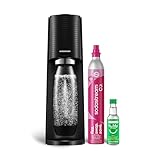
 SodaStream TERRA Sparkling Water MakerSparkling Water Bundle7.9 x 5 x 17 inches7.83 poundsCheck on Amazon

Top 3 picks at a glance
Best soda makers compared
| Model | Best for | Carbonation control | Bottle material | Approximate machine price | Counter-space and durability notes |
|---|---|---|---|---|---|
| SodaStream Terra | Everyday sparkling water | Manual button presses; easy to adjust | BPA-free reusable plastic | Usually $70–$120 | Compact, light, and simple; plastic bottles need periodic replacement |
| SodaStream Art | Frequent users who want a sturdier lever-operated design | Manual; lever gives consistent control | BPA-free reusable plastic | Usually $100–$150 | More substantial than the Terra and slightly wider |
| Drinkmate OmniFizz | Carbonating juice, iced tea, wine, and other drinks | Manual button presses with pressure-release control | BPA-free reusable plastic | Usually $90–$140 | Compact footprint; extra cleaning matters when carbonating sugary liquids |
| Breville InFizz Fusion | Premium control and varied drinks | Manual control with a pressure-release system | Reusable plastic bottles | Usually $200–$300 | Heavier and more expensive, with a robust metal-heavy construction |
| Aarke Carbonator 3 | Design-conscious kitchens using sparkling water only | Manual lever; controlled by duration and pressure | Reusable PET bottle | Usually $150–$220 | Very slim and attractive; premium price without extra drink compatibility |
| Aarke Carbonator Pro | Premium users who prefer a glass bottle | Manual lever with enclosed bottle operation | Glass bottle | Usually $250–$350 | Heavier and taller; glass feels durable but can break if dropped |
Our top picks by household
Best overall for more than water: Drinkmate OmniFizz
The OmniFizz is the most flexible recommendation because it is designed to carbonate beverages besides plain water. You can carbonate chilled juice, lemonade, iced tea, or wine, provided you follow the fill line and release pressure carefully. That makes it more useful than a conventional sparkling-water machine for households that want to experiment with homemade drinks.
Its limitation is cleanup. Sugary or pulpy liquids can leave residue in the bottle and carbonation nozzle, and the machine is less forgiving of overfilling. Use cold, filtered liquid, leave the required headspace, and rinse the bottle and nozzle soon after use. For a household that only makes water, a SodaStream or Aarke machine is usually simpler.
Best value for sparkling water: SodaStream Terra
The Terra is an easy default when the routine is simple: fill a reusable bottle with cold water, attach it, press the carbonation button several times, and remove the bottle after pressure has stabilized. Its quick-connect cylinder system makes installation convenient, and replacement bottles and CO2 cylinders are widely available in many markets.
The plastic bottle keeps the machine affordable and light, but it is a consumable component. Inspect it for clouding, deep scratches, deformation, or an expired use date, and replace it rather than trying to extend its life indefinitely. The Terra is a good fit for renters, small kitchens, and anyone who wants predictable operation without paying for premium materials.
Best premium design: Aarke Carbonator 3
The Carbonator 3 is appealing when appearance and a narrow footprint matter. Its metal body feels more substantial than many entry-level plastic-bodied machines, and the lever makes repeated carbonation comfortable. It is particularly well suited to a kitchen where the appliance stays visible on the counter.
It is not the best value if you expect extra features. It is a manual sparkling-water maker, not a machine for carbonating juice or tea, and its proprietary bottle must be replaced when worn. Check cylinder compatibility before buying: Aarke machines generally use standard screw-in CO2 cylinders rather than SodaStream Quick Connect cylinders.
Best glass-bottle option: Aarke Carbonator Pro
The Carbonator Pro is the better choice for people who dislike serving drinks from plastic. Its glass bottle gives sparkling water a more traditional feel and does not retain odors as readily as plastic. The trade-offs are significant: the machine occupies more vertical space, the bottle is heavier, and accidental drops can break it.
Glass is not automatically more durable than plastic. It resists staining and odor but is less tolerant of impact. Choose it for serving quality and long-term bottle feel, not because it eliminates replacement costs.
Carbonation levels: what the buttons do and do not tell you
Most manual soda makers do not specify a precise CO2 concentration. “Three presses” is not a universal measurement because results change with water temperature, fill level, cylinder pressure, and how long you hold each press.
- Light fizz: Use one or two short presses. This suits fruit syrups and people who find standard soda too sharp.
- Medium fizz: Use two or three presses, pausing briefly between them. This is the practical everyday setting for water.
- Strong fizz: Use several short presses until the machine makes the characteristic pressure-relief sound, without forcing the button continuously.
Cold water absorbs CO2 more effectively than warm water, so chill water to roughly 4–7°C before carbonating. Fill only to the bottle’s marked line. More headspace allows gas to enter the water; overfilling leaves little room for pressure to equalize and increases foaming.
For a stronger result, carbonate plain water first and add syrup afterward. Syrup reduces available water volume and can cause excessive foaming. The exception is a machine such as the OmniFizz or InFizz Fusion that is explicitly designed for carbonating certain non-water drinks.
CO2 cost: the calculation that changes the value equation
A typical household cylinder contains approximately 425g of CO2 and is often marketed as producing up to 60 liters. That advertised figure assumes efficient use and moderate carbonation. Stronger fizz, small spills, and incomplete emptying can reduce the practical yield.
For example, suppose a replacement cylinder costs $25 and produces 45 liters in your routine:
$25 ÷ 45 liters = about $0 per liter
If your household drinks 1.5 liters per day, one cylinder lasts about 30 days:
1.5 liters × 30 days = 45 liters per month
At that usage, CO2 costs about $25 per month, before the machine and bottles. A household using only 0.5 liters per day would consume about 15 liters monthly, making the same cylinder last roughly three months.
Refill and exchange prices vary widely by country and provider. Before buying, check whether your preferred machine accepts readily available cylinders and whether local refills use the same connection. A cheaper machine with difficult-to-source CO2 can cost more over its useful life than a premium machine with convenient refills.
Plastic versus glass bottles
| Factor | Reusable plastic | Glass |
|---|---|---|
| Weight | Light and easy to carry | Heavy, especially when full |
| Impact resistance | Better for busy kitchens, though it eventually scratches | Can shatter or chip if dropped |
| Odor and staining | May retain flavors over time | Generally resists odors and staining |
| Cleaning | Often hand-wash only; check the manufacturer’s instructions | Some bottles are dishwasher-safe, but confirm the specific model |
| Replacement | Usually cheaper and easier to replace | Usually more expensive and model-specific |
Do not put a carbonation bottle in the dishwasher unless its instructions explicitly allow it. Heat and detergent can weaken or deform bottles that are designed to hold pressure. Never carbonate in an ordinary glass bottle or an unapproved container.
Decision matrix: which soda maker fits your situation?
- Small counter, lowest upfront cost: Choose the SodaStream Terra.
- Mostly sparkling water, but you want a sturdier lever: Choose the SodaStream Art or Aarke Carbonator 3.
- Juice, tea, lemonade, or wine: Choose the Drinkmate OmniFizz or Breville InFizz Fusion.
- Plastic-free serving is the priority: Choose the Aarke Carbonator Pro, accepting extra weight and breakage risk.
- High daily volume: Prioritize widely available, low-cost CO2 refills over decorative finish.
- Infrequent use: Avoid paying heavily for premium construction; a compact manual model offers better value.
How to get better results and extend the machine’s life
- Chill the water first. Cold liquid holds carbonation better and foams less.
- Use the fill line. The headspace is part of the pressure system, not wasted capacity.
- Press in short bursts. This gives you control over fizz and reduces sudden foaming.
- Wait before removing the bottle. Let pressure settle according to the machine’s instructions.
- Rinse after every use. This prevents mineral deposits and syrup residue around the nozzle.
- Store cylinders upright. Keep them away from excessive heat and use only the connection type specified for the machine.
Frequently asked questions
Can I carbonate juice or iced tea in any soda maker?
No, only machines explicitly designed for non-water drinks should be used for juice or iced tea. The Drinkmate OmniFizz is designed for beverages such as chilled juice, lemonade, iced tea, and wine, while the Aarke Carbonator 3 is a sparkling-water maker. Sugary or pulpy liquids require careful pressure release, prompt rinsing, and extra attention to the fill line.
Why should I chill water before carbonating it?
Cold water absorbs CO2 more effectively than warm water. Chill the water to roughly 4–7°C before carbonation, and fill the bottle only to its marked line. More headspace allows gas to enter the water, while overfilling leaves less room for pressure to equalize and can increase foaming. For stronger fizz, carbonate plain water before adding syrup.
How often do soda-maker bottles need to be replaced?
Bottle replacement depends on the material, condition, model, and manufacturer’s instructions. Plastic bottles should be replaced if they show clouding, deep scratches, deformation, or an expired use date. Glass bottles may resist odors and staining but can break if dropped. Do not try to extend a worn pressure bottle’s life indefinitely, and never use an unapproved container.
Can I use SodaStream cylinders in an Aarke machine?
Check cylinder compatibility before buying because the connection type matters. Aarke machines generally use standard screw-in CO2 cylinders rather than SodaStream Quick Connect cylinders. Replacement availability also affects long-term value, so check whether local refills or exchanges use the connection required by your preferred machine. The article does not state that every cylinder is compatible across brands.
Is glass safer or more durable than a plastic carbonation bottle?
Glass is not automatically more durable than plastic. It resists staining and odors and can provide a more traditional serving feel, but it is heavier and can chip or shatter if dropped. Reusable plastic is lighter and more impact-resistant, although it can scratch, retain flavors, and eventually need replacement. Choose based on handling, cleaning, and serving preferences.
Bottom line
For most sparkling-water drinkers, the SodaStream Terra delivers the best balance of price, size, and convenience. The Drinkmate OmniFizz is the more capable pick when carbonating drinks other than water matters. Choose the Aarke Carbonator 3 for premium counter appeal, or the Carbonator Pro when glass serving is worth the added cost, weight, and breakage risk. Whichever model you choose, local CO2 availability and your actual liters-per-month usage will have more effect on long-term cost than the initial machine price.