In a small home, a smoke alarm has less distance to cover, but the stakes of a slow or missed alert are no smaller. A one-bedroom apartment or a compact bungalow may need only two or three units, which changes the buying math: you are paying for smarts, not quantity, and every unit should earn its place on the ceiling. The decision behind this keyword is whether a phone alert, voice message, and linked alarms are worth choosing over a basic chirping unit, and which style of power and hub setup suits a compact layout.
The people shopping here are usually renters and owners of studios, townhouses, and cottages who want an alert on their phone when they are out, plus interconnection so one alarm triggers the others. Some can hardwire, others cannot or do not want to, and a few simply want the quietest possible install. The six detectors below are drawn from product titles only, covering hardwired, battery, and hub-based designs, and the guide lists the specs to confirm before you buy in 2026.
Our Top Picks


Top 3 picks at a glance
Quick Picks
As an Amazon Associate we earn from qualifying purchases at no extra cost to you.



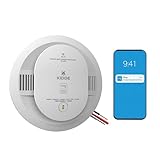
| Product | Best for | Key spec from title |
|---|---|---|
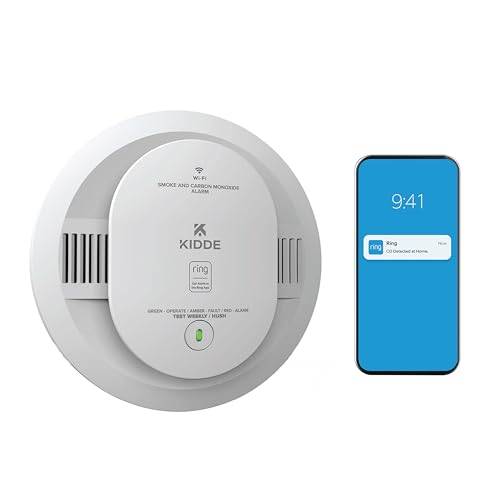
| Kidde Smart Smoke & CO (RGCUDR-RW) | Battery-powered renters on Ring | AA battery, Ring app, wireless interconnect, voice alerts |
| X-Sense SC07-W 6-Pack | Bigger set, no wiring | 10-year sealed battery, interconnected, LCD display |
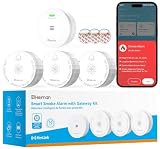
| Heiman 3-Pack with Gateway | Compact multi-room kit | Photoelectric, 2.4GHz Wi-Fi gateway, UL 217 |
| Kidde Smart Smoke & CO (RGCUAR-RW) | Hardwired homes using Ring | Hardwire with AA backup, Ring app, voice alerts |
| Heiman Matter Over Thread | Matter smart home users | Matter over Thread, 10-year photoelectric life |
| Kidde Smart Smoke (20SAR-W) | Hardwired smoke-only upgrade | Hardwired, AA backup, Kidde app alerts, interconnect |
How to Choose
Choose the right sensor type and standard
Photoelectric sensors respond well to slow, smoldering fires such as burning upholstery, which is why many modern alarms use them. Look for a listing to UL 217, the standard for smoke alarms. Carbon monoxide detection is a separate function and follows UL 2034, so confirm whether you want smoke only or a combined unit, particularly if you have a gas stove, a fireplace, or an attached garage. In a small footprint the two hazards are never far apart, so a combined unit near the bedroom hallway is an efficient way to cover both without crowding the ceiling.
Match power source to your building
Hardwired units connect to your home electrical system and use batteries only as backup, which suits owners who can replace existing alarms. Battery-powered models with sealed 10-year cells need no wiring and fit renters or older properties, but they must be replaced as a whole when the battery life ends. AA battery models are easy to service yourself. Check local rules, since some places require hardwired interconnection in certain rooms. Mixing power types in one home is possible, but linking them wirelessly depends on the brand, so stay within one product family when you can.
Decide how the alarm talks to you and itself
Smart alerts reach your phone by Wi-Fi, a gateway hub, or a smart-home standard such as Matter over Thread. Gateway-based kits are simple to set up but add one more device to plug in. Wireless interconnect means one detector triggers all the others, a major benefit in a small home where you might sleep on one side and a fire starts on the other. Voice alerts name the hazard and location, which is calmer and more useful at 3 a.m. than a series of shrill beeps and a flashing light you cannot place.
Know where cheap models cut corners
Budget units may not have a self-test, a clear low-battery warning, or a hush button for burnt toast. Apps can be thin, and some lock features behind subscriptions or require a specific ecosystem. Ignore dramatic marketing language and focus on the standard, the power type, the stated battery life, and what the app is required for. More units are not always better in a small layout, so count rooms and hallways before buying a big pack. Mounting height, distance from the kitchen, and spacing from vents also affect how often a unit nags you with false alerts.
The 6 Best Options
Kidde Smart Smoke & CO Detector, AA Battery (RGCUDR-RW)
A battery-powered combination alarm that works with the Ring app. The title lists wireless interconnect, voice alerts, and both smoke and carbon monoxide detection, making it a flexible fit for renters who cannot touch the wiring. In a small home, one or two of these in the hallway and living area can cover the essentials.
- Strength: smoke and CO in one device covers two risks with one unit per room.
- Strength: AA battery power means no electrician and simple replacement.
- Trade-off: it is tied to the Ring app, so people outside that ecosystem may feel limited.
Skip it if you prefer a hub-free Matter setup or want a 10-year sealed battery that never needs fresh cells.
X-Sense Interconnected Smoke and CO Detector SC07-W, 6-Pack
X-Sense sells this set with a 10-year sealed battery, no hardwiring, whole-home interconnection, an LCD display, and UL 217. It is a straightforward answer for anyone who wants every room covered without touching the ceiling wiring. The LCD readout also helps you confirm the unit is awake without waiting for a test chirp.
- Strength: a 10-year sealed battery reduces yearly maintenance.
- Strength: LCD display gives readings and status at a glance.
- Trade-off: six units is often more than a small home requires, which raises the outlay.
Skip it if you only have two or three rooms or want smartphone alerts that the title does not mention, since the listing focuses on interconnection and the sealed battery instead.
Heiman Smart Smoke Detector 3-Pack with Gateway
This three-pack is photoelectric and interconnected, and uses a 2.4GHz Wi-Fi gateway to send instant app alerts. Three units suit a studio, a one-bedroom, or a compact two-bedroom home well. The gateway acts as the bridge to your router, so the detectors themselves do not need to join Wi-Fi individually.
- Strength: three detectors match the size of a typical small home.
- Strength: instant app alerts reach you when you are away from home.
- Trade-off: the gateway adds a device to plug in and requires 2.4GHz Wi-Fi.
Skip it if you want a hub-free setup or carbon monoxide sensing in the same unit.
Kidde Smart Smoke & CO Detector, Hardwire & AA (RGCUAR-RW)
The hardwired version of the Ring-enabled Kidde alarm adds AA battery backup. The title lists Ring app support, wireless interconnect, voice alerts, and smoke plus carbon monoxide detection, which suits homeowners replacing an old ceiling unit. The combined sensing is practical in a compact home with a gas range or furnace close to the bedrooms.
- Strength: wired power with battery backup keeps protection running through outages.
- Strength: combined smoke and CO sensing reduces the number of devices on the ceiling.
- Trade-off: installation needs existing wiring, so it is unsuitable for most renters.
Skip it if you cannot access ceiling wiring or want a sealed-battery design.
Heiman Smart Smoke Detector, Matter Over Thread
Heiman’s detector speaks Matter over Thread, sends real-time alerts, runs on batteries, and lists UL 217 plus a 10-year photoelectric fire alarm life. It is aimed at smart-home users who want standards-based integration, since a Matter device can sit alongside lights, locks, and sensors from different brands in the same home.
- Strength: Matter over Thread fits modern smart-home hubs without a proprietary gateway.
- Strength: battery operation and a 10-year life make placement flexible.
- Trade-off: it needs a compatible Thread border router, which not every household owns.
Skip it if you have no Matter hub or want a combined carbon monoxide alarm.
Kidde Smart Smoke Detector, Hardwired with AA Backup (20SAR-W)
A smoke-only, hardwired alarm with AA battery backup, real-time Kidde app mobile alerts, and interconnect capability. It suits homeowners who want smart notifications and already have wired locations in place. It makes sense as a like-for-like swap when you only want smoke detection upgraded.
- Strength: hardwired power plus battery backup suits permanent installations.
- Strength: Kidde app alerts keep you informed away from home.
- Trade-off: smoke-only detection means you need a separate carbon monoxide alarm.
Skip it if you rent, or if you want a unit that includes carbon monoxide sensing in the same housing.
Which One Fits Your Situation
You rent a studio or one-bedroom apartment
Use the Heiman 3-Pack with Gateway, or the Kidde RGCUDR-RW if you want carbon monoxide detection and already use Ring. Neither requires an electrician, and both can be moved if you relocate at lease end.
You own a small home with existing wired alarms
The Kidde RGCUAR-RW replaces an old hardwired unit and adds smart alerts, while the Kidde 20SAR-W covers smoke only when carbon monoxide is handled elsewhere. Replacing wired units one by one is easy because the footprints are usually similar.
You run a Matter-based smart home
Pick the Heiman Matter Over Thread detector, assuming you already have a Thread border router. It is the cleanest choice for a household that wants one app and one standard for sensors.
You want a set-and-forget battery system
The X-Sense SC07-W suits a larger layout, though a small home may only need a portion of the pack. Spare units can be placed in a hallway or entry closet, or shared with a family member.
Common Mistakes
- Buying a smoke-only alarm when a gas appliance makes carbon monoxide detection necessary.
- Assuming every smart alarm needs no extra hub, bridge, or specific app.
- Installing detectors in kitchens or bathrooms where steam and cooking cause false alarms.
- Skipping interconnect, which delays warnings in a different room.
- Forgetting the replacement date for sealed-battery models.
Related guides
- How To Check Motherboard Vrm Temperature In Hwinfo
- How To Clean Quest 3 Lenses And Facial Interface
- Micro Sd Cards For Samsung Galaxy Phones
Frequently Asked Questions
How many smoke detectors does a small home need?
Plan one inside or just outside each sleeping area and one on each level or main hallway, then add carbon monoxide coverage near fuel-burning appliances. A studio may need only one or two, but codes and landlord rules vary, so confirm the minimum for your address.
Can renters install hardwired alarms?
Usually not without landlord permission. Battery models with interconnect are the easier route, and some listed units need no wiring at all. Ask the landlord before drilling into ceilings, and keep any original alarm until you confirm the new one is accepted under your lease.
Do smart smoke alarms work without Wi-Fi?
The alarm itself still sounds locally, but phone alerts need your network or gateway. Local sounding is the core safety function, so the siren should never depend on the internet.
What does UL 217 mean?
It is a safety standard for smoke alarms in the United States. Seeing it in a product title is a baseline signal, not a reason to skip checking the other specs such as power type, sensor technology, and how alerts reach your phone.
Related guides
More from Amazon
Programs that pair well with the guide above. Offers and eligibility are set by Amazon and may change.
Free shipping on eligible items, Prime Video and more. Eligible new members can start with a free trial.
Start a Prime free trialAd-free music streaming. Eligible new subscribers can start with a free trial.
Try Music Unlimited freeA Prime membership for ages 18-24 with a trial period. Eligibility is set by Amazon.
See Prime for Young AdultsAudiobooks and podcasts to listen to on the go. Eligible new members can start with a free trial.
Try Audible freeAs an Amazon Associate we earn from qualifying purchases.