The best hunting bibs for most hunters in 2026 are uninsulated or lightly insulated (0-80g) waterproof bibs for active and early-season hunts, and heavily insulated (150-200g+) bibs with windproof membranes for late-season stand hunting — your climate, activity level, and need for silence determine which one wins over pure warmth.
As an Amazon Associate we earn from qualifying purchases at no extra cost to you.


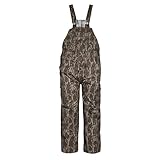

Our Top Picks


Top 3 picks at a glance
How to Choose: The 3 Specs That Actually Matter
Marketing copy talks about “warmth” and “durability,” but three measurable specs decide whether a bib works for you: insulation weight in grams, waterproof rating in millimeters, and fabric face noise. Get those right and fit and pockets are just details.
1. Insulation Weight (g/m2): Match It to Activity, Not Just Temperature
Insulation is measured in grams per square meter of synthetic fill (usually PrimaLoft or similar). More grams = more trapped dead air = warmer, but also less breathable. A common mistake is buying the warmest bib for a 20°F hunt, then sweating through it on the walk in and getting cold from moisture.
Use this rule: If you will walk more than 15 minutes or climb elevation to your spot, drop one insulation tier and layer underneath. If you will sit motionless on stand or in a blind for 3+ hours, go up one tier.
| Insulation Class | Fill Weight | Ideal Active Use | Sits Still Comfort Range* | Best For |
|---|---|---|---|---|
| Uninsulated Shell | 0g | 40°F to 65°F | 55°F+ only | Early archery, spot-and-stalk, rain shell over layers |
| Light Insulated | 40g – 80g | 30°F to 50°F | 35°F to 50°F | Active rifle, mid-season, hill country |
| Mid Insulated | 100g – 133g | 15°F to 35°F | 20°F to 40°F | All-around whitetail, waterfowl in blind |
| Heavy Insulated | 150g – 200g+ | Below 20°F | 0°F to 25°F | Late-season stand, ice belt deer, still hunting in extreme cold |
*Comfort range assumes base layer + mid-layer fleece and low wind. Add 10-15°F of warmth with a windproof membrane like GORE-TEX INFINIUM WINDSTOPPER or similar.
2. Waterproofing vs. Breathability: Read the Numbers
Waterproof ratings are tested as hydrostatic head (mm). Breathability is MVTR (g/m2/24h). You cannot judge a bib by “waterproof” alone.
- 0mm / DWR only: Water-resistant softshell. Quietest, most breathable, will soak in steady rain. Good for dry cold.
- 10,000mm – 15,000mm: Waterproof for light rain and wet snow for a few hours. Often more breathable. Best for most deer hunters who need some rain protection but prioritize silence.
- 20,000mm+ with taped seams and waterproof membrane: Fully waterproof for all-day rain, sitting in wet snow, or waterfowl. Less breathable and often louder unless it has a brushed face.
For bibs, seam taping and a waterproof zipper matter as much as the membrane. Un-taped seams will leak at the crotch and knees first, which is exactly where bibs get punished.
3. Fabric Noise: The Spec Sheet Doesn’t List It
Noise comes from the outer face fabric. Hard-shell nylon with a smooth face is loud when brushing against itself or a tree stand strap. Brushed polyester, fleece, or knit-faced membranes are dramatically quieter.
- Brushed / Fleece Face (quietest): Ideal for bowhunting inside 30 yards. Sacrifices some water shedding speed.
- Knit Face with WINDSTOPPER: Quiet enough for most archery and excellent wind protection. The current sweet spot for whitetail bibs.
- Smooth Ripstop Shell (loudest): Most durable and waterproof, best for waterfowl or mountain hunts where distance matters more than 5-yard silence.
Decision Matrix: Find Your Bib Class in 30 Seconds
Find your primary hunt style and climate, then buy the corresponding class. This prevents overspending on features you don’t need.
| Your Hunt Style & Climate | Recommended Bib Class | Key Features to Prioritize |
|---|---|---|
| Early Season Archery, 50°F+, High Activity | Uninsulated Brush Shell (0g) | Quiet brushed face, vent zips, knee articulation, DWR finish |
| Mid-Season Whitetail Stand, 25°F – 50°F, Low Activity | Light to Mid Insulated Windproof (80g – 133g) | WINDSTOPPER membrane, 10k-20k mm, full-length side zips for easy on/off over boots |
| Late Season Stand / Extreme Cold, Below 25°F, Static | Heavy Insulated Parka Bib (150g – 200g+) | High-loft insulation, windproof + waterproof, high chest coverage, suspenders with adjustment |
| Wet Climate / Waterfowl / All-Day Rain | Uninsulated or Light Insulated Waterproof Shell (0g – 80g, 20k mm+) | Fully taped seams, waterproof membrane with brushed face if possible, reinforced knees/seat |
| Mountain / Spot-and-Stalk / Western Big Game | Uninsulated Technical Softshell (0g) | Breathability over 20k MVTR, stretch panels, durable ripstop, minimal insulation for layering |
Worked Example: Why a 200g Bib Can Make You Colder
Heat balance is simple: your body produces heat based on activity, and your clothing system traps it. If you over-insulate while moving, you sweat and that moisture collapses insulation loft later.
Consider a hunter walking 20 minutes to a stand at 30°F:
- Walking with a 25 lb pack generates roughly 400-500 watts of heat. A 200g bib is designed to retain heat at ~80 watts (sitting). The surplus ~350 watts becomes sweat — often 150-250g of moisture in base layers.
- Sitting on stand generates only 80-100 watts. That trapped moisture now conducts heat away from your skin 25x faster than dry air and evaporates, chilling you. You feel colder at 30°F in a sweaty 200g bib than you would in a dry 80g bib with a proper insulating mid-layer you add after you stop walking.
The fix: For any hunt with a hike over 10 minutes, wear an uninsulated or lightly insulated bib for the walk and pack a puffy mid-layer or use the bib’s side zips to dump heat. Change or vent your base layer at the stand if you sweated. This system is warmer than simply buying the highest gram count.
Best Hunting Bibs by Category in 2026
Use the classes above to shortlist, then compare real-world models. These categories represent proven designs that continue in updated versions for 2026.
Best for Whitetail Bowhunting: Windproof Brushed Bibs
Models like the Sitka Fanatic Bib and Sitka Stratus Bib define this class. They use a GORE-TEX INFINIUM WINDSTOPPER liner with a Berber fleece or knit face. They are not fully waterproof (typically 10k-15k mm) but block 100% wind and remain dead-quiet for close encounters. The Stratus (lighter insulation) is better for 30-50°F active days, the Fanatic (higher loft, ~200g body-mapped) is the standard for 0-30°F all-day sits. Expect to pay usually $350–$550 for this technology. Look for full-length two-way side zips — without them, you cannot put bibs on over boots in the field.
Best Waterproof Workhorse: Shell Bibs
For waterfowl and wet late-season hunts, look at fully waterproof shell bibs using a 20k mm+ membrane with taped seams, such as the First Lite Sanctuary Bib, KUIU Yukon TR Bib, or the waterfowl-specific Sitka Hudson Bib. These often have 0-80g insulation because you add warmth with under-layers. They are louder than fleece bibs but keep you dry kneeling in snow or marsh. They usually run $300–$500. Prioritize reinforced seat and knees with 500D Cordura or similar for briars and blind durability.
Best for Extreme Cold & Static Hunts
Heavy bibs with 150-200g+ synthetic insulation and high chest backs are built for late December and January. The First Lite Sanctuary Insulated Bib and legacy designs like the Cabela’s Inferno Bib fall here. They are bulky and too hot to hike in, but unbeatable for 4-hour dark-to-dark sits below 20°F. They usually cost $350–$600. Check for chest hand-warmer pockets and suspender systems that distribute weight to the shoulders without pressure points.
Best Budget & Mid-Range Durable Pick
If you hunt hard but cannot justify premium membrane pricing, look for bibs with a DWR-treated polyester shell and 80-100g insulation without a membrane. Brands in the Badlands, Nomad, and ScentLok/Realtree lines offer these for usually $150–$300. You lose all-day waterproofing and windproofness, but you gain quiet comfort and durability. Pair with a cheap lightweight rain shell bib to cover the 5% of days when it pours.
Fit and Features That Prevent Returns
- Sizing for layers: Try bibs on with your heaviest mid-layer. You should be able to pinch 2 inches of fabric at the thigh. Too tight compresses insulation and makes you cold; too loose snags on stands.
- Side zips: 3/4 to full-length zips are non-negotiable if you wear rubber boots or need to vent. Short ankle zips force you to remove boots every time.
- Suspenders: Wide, elastic, and adjustable beat button-only. Elastic prevents shoulder bite when sitting hunched.
- Knee articulation: Pre-bent or articulated knees reduce fabric noise and fatigue when climbing or kneeling. Flat-cut bibs ride up and bind.
- Safety harness pass-through: If you tree-stand hunt, ensure a harness port that does not compromise waterproofing. Some bibs have a dedicated slit at the back.
How to Keep Bibs Warm, Waterproof and Quiet for Years
Most bib failures are maintenance, not manufacturing. Wash technical bibs with a residue-free technical wash, never fabric softener, which clogs membrane pores. Reactivate DWR every 3-5 washes with a DWR spray or wash-in, then tumble dry low for 20 minutes to reset the finish. Hang-dry heavy fleece bibs to preserve loft. Repair small thorn tears immediately with gear tape to prevent insulation migration.
FAQ
Should I buy insulated or uninsulated hunting bibs?
Buy uninsulated if you hunt actively, hunt in temps above 40°F, or want one versatile piece to layer under. Buy insulated (100g+) if you sit still for hours below 35°F and cannot add layers at the stand. For most hunters who do both, a lightly insulated windproof bib (80-133g) with venting is the best compromise.
Are hunting bibs better than pants?
Bibs are better for cold and still hunting because they eliminate the gap between jacket and pants — the main heat-loss and snow-entry point — and distribute weight more comfortably. Pants are cooler and more athletic for early season and mountain hunts where you need maximum ventilation.
What waterproof rating do I actually need for hunting bibs?
For occasional light rain and snow, 10,000mm with DWR is enough and will be quieter. For sitting in steady rain, wet snow, or marsh environments, get 20,000mm+ with fully taped seams and a waterproof membrane. If you hunt in dry cold only, prioritize windproof and quiet over waterproof rating.