The best cooking oil dispenser for most home cooks is a 500ml to 700ml glass bottle with a weighted gravity spout and a wide mouth for refilling, because it gives the best balance of pour control for both seasoning and pan-prep, easy cleaning, and drip-free storage. If you fry often or cook with multiple oils, a 750ml to 1L stainless-steel dispenser with a lever or trigger spout is neater under high-heat splatter, while a small 350ml precision-tip bottle is better for strict portion control and finishing oils.
As an Amazon Associate we earn from qualifying purchases at no extra cost to you.



Our Top Picks

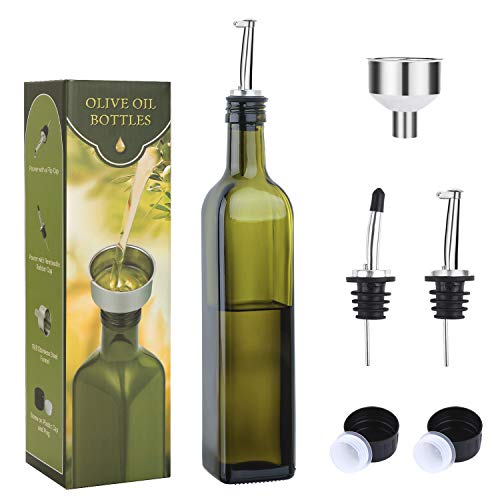


Top 3 picks at a glance
How to Choose the Best Cooking Oil Dispenser for Your Routine
Buying an oil dispenser is a trade-off between flow speed, capacity, and how much cleaning you are willing to do. Use these five criteria to match the hardware to how you actually cook:
- Pour control: Gravity spouts pour continuously and are good for coating pans. Valved, pump, or trigger spouts dispense in measured bursts and are better for dressings, basting, and calorie control.
- Capacity: Counts refills, weight in hand, and freshness. Large bottles reduce refills but get heavy and keep oil longer.
- Material: Glass lets you see level and oil clarity, and does not retain odors. Stainless steel blocks light to slow oxidation and hides fingerprints and drips better, but you cannot see when you are low.
- Cleaning access: A mouth at least 35mm wide lets you hand-wash or use a bottle brush. Narrow necks and welded spouts trap old oil and turn rancid.
- Drip resistance: Look for a vented air-return channel, a weighted flap that snaps shut, and a recessed spout lip. Simple open pour spouts almost always weep.
Capacity vs. Refill Math: How Big Should You Go?
Manufacturers list capacity, but not how it translates to real use. This worked calculation helps you avoid buying a dispenser that is either constantly empty or holding oil for months.
Estimate your weekly consumption: Average home cooking uses 15ml (about 1 tablespoon) per stovetop meal. For a household cooking 5 dinners at home per week, that is 75ml per week just for sautéing and roasting, plus another 30-50ml if you use oil for dressings or air-fryer spritzing. Call it 100-125ml per week total.
Runtime before refill = Capacity / Weekly Use
- 350ml dispenser at 110ml/week = 3.1 weeks before refill
- 500ml dispenser at 110ml/week = 4.5 weeks
- 750ml dispenser at 110ml/week = 6.8 weeks
- 1000ml dispenser at 110ml/week = 9 weeks
For freshness, most refined cooking oils are best used within 6 to 8 weeks after opening in a kitchen dispenser that is exposed to heat and light. That makes 500ml to 700ml the sweet spot for 1-2 person households, while families cooking twice daily will actually use a 750ml to 1000ml bottle fast enough to keep oil fresh. If you buy oil in bulk tins, decant only what you will use in a month and keep the rest sealed in a dark pantry.
Pour Rate and Why It Matters
Even with the same oil, spout design changes output by 3x to 4x. Olive oil at room temperature (about 20 deg C) is more viscous than vegetable or avocado oil, so a narrow precision tip will feel very slow with olive oil but normal with a lighter oil.
| Dispenser Type (Spec Class) | Typical Capacity | Flow Rate (ml per second) | Control Style | Drip Risk |
|---|---|---|---|---|
| Glass gravity bottle with auto-flap spout | 500-700ml | 8-12 ml/sec | Continuous tilt pour, flap shuts on upright | Low if flap is weighted, Medium if simple silicone flap |
| Stainless-steel lever / trigger spray-pump | 750-1000ml | 1.5-2 ml per pump, or 3-5 ml/sec spray | Measured pump or mist | Very Low |
| Stainless-steel gravity pourer with spout cap | 500-750ml | 10-15 ml/sec | Fast continuous pour | Low-Medium, depends on vent tube |
| Small glass precision-tip squeeze bottle | 250-350ml | 1-2 ml/sec | Drop-by-drop squeeze | Very Low |
| Two-chamber or dual-spout dispenser | 2x 350ml | 6-9 ml/sec per side | Separate oils, e.g., neutral + olive | Medium, more seals to wear |
Use the flow rate to anticipate control. If you often season salads or portion oil for a diet plan, a 1-2 ml/sec precision tip prevents the accidental 30ml pour that a wide gravity spout delivers in just 2 seconds. If you preheat woks or sheet pans, that same precision tip will feel painfully slow, and a gravity spout is faster and more ergonomic.
Glass vs. Stainless Steel: Which Stays Neater Longer?
Glass Dispensers
Borosilicate or thick soda-lime glass is inert, will not stain with turmeric or chili oil, and lets you see sediment or clouding. The weakness is light exposure, which accelerates oxidation, and fragility near the stovetop. Choose a glass dispenser with a dark tint, UV coating, or a silicone sleeve if it will sit next to the range. Check that the base is flat and wide; tall narrow glass bottles tip easily when half-empty. Market range is usually $10–$25 for a well-designed glass gravity bottle, with replacement spouts typically $6–$12 for a set.
Stainless-Steel Dispensers
Food-grade 304 stainless steel blocks light completely, resists dents better than thin glass, and handles heat and greasy hands without showing every fingerprint if it has a brushed finish. The trade-off is you cannot see the oil level without opening it, and low-quality welds around the base can trap water during washing and cause spotting. Look for a seamless inner wall and a removable silicone gasket rather than glued plastic. Stainless gravity pourers usually run $15–$30, while pump or trigger models are usually $18–$35.
For a neater kitchen under heavy use, stainless wins on external cleanliness because exterior drips wipe clean and do not leave a visible film. For low-oil, flavor-sensitive routines where you use expensive extra-virgin olive oil or infused oils, glass wins because you can monitor freshness and avoid leaving old oil in an opaque container.
Cleaning Access and Drip Resistance Checklist
A dispenser that cannot be fully cleaned will make your kitchen less neat over time, as polymerized oil builds up around the spout and collar. Before you buy, check these points:
- Mouth diameter: 38mm or wider accommodates a standard bottle brush and lets you air-dry completely. Under 28mm requires a narrow funnel to refill and traps moisture.
- Spout disassembly: The entire spout assembly, including the air vent tube and flap, should pull straight out without tools. Avoid models where the vent is molded into the plastic collar.
- Gasket material: Food-grade silicone stays flexible after months of oil contact. Rubber hardens and can stick to glass threads.
- Vented design: A dispenser with a dedicated air-return vent pours smoothly without glugging. Without it, oil surges and then drips as pressure equalizes.
- Drip tray or recessed lip: A slight concave well under the spout catches the last drop instead of letting it run down the side onto the counter.
Cleaning routine that prevents sticky residue: Empty completely every 2 to 3 refills, wash with hot water and a small amount of dish soap using a bottle brush, rinse with very hot water, and dry fully before refilling. Never put oil-contaminated dispensers in a dishwasher with cold short cycles; detergent alone does not cut polymerized oil and the high heat can warp plastic spouts. Soak the spout parts separately in warm soapy water for 5 minutes, then rinse and air-dry.
Decision Matrix: Match Your Cooking Routine to the Right Type
Use this matrix to map your situation directly to a spec class instead of guessing by looks.
| If You… | Choose This Type | Why It Fits |
|---|---|---|
| Cook 3-5 meals/week, mostly saute and roast, want one all-rounder | 500-700ml glass gravity bottle with weighted flap | Fast enough for pans, precise enough for dressings, wide mouth is easy to clean, you can see level |
| Fry, sear, or stir-fry daily at high heat | 750-1000ml stainless-steel gravity pourer with vented spout and cap | Larger reserve, blocks light near heat, cap prevents splatter ingress, fast pour |
| Track oil by teaspoons or use an air fryer | 250-350ml precision-tip squeeze or trigger spray | Delivers 1-2 ml at a time, true portion control, minimal drip |
| Keep two oils out (e.g., neutral oil + olive oil) | Dual-chamber or two small 350ml bottles | Avoids cross-contamination, but buy only if both chambers disassemble fully |
| Want the lowest maintenance and cleanest counter | Stainless pump dispenser with removable pump head | Sealed system, almost zero drip, but slower refill and more parts to wash |
What to Avoid for a Neater Counter
- Cork or bare wood stoppers without silicone sleeves; they absorb oil, swell, and drip within weeks.
- Unvented open pour spouts that look minimalist but glug and leave a trail down the bottle.
- Very tall, narrow bottles over 250mm high with a base under 65mm; they tip when you pour one-handed.
- Plastic bottles not labeled BPA-free or heat-resistant; they can warp near the stovetop and retain odors from infused oils.
FAQ
Should I keep the dispenser next to the stove for convenience?
Convenience is good, but heat degrades oil. If you keep it within 30cm of a burner, choose stainless steel to block light and heat, and keep only a 500ml or smaller fill. For glass dispensers, store one step away from direct heat and light, even if it means an extra reach.
Why does my dispenser drip even with a flap?
Three common causes: 1) The vent is clogged with dried oil, so pressure forces oil out around the flap. Remove and soak the spout. 2) The flap is a light silicone disk instead of a weighted mechanism and does not snap shut. Replace the spout with a weighted gravity type. 3) Overfilling past the shoulder leaves no air space to break the siphon; leave 15-20mm of headspace.
Can I put chili flakes or herbs inside the dispenser?
Only if the mouth and spout are wide enough to clean pulp and particles. Fine particles clog vent tubes and precision tips and create a hygiene risk as they sit in oil at room temperature. For infused oils, infuse in a separate jar, strain completely, then decant the clear oil into the dispenser.