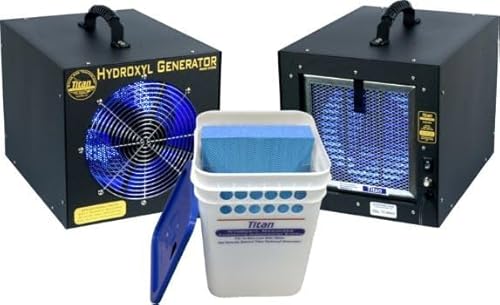
The best commercial hydroxyl generator for odor treatment for most restoration and commercial cleaning businesses is a 1,000–2,000 sq. ft. rated unit with adjustable hydroxyl output, dual UV lamp chambers, and a 4–7 amp draw, such as the Odorox Boss or similar professional-grade hydroxyl generator class, because it balances coverage, portability, and safe occupied-space operation better than smaller sub-500 sq. ft. units or larger fixed-install systems.
As an Amazon Associate we earn from qualifying purchases at no extra cost to you.


Our Top Picks

How Hydroxyl Generators Compare for Commercial Odor Treatment
Hydroxyl generators use ultraviolet (UV) light to generate hydroxyl radicals that break down volatile organic compounds (VOCs), smoke residues, and bio-based odors at the molecular level. Unlike ozone generators, true hydroxyl generators can typically be used in occupied spaces and on moisture-sensitive materials, which is why they are preferred for hotels, rental units, senior living facilities, and post-restoration deodorization. For commercial buyers, the decision comes down to five factors: rated coverage, output control, portability, maintenance cost, and operating guidance.
1. Rated Coverage vs. Real-World Treatment Area
Manufacturers rate coverage in square feet under ideal conditions (8 ft ceilings, sealed space, light to moderate odor). Commercial spaces rarely match those conditions. High ceilings, HVAC air exchanges, porous materials, and severe smoke or protein-fire odors all reduce effective coverage by 30–50%.
Use this de-rating rule when sizing:
- Light odor (general occupancy, pet, musty): Use 100% of rated coverage
- Moderate odor (tobacco, cooking, water damage with organic decay): Divide rated coverage by 1.4
- Severe odor (heavy smoke, fire soot, trauma/bio): Divide rated coverage by 2
| Spec Class | Example Model Type | Rated Coverage | Effective Severe-Odor Coverage | Power Draw | Weight | Best For |
|---|---|---|---|---|---|---|
| Compact Portable | Odorox Slim Line class | ~500–750 sq. ft. | ~250–375 sq. ft. | 2.5–3.5A @ 115V | 28–35 lbs | Single hotel room, vehicle, small office, containment chamber |
| Mid-Size Workhorse | Odorox Boss class | ~1,000–1,500 sq. ft. | ~500–750 sq. ft. | 5.0–6.5A @ 115V | 55–70 lbs | Apartment, 2–3 room water loss, light smoke job, rental turnover |
| High-Output Commercial | Odorox Boss Extreme / Dual-Optic class | ~1,500–2,000+ sq. ft. | ~750–1,000 sq. ft. | 6.5–8.0A @ 115V | 70–85 lbs | Large open office, banquet hall, whole-house fire restoration |
2. Output Controls and Operating Modes
Output control is what separates a true commercial unit from a consumer deodorizer. Look for these controls:
- Variable hydroxyl output / UV intensity: Lets you dial up for heavy smoke and dial down for occupied-space maintenance. Units without this force you to run full power or power-cycle the machine, which creates inconsistent results.
- Fan speed control: Independent fan speed is critical. High fan for initial distribution (first 2–4 hours), low fan for overnight dwell and for use in small sealed rooms where excess air movement can dry surfaces unevenly.
- Timer and continuous mode: A 24-hour timer with continuous run option prevents job-site overruns. For commercial scheduling, continuous mode with manual shutoff is more useful than a 2-hour auto-shutoff found on residential units.
- Optics / lamp chamber selection: High-end units let you run one or two UV chambers. Running a single chamber cuts output by ~45% and extends lamp life when treating light odors in occupied areas.
Decision Matrix: Match the Generator to Your Treatment Area
Choose based on your most common job, not your largest possible job. Buying one oversized unit for everything increases power costs and reduces flexibility.
| If Your Typical Job Is… | Recommended Class | Why | Scaling Strategy |
|---|---|---|---|
| Property management: 1-bed apartments, hotel rooms, 300–600 sq. ft. with pet/tobacco/mildew odor | Compact Portable (500–750 sq. ft.) | Lightweight, fits in closet or bathroom, low amp draw allows operation while housekeeping continues | Deploy 1 unit per room, stagger start times by 2 hours |
| Restoration: Water + odor, 2–4 rooms, contents on site | Mid-Size Workhorse (1,000–1,500 sq. ft.) | Enough hydroxyl density to penetrate porous contents without relocating them; hydroxyls are safe on electronics, art, and fabrics | Add second compact unit for contained source room instead of upsizing single unit |
| Fire / smoke restoration: Whole house, restaurant, large open commercial | High-Output Commercial (1,500–2,000+ sq. ft.) | Needed to overcome activated carbon and soot absorption; multiple optics shorten treatment from days to hours | Use 2 mid-size units on separate circuits instead of 1 high-output if circuit access is limited |
| Facility maintenance: Gym, daycare, clinic with recurring organic odors | Mid-Size with low-output mode | Can run nightly at low output while unoccupied, then low fan during day for maintenance | Wall-mount or cart-mount for daily repositioning |
Worked Calculation: Power Budget and Unit Count for a Commercial Space
Spec sheets rarely tell you how many generators you can run without tripping breakers, or how many units you actually need for a large area. Here is a practical calculation for a common scenario.
Scenario: A 2,400 sq. ft. open-plan office with 10 ft ceilings and moderate tobacco/cooking odor after tenant turnover. You have access to standard 15A / 115V wall circuits (code limits continuous load to 80%, so 12A usable per circuit).
Step 1: De-rate coverage for moderate odor. Using a mid-size 1,200 sq. ft. rated unit: 1,200 / 1.4 = ~857 sq. ft. effective per unit. For 2,400 sq. ft.: 2,400 / 857 = 2.8, so you need 3 units.
Step 2: Check power budget per unit. Odorox Boss class draws ~5.8A at 115V. Watts = Amps x Volts = 5.8 x 115 = 667 watts per unit. Three units = 1,734 watts running continuously.
Step 3: Check circuit capacity. Usable per 15A circuit = 12A x 115V = 1,380 watts. One circuit can safely run two mid-size units (1,334 watts) but not three. You must split the third unit onto a second circuit on a different breaker, typically by running a 12-gauge extension to a hallway or break room outlet verified on a separate circuit.
Step 4: Estimate runtime and energy cost. At 667 watts x 24 hours = 16.0 kWh per unit per day. At a commercial rate of around $0/kWh, one unit costs ~$2 per 24 hours. Three units for a 48-hour treatment = ~$13 in electricity, versus $200–$400 in lamp and filter consumables amortized over the treatment. Power is rarely the cost driver; lamp life is.
This is why portability and multi-circuit operation matters more than raw coverage. Two mid-size units on two circuits will finish faster and safer than one high-output unit straining on a single outlet.
Portability, Maintenance, and Total Cost of Ownership
Portability
Commercial units live in vans. Weight and form factor determine whether one tech can deploy. Compact units under 35 lbs can be carried one-handed up stairs. Mid-size and high-output units at 55–85 lbs should have integrated handles, stackable cases, and 8–10 inch never-flat wheels. If a unit lacks wheels, add a $80–$150 folding hand truck to your budget — frequent lifting increases injury and damage risk.
Dimensions also matter for containment. A 20 x 16 x 16 inch compact unit fits inside a standard 6 ft containment or bathroom for source treatment. Larger 30+ inch units do not, forcing you to duct hydroxyls in, which reduces concentration by 20–30%.
Maintenance
Hydroxyl generators are not filterless. Their consumables define long-term cost:
- UV lamps / optics: Usually rated for 8,000–10,000 hours. In commercial use (4–6 hours per day average), that is roughly 12–18 months. Replacement lamp sets usually run $150–$350 per chamber. Running at full output continuously halves effective life due to heat.
- Pre-filters: Washable electrostatic or disposable pleated filters. In dusty post-construction or fire jobs, clean or replace every 24 hours of runtime. Clogged pre-filters cut hydroxyl output by starving the UV chamber of airflow.
- Hydroxyl-generating substrate / catalyst: Some designs use a coated substrate or titanium element that needs replacement every 12–24 months. Check whether this is user-replaceable. Field-replaceable saves a depot service fee of $200–$400.
- Fan and housing: Units with sealed bearings and tool-free access for cleaning soot and dust last longer in restoration. Avoid units where lamp replacement requires complete disassembly.
Budget roughly $300–$600 per year per mid-size unit in consumables under regular commercial rotation. Units that price lamps lower but require proprietary filters often cost more over three years than units with higher upfront cost.
Operating Guidance to Get Commercial Results
Correct operation matters more than brand. Follow this sequence for consistent odor elimination rather than masking:
- 1. Remove the source and clean first. Hydroxyls treat residual VOCs, not bulk contamination. Extract water, remove charred debris, clean surfaces with detergent, then deploy the generator. Running a generator in a dirty space wastes lamp hours.
- 2. Seal and control airflow. Close windows and exterior doors, set HVAC to fan OFF or close vents in the treatment zone. You want 0.3–0.5 air changes per hour, not a wind tunnel. For occupied spaces, crack a door 1–2 inches to provide makeup air without flushing hydroxyls.
- 3. Set output to the odor level, not maximum. Start at 60–70% output and high fan for the first 3–4 hours to distribute, then reduce fan to low and adjust output based on smell. For occupied treatment, run at 30–40% output with continuous low fan for 24–48 hours. Dialing to 100% in a small sealed room can produce a sharp, metallic odor from excess hydroxyls and does not speed deodorization.
- 4. Position for circulation, not at the source. Place the generator centrally, 3–5 feet off the ground on a table or counter, with 3 feet of clearance on intake and exhaust. Point exhaust along the longest wall to create a circular airflow pattern. Do not point directly at a single odor source.
- 5. Treat long enough. Light odors: 24 hours. Moderate tobacco/pet: 24–48 hours. Heavy smoke: 48–72 hours with a reposition at 24 hours. Check progress by airing the space for 15 minutes, then re-entering. Human nose adapts quickly inside the treatment area and will miss residual odor.
- 6. Document conditions. Log start time, output setting, fan speed, room size, temperature and relative humidity (hydroxyl generation is most efficient at 40–70% RH and 65–80°F). This protects you if a client claims treatment failed and helps you replicate successful settings.
In commercial buying terms, the best value in 2026 is usually not the highest-rated coverage unit, but a fleet of two mid-size generators with adjustable output. They give you redundancy when one is in service, allow simultaneous treatment of two small jobs, and can be paired for one large job while staying within safe power limits on standard commercial circuits. Reserve high-output fixed units for dedicated facilities that need daily maintenance deodorization in the same large footprint.
FAQ
Can hydroxyl generators be used while people are present?
Yes, when operated at the manufacturer’s occupied-space output setting. True hydroxyl generators produce hydroxyl radicals in concentrations generally recognized as safe for occupied areas, unlike ozone generators which require evacuation. Always follow the specific unit’s guide for occupied vs. unoccupied settings and maintain ventilation per the manual.
Do hydroxyl generators remove the need for sealing or thermal fogging after fire?
Often, but not always. Hydroxyls handle residual smoke odor trapped in porous materials and air. Heavily charred framing or deeply embedded smoke in HVAC liners may still require sealing with a shellac or synthetic sealer after hydroxyl treatment. Use hydroxyls first; sealing is the backup, not the default.
How often should UV lamps be replaced if the generator still turns on?
Replace on hours, not on failure. Output drops gradually after ~7,000 hours even though the lamp still illuminates. If treatment times are getting longer for the same type of job, or if odor returns within days, lamps are likely past effective output even if they appear lit.