The best bass guitars for most players in 2026 are a 34″-scale split-coil bass like the Squier Classic Vibe ’60s Precision Bass under $500, a dual-humbucker Yamaha TRBX304 for versatility, or a short-scale Fender Player II Mustang Bass PJ if smaller hands or lighter weight matter more than maximum low-end tension. Which one is “best” depends on three physical variables you can actually measure — scale length, pickup layout, and weight — so this guide works through those first, then maps them to specific playing styles and budgets.
As an Amazon Associate we earn from qualifying purchases at no extra cost to you.
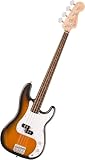


Top 3 picks at a glance
Why scale length is the first filter
Scale length (nut to bridge) changes string tension, fret spacing, and how much effort each note costs. Long-scale is 34″, short-scale is typically 30″, and medium-scale sits around 32″.
You can estimate the tension difference with a simple rule of thumb: for a fixed gauge and tuning, tension scales roughly with the square of scale length. Moving from 34″ to 30″ gives (30/34)² ≈ 0.78 — about 22% less tension at the same pitch. That’s the difference between a stiff E string that fights drop-D detuning and a floppy one that buzzes if you dig in. The trade-off:
- 34″ (long scale): tight, piano-like low end; best for aggressive pick playing, drop tunings, and slap. Cost: wider fret stretches and more finger fatigue on long sets.
- 30″ (short scale): looser, thumpier, more forgiving — great for guitarists doubling on bass, smaller hands, and Motown/indie tones. Weakness: low E can get woolly; heavier gauges (105s) help.
- 32″ (medium): the underrated middle ground — most of the tension benefit with much of the comfort.
If you tune below E standard regularly, stay at 34″ or go to a multiscale (35″–34″ fanned fret) design like the Ibanez Bass Workshop models — the extra inch on the low side keeps B strings from feeling like rubber bands.
Pickup configurations, decoded by output and tone
Pickup layout determines your tonal ceiling more than wood or brand ever will:
- P (split-coil Precision): one thick midrange voice, hum-canceling. Sits in a mix almost automatically. One sound, but it’s the right sound for rock, punk, and soul.
- JJ (two Jazz single-coils): bridge pickup gives growl and definition; blended, you get scooped, airy tones. Soloed single-coils can hum near dimmers or monitors.
- PJ: Precision neck pickup + Jazz bridge — the most popular “covers everything” config under $800.
- HH / soapbar: high output, quiet, modern; standard for metal and gospel/R&B fusion (think Yamaha TRBX, Sterling StingRay).
- MM (StingRay-style humbucker): aggressive top-end grind, the definitive slap/funk rock voice.
A useful signal-chain data point spec sheets omit: passive basses output roughly 100–300mV, but active preamps (EMG, Darkglass-equipped models) can push 2–4V — hot enough to clip an audio interface’s instrument input set for passive levels. If you record direct, an active bass often needs the interface’s pad engaged or gain dropped 8–10dB below what you’d use for a passive P-bass.
Neck feel and weight: the comfort math
Two numbers matter more than marketing terms. Nut width: ~38mm (Jazz-style, slim, fast) to ~45mm (Precision-style, chunky, precise for fingerstyle). Weight: a 10lb+ bass costs real fatigue. Over a 3-hour gig with a strap distributing roughly 60/40 between shoulder and neck-dive correction, a 9.5lb bass versus an 8lb bass is the difference between finishing the third set loose or fighting your fretting wrist. Targets: under 8.5lb for comfort, and check headstock-heavy designs for neck dive — a wide leather strap fixes most cases without buying a new bass.
Style-to-bass decision matrix
| Playing style / situation | Scale | Pickups | Typical pick | Price range |
|---|---|---|---|---|
| Beginner / all-rounder | 34″ | PJ or P | Squier Classic Vibe ’60s P-Bass | $350–$500 |
| Small hands / guitarist doubling | 30″ | PJ | Fender Player II Mustang Bass PJ | $600–$800 |
| Rock / punk (pick or fingers) | 34″ | P | Fender Player Precision Bass | $800–$1,000 |
| Funk / slap | 34″ | MM or JJ | Sterling StingRay Ray34 / Sire Marcus Miller V7 | $450–$900 |
| Metal / drop tunings / 5-string | 34–35″ | HH active | Yamaha TRBX305 / Ibanez SR505E | $500–$900 |
| Jazz / fusion / studio | 34″ | JJ | Fender Player II Jazz Bass | $800–$1,000 |
| Long gigs / back issues | 30–34″ | Any | Lightweight class (<8lb), e.g. Ibanez SR400 series | $400–$700 |
How to choose in five steps
- 1. Fix your scale first. Play a 30″ and a 34″ back to back; if the long scale doesn’t feel punishing, default to 34″ for tension headroom.
- 2. Match pickups to your loudest genre. Pickups must cover your most demanding context — you can always tame a hot MM humbucker, but a passive P won’t suddenly growl.
- 3. Weigh it, or look up the weight. Anything over ~9.5lb will punish standing players; budget basses often run lighter than expected, which is a hidden advantage.
- 4. Budget for the total rig. Reserve ~20% of your spend: a $500 bass + $150 practice amp or interface + setup beats a $650 bass played through headphones through a tinny app.
- 5. Get a setup (~$50–$80). A properly set-up $400 bass outperforms a neglected $1,200 one — action, intonation, and truss rod do more for feel than the price tag.
FAQ
Is a 5-string worth it for beginners?
Only if your genre demands it (metal, gospel, modern pop). The wider neck (~47mm+ nut) adds stretch and muting complexity; most beginners progress faster on four.
Active or passive?
Passive for simplicity and classic tone, active for EQ control onboard and higher output. If you record direct or play metal, active earns its 9V battery.
What’s the minimum viable budget?
About $250–$300 buys a genuinely playable bass (Squier Sonic/Affinity, Ibanez GSR) — below that, fretwork and electronics become a lottery.