
When your check engine light fires, the nearest auto parts store will read your codes for free, but they won’t help you after hours, won’t track whether a repair actually fixed the problem, and won’t tell you if the issue is worth your attention or a known quirk of your vehicle’s programming. A dedicated code reader solves that gap: you plug it in, pull the fault codes yourself, clear them after a repair, and confirm the light stays off. For most owners, that’s the entire job, and paying more than necessary for bells and whistles you’ll never use is the main mistake buyers make in this category.
What separates a worthwhile unit from a cheap disappointment comes down to three things: whether it speaks the full protocol set your car actually uses (CAN became mandatory only in 2008, and many budget readers handle it while older vehicles still run on different protocols), whether it gives you enough context around a code to act on it—freeze frame data, I/M readiness status, live sensor readings—and whether the display and menu logic work under a hood in daylight without squinting. This roundup compares eight readers across that full spread, from a fifteen-dollar code puller that does one job well to a diagnostic scanner that touches transmission, ABS, and airbag modules.
As an Amazon Associate we earn from qualifying purchases at no extra cost to you. Product prices and availability are accurate as of the date shown and are subject to change.




Top 3 picks at a glance
Quick Picks
| Product | Best for | Price |
|---|---|---|
| ANCEL AD310 Classic | Most owners who want a reliable daily driver | $29.99 |
| MOTOPOWER MP69033 | Buyers who want the lowest possible price | $15.96 |
| FOXWELL NT301 | DIYers who want live data and detailed readiness info | $55.95 |
| ANCEL AD410 | Owners upgrading from a basic reader who still want simplicity | $38.96 |
| VDIAGTOOL VD10 | Pre-inspection checks and quick CEL resets | $18.99 |
| FOXWELL NT604 Elite | Enthusiasts who need ABS, SRS, and transmission codes | $139.99 |
| Innova 5210 | Users who want phone connectivity and oil reset | $89.99 |
| FOXWELL NT201 | Truck owners who want more data without a full scanner price | $39.99 |
How We Picked
We ranked these readers on protocol coverage (does the unit handle every OBD II mode your vehicle’s system might report?), diagnostic depth beyond simple code retrieval (freeze frame capture, I/M readiness monitors, live data streaming, and system-specific modules like ABS or transmission), and usability under real conditions (screen legibility in sunlight, menu logic that doesn’t require a reference manual, connector fit in tight engine bays). Price-to-capability ratio tied it together: a twenty-dollar reader that nails basic code reading beats a hundred-dollar scanner whose advanced features sit unused in a drawer.
The 8 Best Auto Code Reader in 2026
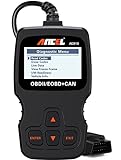
ANCEL AD310 Classic
The AD310 is the default answer for most people who just need to know why the light is on. It covers every OBD II protocol on 1996-and-newer vehicles, pulls both generic and manufacturer-specific codes, and clears the CEL after you’ve made a repair. Owner feedback consistently highlights its color screen and straightforward menu as the reason they never upgraded to a pricier unit.
- Pro: Reads and clears both generic and enhanced PCM codes, which many budget readers skip.
- Pro: Large, bright display that works in direct sunlight without a reflective shade.
- Con: No live data streaming or freeze frame capture, so you can’t watch sensor values change in real time.
Skip it if you want to verify a repair by watching fuel trims return to normal or if your vehicle is a diesel light truck with non-standard protocols.
MOTOPOWER MP69033
At under sixteen dollars, the MP69033 is essentially the floor of the category. It reads and clears CEL codes on any post-1996 OBD II vehicle and nothing else, but it does that task without fuss and with a compact, pocketable shell that survives a glovebox full of receipts.
- Pro: Lowest price among readers with CAN protocol support, making it near-disposable if lost.
- Pro: Simple two-button interface that requires zero reading of the manual.
- Con: Backlit but small LCD struggles in bright conditions, and no readiness or freeze frame data at all.
Skip it if you plan to use the reader more than occasionally; the lack of diagnostic context means you’ll still visit a parts store for follow-up questions.
FOXWELL NT301
The NT301 steps into territory where a code reader earns the word “diagnostic.” It streams live sensor data on-screen, captures freeze frame snapshots when a fault triggers, and shows I/M readiness monitors with pass/fail status—a genuine advantage before a state inspection. Professional mechanics reference it as a fast initial screen before they reach for a full platform scanner.
- Pro: Live data graphing lets you watch O2 sensor voltage or coolant temp change while the engine runs.
- Pro: I/M readiness display mirrors what an inspection station’s equipment checks, removing guesswork.
- Con: Menu navigation is less intuitive than the ANCEL units, with more key presses to reach the same screen.
Skip it if you only ever want a code number and a definition; the extra modes add cost you won’t use.
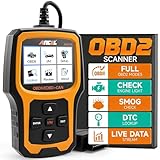
ANCEL AD410
The AD410 is the AD310’s sibling with a wider screen, slightly faster processor, and access to a free online diagnostics database that cross-references the code with common fixes for your specific make. It fills the gap between basic code reading and the data-heavy NT301 without pushing past forty dollars.
- Pro: Built-in repair suggestion database tied to vehicle VIN, which helps less-experienced owners interpret what a code actually means in context.
- Pro: Reads enhanced OBD II modes including pending and confirmed codes for more accurate diagnosis before a repair.
- Con: No live data streaming; you get a snapshot, not a moving graph of sensor behavior.
Skip it if you already own a smartphone and prefer a Bluetooth-connected app for diagnostics; the AD410 is standalone hardware and can’t share its screen with a phone.
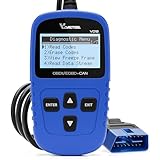
VDIAGTOOL VD10
Under nineteen dollars, the VD10 packs freeze frame capture and I/M readiness checks—features that usually justify a thirty-dollar premium. The build quality is noticeably plasticky compared to ANCEL or FOXWELL units, but the diagnostic logic inside the housing does more than its price tag suggests.
- Pro: Includes freeze frame data and readiness monitors at a price that normally only covers basic code read/clear.
- Pro: Compact enough to keep on a keyring or in a center console without a carrying case.
- Con: Screen contrast is poor in bright light, and the membrane buttons feel cheap and slow to register presses.
Skip it if you’ll be doing repeated diagnostic sessions; the ergonomic compromises add friction over time and you’d be better served by spending another ten dollars.
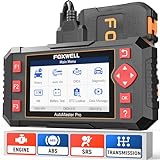
FOXWELL NT604 Elite
The NT604 Elite breaks out of pure engine diagnostics and into system-level scanning: it reads and clears codes from ABS, SRS (airbag), and transmission modules in addition to the engine. For an enthusiast who wants to reset a traction control light after replacing a wheel speed sensor, or who needs to confirm an airbag module is communicating after a battery replacement, this is the lowest entry point into multi-system coverage without a professional platform scanner.
- Pro: Covers four vehicle systems (engine, ABS, SRS, transmission), far beyond any code reader on this list.
- Pro: Bi-directional testing on select functions lets you command actuators, not just read fault codes.
- Con: At $139.99 it costs more than three of the other units combined; the depth is wasted if you only deal with engine CELs.
Skip it if you have no interest in ABS, airbag, or transmission diagnostics; a forty-dollar reader covers your needs and this overbuilt option won’t improve your engine diagnosis.
Innova 5210
The 5210 bridges the gap between a dedicated hardware reader and a phone-based diagnostic tool. It reads engine codes, performs live data streaming, tests battery health, and handles oil life reset—all while connecting via Bluetooth to a free app that provides guided diagnostics and repair help. For owners who want a modern workflow without giving up the reliability of a physical device, it’s a pragmatic middle ground.
- Pro: Bluetooth app connectivity means you get larger-screen guidance, code-to-repair suggestions, and data logging you can share with a mechanic.
- Pro: Built-in battery tester and oil reset add utility that normally requires separate tools.
- Con: The companion app is the experience; without a compatible phone nearby, the device’s standalone screen is limited compared to dedicated readers.
Skip it if you distrust app-based workflows or drive an older vehicle whose protocols may not pair cleanly with the mobile software.
FOXWELL NT201
Positioned between the AD310’s simplicity and the NT301’s data density, the NT201 offers live data streaming and readiness checks at a price that keeps it under forty dollars. Its interface is FOXWELL’s more recent design language—larger font, fewer sub-menus—and it works equally well on trucks and SUVs as it does on passenger cars, making it a practical family-vehicle fleet tool.
- Pro: Live data plus readiness monitors at an under-$40 price, undercutting the NT301 on features-per-dollar.
- Pro: Wide vehicle coverage including light trucks, with clear protocol auto-detection that avoids manual selection errors.
- Con: No freeze frame capture; you see current sensor values but lose the snapshot of conditions at the moment the fault occurred.
Skip it if freeze frame data matters to your diagnostic process; the three-dollar difference up to the NT301 adds that feature and is worth it for intermittent faults.
Buying Guide
Protocol Coverage and Vehicle Year
OBD II became a federal requirement for gasoline vehicles in 1996, but the underlying communication protocols (ISO 9141-2, KWP 2000, J1850 PWM, J1850 VPW, and CAN) varied until CAN became mandatory for all vehicles in 2008. A reader that only speaks CAN will fail to communicate with a pre-2008 vehicle that uses J1850. Every product on this list claims 1996-or-newer support, but if you drive a truck from that era, verify the unit explicitly lists J1850 PWM coverage. For diesel applications beyond light trucks, none of these readers will work; you need a dedicated diesel diagnostic interface.
Diagnostic Depth: Codes vs. Data vs. Systems
Three tiers exist in this category. Basic readers pull a DTC, show its definition, and let you clear the light. Intermediate readers add live data streaming (watching a sensor value change in real time), freeze frame capture (conditions recorded when the fault triggered), and I/M readiness status (whether your vehicle’s onboard monitors have completed their self-tests). Advanced units like the NT604 Elite extend beyond the engine into ABS, SRS, and transmission modules. Match the tier to your actual repair behavior: if you replace an oxygen sensor and clear the code to see if the light returns, a basic reader suffices. If you need to confirm a catalyst is functioning by watching upstream and downstream O2 sensor patterns, you need live data.
Ergonomics: Screen, Buttons, and Connector Fit
You’ll use a code reader with grease-stained fingers, in a squatting position, often in direct sun or a dim garage. A color TFT screen with a brightness level that overcomes glare beats a monochrome LCD every time, which is why the AD310’s display gets consistent praise despite its simple feature set. Button layout matters more than you’d expect before purchase: membrane switches that require firm, repeated presses become frustrating during multi-step operations. The OBD II connector is standardized, but its angle and clearance vary by vehicle; readers with a short, right-angle housing fit tighter bays better than units with a protruding connector.
Our Verdict
The ANCEL AD310 Classic is the top pick for most owners: it covers every protocol on post-1996 vehicles, reads enhanced codes, clears the light reliably, and its bright screen and simple menus mean you’ll actually use it rather than leaving it in a drawer. If your budget is absolute and you only need to know a code number before deciding whether to drive to a shop, the MOTOPOWER MP69033 delivers that at a price so low it removes any reason to go without. The exception that flips the ranking: if you own multiple vehicles, drive a truck or SUV, and want live data to actually diagnose problems yourself rather than just identify them, the FOXWELL NT201 at $39.99 offers the best feature-to-cost ratio in the group, adding streaming data and readiness checks for only ten dollars more than the AD310.
FAQ
Will an OBD II code reader tell me exactly what part to replace?
No. A code reader reports which system detected a fault and under what conditions, but it doesn’t identify the failed component. A P0301 code means cylinder one is misfiring, but the cause could be a spark plug, ignition coil, fuel injector, or compression issue. The reader narrows your diagnostic path; it doesn’t replace one.
Can I clear a check engine light and pass an emissions inspection?
Clearing codes resets your vehicle’s I/M readiness monitors, meaning the inspection station’s equipment will detect that the monitors haven’t completed their drive cycles yet. You’ll need to drive the vehicle through a typical cycle (city and highway, cold start included) before the monitors reset themselves. This is why readiness status matters on readers like the NT301 and VD10.
Do these readers work on all vehicles sold in the US?
All gasoline and hybrid vehicles sold in the US from 1996 onward support OBD II. Some vehicles from 1994 and 1995 in California had early OBD II compliance. Diesel vehicles beyond light trucks (under 14,000 lbs GVWR) use different diagnostic protocols that standard OBD II readers cannot communicate with, so check your vehicle’s fuel type before purchasing.
Is a Bluetooth reader better than a standalone unit?
A Bluetooth reader paired with a phone app gives you a larger display, data logging, and often guided repair information, but it depends on your phone’s battery, app compatibility, and Bluetooth stability in a metal-heavy engine bay. A standalone reader always works without a second device and typically has fewer connectivity headaches. For speed and reliability in a garage, standalone hardware wins; for learning and sharing data with a mechanic, phone-based tools are more versatile.


