Our Short List of 3

- Best for: Owners of older PCs who want a drop-in upgrade with generous memory.
- Memory: 12GB GDDR6, 15 Gbps
- Bus: 192-bit
- Boost clock: 1807 MHz
- Cooling: Torx twin-fan cooler

- Best for: 1080p gamers who want 16GB of memory and a card that stays useful for years.
- Memory: 16GB GDDR6
- Architecture: RDNA 4
- Cooling: Triple-fan cooler, OC edition
- Outputs: HDMI, 2x DisplayPort

- Best for: Gamers wanting a step up from entry-level cards, including 1440p play.
- Memory: 12GB GDDR6X
- Bus: 192-bit
- Cooling: 3X WINDFORCE fans
- Architecture: Ada Lovelace
All 3 Picks at a Glance
| Product | Specs | Action |
|---|---|---|
| MSI GeForce RTX 3060 Ventus 2X 12G OC |
| Check price on Amazon |
| XFX Swift Radeon RX 9060 XT OC Triple Fan 16GB |
| Check price on Amazon |
| GIGABYTE GeForce RTX 4070 WINDFORCE OC 12G |
| Check price on Amazon |
Buying an affordable graphics card is a decision about where your money stops working for you. Every card in this guide runs games at 1080p, so the choice is not about whether a card works, but about how long it stays useful: how much memory it carries, how much power it draws, and which features its generation supports. Spend too little on memory and you lower texture settings within a year; buy above your monitor and the extra performance sits idle.
This guide is for first-time builders, owners of older PCs wanting a drop-in upgrade, and 1080p gamers who want steady frame rates without entering the high-end tiers. It stays in the entry-level and lower mid-range: unlike the value roundups that stretch up to 4K cards, every pick here is chosen for performance per dollar at 1080p, and unlike the VR guides on this site, no pick is chosen for headset resolution. Each card below is named with specifications from its Amazon listing.
Our Top Picks
Top 3 picks at a glance
Quick Picks
As an Amazon Associate we earn from qualifying purchases.
| Product | Best for | Key spec |
|---|---|---|
| ASUS Dual GeForce RTX 4060 OC Edition 8GB | First builds and quiet 1080p gaming | 8GB GDDR6, DLSS 3, 0dB fan technology |
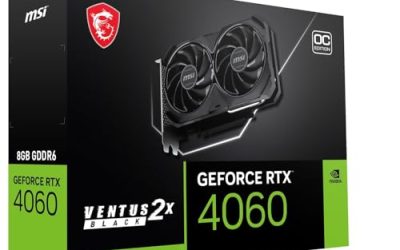
| MSI GeForce RTX 3060 Ventus 2X 12G OC | Older PCs needing more memory | 12GB GDDR6, 192-bit bus, 1807 MHz boost clock |
| ASRock Radeon RX 7600 Challenger Pro 8GB OC | Low-cost AMD builds | 8GB GDDR6, RDNA 3, 2695 MHz boost clock |
| XFX Swift Radeon RX 9060 XT OC Triple Fan 16GB | 1080p gamers who want memory headroom | 16GB GDDR6, RDNA 4, triple-fan cooler |
| GIGABYTE GeForce RTX 4070 WINDFORCE OC 12G | A step up for demanding 1080p and 1440p play | 12GB GDDR6X, 192-bit bus, triple WINDFORCE fans |
How to Choose
Match memory to the resolution you actually play at
Memory capacity decides how much texture and scene data a card holds at once, and running out of it causes stutter that no clock speed can fix. At 1080p, 8GB still handles most current games at high settings, but newer releases with large texture packs already push against that limit, so an 8GB card is a shorter-lived choice than a 12GB or 16GB one. If you keep a card for four or more years, treat 12GB as the practical floor and 16GB as the comfortable buy, even at 1080p. Check the memory figure on the listing itself, not the model name, because several models ship in more than one memory configuration.
Check power draw before you fall for a card
An affordable card can stop being affordable the moment it needs a new power supply, so read the board power and connector requirements on the listing before ordering. Cards in this guide range from modest draws that suit a 550W unit to hungrier designs that need a stronger supply and the right PCIe power cables. Add the card’s draw to roughly 100 to 150W for a mid-range processor and platform, then leave headroom for brief spikes. Also confirm the connector type: some newer cards use a different power connector than older supplies provide, and an adapter is a workaround, not a plan.
Measure the card against your case, not the box
Length, thickness and slot count are the most common reasons a graphics card gets returned, and they have nothing to do with performance. A triple-fan card can run 300mm or longer, and a 2.5-slot cooler can block the slot below it, which matters in compact cases and small-form-factor builds. The listing gives the card’s dimensions and slot width, and your case maker lists maximum graphics card clearance, so compare those two numbers directly. Leave room for airflow as well: a card pressed against a case panel or a drive cage runs hotter and louder than the same card with space around it.
Weigh the generation, not just the model number
A newer generation brings features an older card cannot add later, such as newer upscaling support, current display outputs and better video encoding. The RTX 40-series and 50-series cards support DLSS frame generation features that the 30-series does not, while AMD’s RDNA 4 cards bring newer encoding and upscaling than RDNA 3. That does not make older cards bad buys: a 12GB card from an earlier generation can outlast an 8GB card from a newer one in texture-heavy games. Compare generation features against memory capacity together, and let your games decide which matters more.
The 5 Best Options
ASUS Dual GeForce RTX 4060 OC Edition 8GB
The ASUS Dual RTX 4060 OC is the straightforward entry pick for a first build or a quiet 1080p machine. Its 8GB of GDDR6, PCIe 4.0 interface and DLSS 3 support cover current games at 1080p with high settings, and the dual Axial-tech fans with 0dB technology stop spinning at idle, so the card stays silent on the desktop. HDMI 2.1a and DisplayPort 1.4a cover modern monitors, and the 2.5-slot design fits most standard mid-tower cases without a fight.
Specs
- Memory: 8GB GDDR6
- Interface: PCIe 4.0
- Outputs: HDMI 2.1a, DisplayPort 1.4a
- Cooling: Dual Axial-tech fans, 0dB technology, 2.5-slot design
- Features: DLSS 3 support
- Warranty: 3-year warranty listed
Best for: First-time builders and quiet 1080p gaming setups.
Watch out for: 8GB of memory fills quickly in newer texture-heavy titles, so expect to lower texture settings sooner than with a 12GB or 16GB card.
MSI GeForce RTX 3060 Ventus 2X 12G OC
- Best for: Owners of older PCs who want a drop-in upgrade with generous memory.
- Memory: 12GB GDDR6, 15 Gbps
- Bus: 192-bit
- Boost clock: 1807 MHz
- Cooling: Torx twin-fan cooler
Owners of older PCs who want a drop-in upgrade with generous memory.
This is an earlier-generation card, so it lacks the newest upscaling features of the 40-series and 50-series, and its raw speed trails newer 8GB cards in some games.
The MSI RTX 3060 Ventus 2X 12G OC is the pick for anyone upgrading an older PC who wants memory more than the newest features. Its 12GB of GDDR6 on a 192-bit bus gives more texture room than most cards at this tier, and the 1807 MHz boost clock with 15 Gbps memory keeps 1080p frame rates steady. The twin Torx fan cooler is compact, the PCIe 4.0 interface works in older boards, and the Ampere architecture runs a wide library of games without fuss.
Watch out for: This is an earlier-generation card, so it lacks the newest upscaling features of the 40-series and 50-series, and its raw speed trails newer 8GB cards in some games.
ASRock Radeon RX 7600 Challenger Pro 8GB OC
The ASRock RX 7600 Challenger Pro is the low-cost AMD starter in this guide, built on RDNA 3 with 8GB of GDDR6 and a 2695 MHz boost clock. The triple-fan cooler with 0dB silent mode keeps it quiet at idle and steady under load, and PCIe 4.0 keeps it compatible with a wide range of boards. For 1080p gaming at high settings it delivers the essentials without extras you may never use, which is exactly the point of an affordable card.
Specs
- Memory: 8GB GDDR6
- Architecture: RDNA 3
- Boost clock: 2695 MHz
- Cooling: Triple fans, 0dB silent mode
- Interface: PCIe 4.0
Best for: Low-cost AMD builds and 1080p gaming at high settings.
Watch out for: 8GB is the tightest memory in this guide, so heavy texture packs and future releases may force settings down sooner than on the 12GB and 16GB picks.
XFX Swift Radeon RX 9060 XT OC Triple Fan 16GB
- Best for: 1080p gamers who want 16GB of memory and a card that stays useful for years.
- Memory: 16GB GDDR6
- Architecture: RDNA 4
- Cooling: Triple-fan cooler, OC edition
- Outputs: HDMI, 2x DisplayPort
1080p gamers who want 16GB of memory and a card that stays useful for years.
Ray tracing performance trails the Nvidia cards at this tier, and some tools and mods favor Nvidia features, so check your most-played games first.
The XFX Swift RX 9060 XT OC is the memory headroom pick: 16GB of GDDR6 on AMD’s RDNA 4 architecture, with a triple-fan cooler and HDMI plus dual DisplayPort outputs. That capacity is the reason to choose it over 8GB rivals at the same tier, because it holds high-resolution textures and stays comfortable as games grow more demanding. It is the longest-lived card in this guide for a 1080p gamer who keeps hardware for years.
Watch out for: Ray tracing performance trails the Nvidia cards at this tier, and some tools and mods favor Nvidia features, so check your most-played games first.
GIGABYTE GeForce RTX 4070 WINDFORCE OC 12G
- Best for: Gamers wanting a step up from entry-level cards, including 1440p play.
- Memory: 12GB GDDR6X
- Bus: 192-bit
- Cooling: 3X WINDFORCE fans
- Architecture: Ada Lovelace
Gamers wanting a step up from entry-level cards, including 1440p play.
As an earlier-generation card it lacks the newest features of the 50-series, and its triple-fan length and power needs deserve a check against your case and supply.
The GIGABYTE RTX 4070 WINDFORCE OC is the step-up pick for gamers who want more than entry-level 1080p performance and the option of 1440p play. Its 12GB of GDDR6X on a 192-bit bus, three WINDFORCE fans and Ada Lovelace architecture with DLSS 3 frame generation support handle demanding titles smoothly at high settings. It is an earlier-generation card, but its combination of memory, cooling and features still suits a wide range of games.
Watch out for: As an earlier-generation card it lacks the newest features of the 50-series, and its triple-fan length and power needs deserve a check against your case and supply.
Which One Fits Your Situation
You are building your first gaming PC
Pick the ASUS Dual RTX 4060 OC. It covers 1080p gaming with current features, runs quietly thanks to its fan-stop design, and fits standard cases without clearance drama. Its modest power needs also keep the rest of the build simple, since you will not need an oversized supply to support it.
You are upgrading an older PC on a tight budget
Pick the MSI RTX 3060 Ventus 2X 12G OC. Its 12GB of memory is the standout at this tier, its compact twin-fan design fits older cases, and PCIe 4.0 works with older boards. You get a real memory upgrade without replacing anything else in the machine. That makes it the simplest path to better textures and steadier frame rates.
You want the card to last the longest
Pick the XFX Swift RX 9060 XT 16GB. Memory capacity is the spec that ages slowest, and 16GB gives the most room for future texture packs and higher settings. The triple-fan cooler and RDNA 4 architecture round out a card built to stay in service for years. Few cards at this tier give that much headroom.
You play demanding games and may move to 1440p
Pick the GIGABYTE RTX 4070 WINDFORCE OC 12G. Its 12GB of GDDR6X and DLSS 3 frame generation support give it the headroom for heavier titles and higher resolutions, while the triple-fan cooler keeps it steady during long sessions. Check your case length and power supply first, since this is the largest and hungriest card in the guide.
Common Mistakes
- Buying an 8GB card for a high-refresh 1440p monitor and then wondering why textures stutter: match memory to resolution first.
- Ignoring the power supply: a card that needs a stronger unit or a different connector turns a simple upgrade into a second purchase.
- Skipping the tape measure: triple-fan cards and 2.5-slot coolers do not fit every case, and clearance is listed by both the card and the case maker.
- Choosing by model number alone: the same model name can ship with different memory sizes, so read the memory figure on the listing.
- Paying for a tier above your monitor: a 1080p 60Hz display cannot show what a high-end card renders, so spend where you can see the difference.
Frequently Asked Questions
Is 8GB of VRAM still enough in 2026?
At 1080p with high settings, 8GB remains workable in most current titles. Newer releases with large texture packs already push against it, though, so if you keep cards for four or more years, 12GB or 16GB is the safer purchase even at 1080p.
Should I buy AMD or Nvidia for an affordable card?
AMD generally offers more memory for the money at this tier, as the 16GB RX 9060 XT shows. Nvidia generally leads on ray tracing, upscaling quality and creative-app acceleration. If ray tracing is optional for you, AMD usually gives more for the same spend.
Will these cards work in an older motherboard?
Yes, in most cases. These cards use PCIe 4.0, which works in PCIe 3.0 slots at a lower link speed, and they fit standard desktop boards. Check your case length, slot width and power supply first, since those are the usual blockers.
Do I need a new power supply for an affordable card?
Not usually. The entry cards here run on modest supplies, and a quality 550W unit covers most of them. Step-up cards such as the RTX 4070 need more headroom, so add the card’s draw to your processor and platform, then check your supply’s rating.
Related guides
More from Amazon
Programs that pair well with the guide above. Offers and eligibility are set by Amazon and may change.
Free shipping on eligible items, Prime Video and more. Eligible new members can start with a free trial.
Start a Prime free trialAd-free music streaming. Eligible new subscribers can start with a free trial.
Try Music Unlimited freeA Prime membership for ages 18-24 with a trial period. Eligibility is set by Amazon.
See Prime for Young AdultsAudiobooks and podcasts to listen to on the go. Eligible new members can start with a free trial.
Try Audible freeAs an Amazon Associate we earn from qualifying purchases.