A 60fps webcam makes motion look smooth instead of choppy, which matters when you gesture, turn your head or move around during a stream or a call. Frame rate is only one part of the picture, though, because resolution, sensor size, focus and lighting decide how sharp and natural you look on screen. A 30fps camera looks fine for a still call, but it turns choppy the moment you move or gesture. The four cameras below all reach 60 frames per second at 1080p or better, so every pick here keeps motion smooth.


This guide is for streamers, remote workers and creators who want smooth video without a dedicated camera. Every webcam below was chosen from the name and specifications shown on its Amazon page, with the frame rate, resolution and sensor checked against the listing. The guide below walks through frame rate, sensors, focus and microphones first, then compares four cameras that cover streaming, calls, low light and recording.
Quick Picks
As an Amazon Associate we earn from qualifying purchases
| Product | Best for | Key spec from title |
|---|---|---|
| Logitech StreamCam | Streaming with autofocus | 1080p at 60fps |
| Logitech MX Brio | Sharp 4K calls and streams | 4K, 1080p at 60fps |
| Elgato Facecam Pro | True 4K60 streaming | 4K at 60fps |
| Razer Kiyo Pro Ultra | Low-light streaming | 4K, 1080p at 60fps |
How to Choose
Frame rate and resolution
A webcam that records 1080p at 60 frames per second gives smooth motion for calls and streams, while a 4K camera at 30 frames per second gives sharper stills at the cost of motion. Some cameras offer both, switching between 4K at 30fps and 1080p at 60fps, which covers streaming and recording in one device. Check the frame rate at the resolution you will actually use, because a camera that only reaches 60fps at 720p will not look smooth at 1080p. Match the output to your platform, since most streams and calls run at 1080p or lower.
Sensor and low light
A larger sensor gathers more light, which keeps the image clean when the room is dim and reduces the grain that appears on small sensors. Sony STARVIS sensors appear in several cameras in this group, and they are built for low-light performance. Check whether the camera adjusts exposure automatically and whether it handles a bright window behind you without turning your face dark. A camera with good low-light handling needs less extra lighting, which keeps a desk setup simple and tidy.
Field of view and focus
The viewing angle sets how much of the room appears behind you, so a wide angle suits a group call or a desk with props, while a narrower angle keeps the focus on one person. Autofocus keeps you sharp when you lean in or move, while a fixed-focus camera suits a fixed seat at a set distance. Check whether the camera lets you adjust the angle or zoom, because a digital zoom crops the image and can soften the picture. A privacy shutter matters too, since it covers the lens when the camera is idle.
Microphones and mounting
Built-in microphones cover quick calls, but a dedicated microphone sounds better for streams and recordings, so treat the camera mic as a backup. Dual noise-reducing microphones help in a busy room by cutting background sound. Check the mount before buying, because a clip that fits a monitor and a tripod thread cover most desks, while a privacy shutter keeps the lens covered when the camera is idle. USB-C and USB-A connections both work, so match the cable to the ports on your computer.
The 4 Best Options
Logitech StreamCam
The StreamCam records Full HD video at 60 frames per second, which keeps motion smooth for live streams and video calls. Its glass lens and smart auto-focus track your face as you move, and the exposure adjusts automatically when the room lighting changes. The camera mounts on a monitor or a tripod, and it can rotate for vertical video when a stream or clip needs a portrait frame. A USB-C cable connects to modern laptops and desktops, and dual microphones cover quick calls without extra gear. The mount adjusts easily, so the camera works on a monitor, a desk shelf or a tripod.
Specs
- Full HD 1080p video at 60fps
- Premium glass lens
- Smart auto-focus with facial tracking
- Vertical video support
- Dual microphones
- USB-C connection
Best for: Live streaming with smooth 1080p60 video and autofocus tracking.
Watch out for: It tops out at 1080p, so it cannot match the 4K cameras here for sharpness.
Logitech MX Brio
The MX Brio records 4K video at 30 frames per second and drops to 1080p at 60 frames per second when smooth motion matters more than resolution. Its Sony STARVIS sensor gathers light well in dim rooms, and auto-framing keeps you centered as you move. Dual noise-reducing microphones cut background sound on calls, and the USB-C connection works with modern laptops. It is the pick for buyers who want one camera that covers both sharp 4K recording and smooth 1080p streaming. The camera also works with common meeting software, so it fits a work setup as well as a stream.
Specs
- 4K Ultra HD video
- 1080p video at 60fps
- Sony STARVIS sensor
- Auto-framing
- Dual noise-reducing microphones
- USB-C connection
Best for: Sharp 4K recording with a smooth 1080p60 mode for streams.
Watch out for: 4K mode runs at 30fps, so switch to 1080p for the smoothest motion.
Elgato Facecam Pro
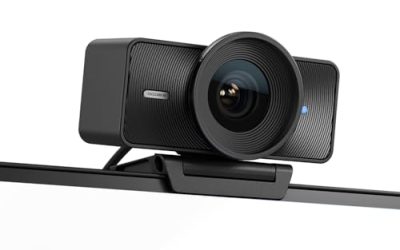
The Facecam Pro is the only camera in this group that records true 4K at 60 frames per second, which gives the sharpest and smoothest video here. Its Sony STARVIS sensor and f/2.0 21mm prime lens gather light well, and uncompressed video keeps the image clean for streams and recordings. Stream Deck integration lets you change settings from a control pad, and the fixed-focus design suits a set desk position. It is the pick for streamers who want the best image quality in this group. The prime lens keeps the image sharp edge to edge, which suits a camera that never moves.
Specs
- True 4K60 Ultra HD video
- Sony STARVIS sensor
- f/2.0 21mm prime lens
- Uncompressed video
- Stream Deck integration
- DSLR-style controls
Best for: True 4K60 streaming with the sharpest image in this group.
Watch out for: Fixed focus suits a set position, so it is less forgiving when you move around.
Razer Kiyo Pro Ultra
The Kiyo Pro Ultra uses a large 1/1.2-inch Sony STARVIS 2 sensor with an f/1.7 lens, which gathers more light than the other cameras here and keeps the image clean in dim rooms. It records 4K at 30 frames per second and 1080p at 60 frames per second, so it covers both sharp recording and smooth streaming. Autofocus tracks you as you move, a built-in microphone covers calls, and a privacy shutter covers the lens when the camera is idle. It is the pick for low-light rooms and late-night streams. The large sensor also helps in a room with a single lamp, where smaller sensors turn grainy.
Specs
- Large 1/1.2-inch Sony STARVIS 2 sensor
- f/1.7 aperture lens
- 4K video at 30fps
- 1080p video at 60fps
- Autofocus
- Built-in microphone
- Privacy shutter
- USB 3.0 connection
Best for: Low-light streaming with a large sensor and wide lens.
Watch out for: The large sensor and lens make it bigger than the other cameras here.
Which One Fits Your Situation
For live streaming
The Facecam Pro leads with true 4K60 video, while the StreamCam is the simpler 1080p60 choice. Both cameras keep motion smooth, so the choice comes down to whether you need 4K sharpness or a lighter setup. Check your upload speed first, because 4K60 streaming needs a faster connection than 1080p60. A wired connection helps most here, since Wi-Fi can drop frames during a long stream.
For video calls
The MX Brio fits calls best, because its auto-framing and noise-reducing microphones keep you centered and clear. The StreamCam is the backup choice, with autofocus and dual microphones for quick meetings. Both cameras connect over USB, so they work with common meeting software without extra setup. A good light in front of you matters more than the camera model for call quality.
For dim rooms
The Kiyo Pro Ultra leads, because its large sensor and wide lens gather more light than the other cameras here. The Facecam Pro follows with its Sony STARVIS sensor and fast prime lens. Add a small light when the room is very dark, since no webcam replaces good lighting entirely. Place the light in front of you, not behind, so your face stays bright.
For recording and editing
The Facecam Pro leads with uncompressed 4K60 video, which gives an editor the cleanest footage. The MX Brio follows with 4K recording and a 1080p60 mode for smooth clips. Both cameras connect over USB, so they work with common recording software. Uncompressed video takes more disk space, so keep a fast drive ready for long recordings. The MX Brio suits shorter clips, while the Facecam Pro suits long sessions.
Common Mistakes
- Buying a camera that only reaches 60fps at 720p and expecting smooth 1080p video.
- Ignoring sensor size, then wondering why the image turns grainy in a dim room.
- Using a fixed-focus camera from a seat that moves closer and farther during a call.
- Forgetting the mount, then finding the clip does not fit a thick monitor.
- Relying on a built-in microphone for a stream that needs a dedicated mic for clear voice.
Frequently Asked Questions
Is 60fps worth it on a webcam?
Yes, when you move, gesture or stream games, because 60 frames per second keeps motion smooth instead of choppy. The difference is clearest on a fast display and in streams with movement. For a still head-and-shoulders call, 30fps looks fine, so match the frame rate to how much you move during the call. A fast display shows the difference most clearly.
Can a webcam record 4K and 60fps at the same time?
Only a few cameras can, because 4K60 needs a fast sensor and a strong USB connection. The Facecam Pro in this guide records true 4K at 60fps, while the other cameras switch between 4K at 30fps and 1080p at 60fps. Check the frame rate at the resolution you will actually use. USB speed matters for 4K60.
Does a bigger sensor help a webcam?
Yes, a larger sensor gathers more light, which keeps the image clean in dim rooms and reduces grain. The Kiyo Pro Ultra uses a large 1/1.2-inch sensor for this reason. Sensor size matters more than megapixels for video, because video uses only part of the sensor at a time. A large sensor also keeps colors natural in warm indoor light.
Do I need a separate microphone with a 60fps webcam?
Built-in microphones cover quick calls, but a dedicated microphone sounds clearer for streams and recordings. The cameras in this guide carry dual or noise-reducing microphones that work well as a backup. Add a USB microphone when voice quality matters as much as the picture. A USB microphone also cuts room echo, which a camera mic cannot do.
Related guides
More from Amazon
Programs that pair well with the guide above. Offers and eligibility are set by Amazon and may change.
Free shipping on eligible items, Prime Video and more. Eligible new members can start with a free trial.
Start a Prime free trialAd-free music streaming. Eligible new subscribers can start with a free trial.
Try Music Unlimited freeA Prime membership for ages 18-24 with a trial period. Eligibility is set by Amazon.
See Prime for Young AdultsAudiobooks and podcasts to listen to on the go. Eligible new members can start with a free trial.
Try Audible freeAs an Amazon Associate we earn from qualifying purchases.