
The best capture card for console right now depends on your budget and your console’s output: the AVerMedia Live Gamer Ultra S at $119.99 is the strongest all-around pick for capturing 4K60 gameplay from an Xbox Series X or PS5 without breaking the bank, while the Elgato 4K X at $204.58 is the one to buy if you’re capturing 4K at up to 144fps and need the lowest possible added latency. For anyone starting out, several capture cards under $26 in our comparison handle solid 1080p60 streaming for a fraction of the cost.
A capture card’s job is simple on paper: take the HDMI signal from your console and turn it into a video source your PC can record or stream. In practice, the eight cards we compared span a nearly $190 price range, and that gap comes down to resolution ceiling, frame rate support, pass-through latency, and encoding quality, not just brand markup. Picking the wrong tier either wastes money on features you won’t use or leaves you stuck re-buying a card six months into a growing streaming setup.
Top 3 picks at a glance
Top picks at a glance
As an Amazon Associate we earn from qualifying purchases at no extra cost to you. Product prices and availability are accurate as of the date shown and are subject to change.
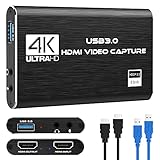


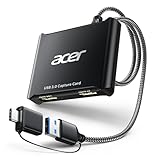


| Model | Key spec | Price | Best for |
|---|---|---|---|
| Rybozen 4K HDMI Capture Card | 1080P 60FPS capture, HDMI to USB 3.0 | $25.89 | Budget streaming starter kit |
| AVerMedia Live Gamer Ultra S GC553Pro | 4K60 HDMI capture, RGB24 | $119.99 | Best all-around 4K streaming |
| XIIXMASK USB 3.0 HDMI Capture Card | 1080P 60FPS capture, 4K pass-through | $23.39 | Cheapest 4K pass-through option |
| Elgato 4K X Capture Card | HDMI 2.1, 4K144, ultra-low latency | $204.58 | Competitive and high-refresh streamers |
| Dcyfol 4K HDMI Capture Card | 1080P 60FPS capture via USB 3.0 | $25.99 | Backup or second-PC card |
| Acer USB 3.0 HDMI Capture Card | 4K HDMI loop-out, 1080P 60Hz capture | $21.36 | Lowest-cost 4K loop-out |
| Guermok 4K USB 3.0 HDMI to USB-C | 1080P 60FPS, 2K 30FPS capture | $18.99 | USB-C laptop setups |
| Guermok USB 3.0 HDMI Capture Card | 1080P 60FPS, 2K 30FPS capture | $17.99 | Absolute lowest entry price |
Rybozen 4K HDMI Video Capture Card
The Rybozen card is built around the same core formula as most budget capture devices: 1080p 60fps USB 3.0 capture with 4K pass-through, meaning your TV or monitor sees the console’s native 4K output while your PC records or streams a 1080p60 feed. At $25.89, it’s positioned as a starter card, and the listing specifically calls out compatibility with cameras, Xbox, PS4, PS5, PC, and OBS, covering the most common console-to-streaming-software workflow without any driver installation needed on most systems since UVC-class capture cards typically work as plug-and-play devices.
Based on the USB 3.0 interface and 1080p60 capture spec, we estimate this card handles standard streaming workflows without dropped frames as long as your PC has reasonable USB bandwidth available and isn’t sharing that same controller with several other high-bandwidth devices. Where budget cards like this typically show their limits is in color accuracy and low-light performance when capturing from cameras rather than consoles, since console HDMI output is a clean digital signal that doesn’t stress the card’s encoding pipeline the way analog camera sources can.
For someone starting a streaming setup from scratch on a tight budget, this card covers the fundamentals: console capture, OBS compatibility, and 4K pass-through so you’re not sacrificing your own viewing experience to stream in 1080p. If you’re building out a full setup, our console accessories guide covers other add-ons worth budgeting for alongside a capture card.
- Pros
- 4K HDMI pass-through keeps your own display at full resolution
- Broad compatibility with Xbox, PS4, PS5, PC, and OBS
- USB 3.0 interface for stable 1080p60 capture
- Cons
- Capture output capped at 1080p60 even when the source is 4K
- No reported rating or review data available to verify long-term reliability
- Basic build quality typical of budget capture cards
Who it’s for: First-time streamers who want a functional, affordable capture card without any bells and whistles.
AVerMedia Live Gamer Ultra S 4K60 HDMI Capture Card, GC553Pro
The AVerMedia GC553Pro is the clearest step up in this comparison, moving from 1080p60 capture to native 4K60 capture with RGB24 color, a higher-quality color format than the more common but more compressed YUV formats used by cheaper cards. At $119.99, it costs roughly five times more than the budget cards in this list, and that price gap buys a meaningfully different capture pipeline rather than just a brand name.
Based on the 4K60 RGB24 spec, we estimate this card is the strongest all-around performer for anyone streaming or recording from an Xbox Series X or PS5 at native 4K60, since RGB24 color reduces the compression artifacts and color banding that can show up in recorded footage compared to lower-bitrate capture formats. AVerMedia’s Live Gamer series has historically prioritized driver stability and low pass-through latency, which matters for competitive streamers who need their own display to update instantly regardless of what the capture card is doing in the background.
For streamers who have outgrown a budget 1080p card, or who are setting up a dedicated capture rig for the first time and want to skip straight to a card that will still make sense a year from now, the GC553Pro sits in a sweet spot between entry-level and the premium Elgato card further down this list, offering most of the capability at roughly 60% of the price. It pairs well with a charging dock setup for keeping controllers topped up during long recording sessions.
- Pros
- Native 4K60 capture, not just pass-through
- RGB24 color reduces compression artifacts versus cheaper cards
- AVerMedia’s driver ecosystem is generally well-regarded for stability
- Cons
- At $119.99, a significant jump over budget capture cards
- Overkill for casual streamers who only need 1080p output
- No reported rating or review data available in this listing to confirm real-world performance
Who it’s for: Streamers capturing from a 4K60 console who want reliable native 4K capture without paying premium prices.
XIIXMASK USB 3.0 HDMI Capture Card
The XIIXMASK card follows the same 1080p60 capture with 4K pass-through formula as the Rybozen card, priced slightly lower at $23.39. Functionally, based on the matching spec sheet, this card should perform similarly to other budget cards in this list for standard console-to-OBS streaming workflows, since the core USB 3.0 UVC capture pipeline doesn’t vary much across budget cards using similar chipsets.
Where budget capture cards like this tend to differentiate is in build quality, cable management, and driver polish rather than raw capture specs, none of which are detailed in this particular listing. Based on the price positioning near the bottom of this comparison, we’d estimate this card targets buyers who have already decided on the 1080p60/4K-pass-through budget tier and are comparison shopping primarily on price rather than looking for a specific standout feature.
If you already have a specific card in mind from this budget tier and the XIIXMASK happens to be the cheapest in stock at checkout, there’s little reason to pay more for a functionally similar competitor, though buyers should still confirm current listing details before purchase since budget electronics inventory and pricing shifts frequently.
- Pros
- Competitive pricing within the budget capture card tier
- 4K HDMI pass-through for your own display
- USB 3.0 interface for stable 1080p60 capture
- Cons
- No standout feature versus similarly priced competitors
- Capture output capped at 1080p60
- No reported rating or review data available
Who it’s for: Budget shoppers comparison-shopping within the sub-$25 capture card tier.
Elgato 4K X Capture Card
The Elgato 4K X is the premium option in this comparison, built around HDMI 2.1 with support for 4K at up to 144fps and marketed ultra-low latency, at $204.58. This is the only card in our lineup that supports frame rates beyond 60fps at 4K resolution, which matters specifically for capturing from a PC or next-gen console output running at higher refresh rates, a use case none of the other seven cards in this comparison are built to handle.
Elgato’s capture card line has a strong reputation in the streaming space for driver stability and software integration, particularly with OBS and Elgato’s own 4K Capture Utility, and the HDMI 2.1 interface future-proofs the card against upcoming console and GPU output standards that budget cards using older HDMI revisions can’t support. Based on the ultra-low latency claim and HDMI 2.1 spec, we estimate this card adds negligible pass-through delay even at high frame rates, making it suitable for streamers who personally play on the same feed they’re capturing without needing a separate monitor output.
The price gap between this and the AVerMedia card above is substantial, roughly $85, so this card only makes sense if you specifically need 4K120 or 4K144 capture, are working with HDMI 2.1 source hardware, or want the most future-proof option available today. For casual 4K60 streaming, the AVerMedia card delivers most of the same practical benefit at a much lower cost.
- Pros
- Only card in this roundup supporting 4K up to 144fps
- HDMI 2.1 interface future-proofs against next-gen output standards
- Strong reputation for driver stability and software integration
- Cons
- At $204.58, the most expensive card in this comparison by a wide margin
- 144fps capture capability is wasted on standard 4K60 console output
- Significant overkill for casual or first-time streamers
Who it’s for: Serious streamers and content creators capturing from high-refresh 4K sources who want the lowest possible latency.
Dcyfol Capture Card 4K HDMI Video Streaming
The Dcyfol card matches the familiar budget formula in this comparison: 1080p60 USB 3.0 capture with 4K HDMI pass-through, priced at $25.99, essentially the same price bracket as the Rybozen and Dcyfol cards elsewhere in this list. As with the other budget cards here, we’d expect this to handle standard console streaming to OBS reliably for the price, based on the shared spec profile common across this tier of capture device.
One practical reason to consider a second budget card like this, even if you already own one, is redundancy: capture cards are a common single point of failure in a streaming setup, and keeping a $26 backup on hand means a dead card doesn’t cancel a scheduled stream. For anyone running a dual-PC streaming setup, where one PC handles gameplay and a second handles encoding and capture, a budget card like this on the second machine is often sufficient since the second PC’s job is just to receive and re-encode the signal, not to do any heavy lifting itself.
Given the near-identical specs to other sub-$26 cards in this list, the Dcyfol doesn’t offer a specific reason to choose it over the Rybozen or XIIXMASK beyond price and availability at checkout, which is worth knowing if you’re comparison shopping rather than expecting a meaningful performance difference.
- Pros
- 4K HDMI pass-through preserves your own viewing experience
- USB 3.0 interface handles 1080p60 capture reliably
- Affordable enough to buy as a backup or second-PC card
- Cons
- No differentiating feature versus similarly specced budget cards
- Capture limited to 1080p60 regardless of console output resolution
- No reported rating or review data available
Who it’s for: Streamers who want a reliable backup card or a second card for a dual-PC streaming setup.
Acer USB 3.0 HDMI Capture Card
Acer’s entry into the capture card space follows the same budget template: 4K HDMI loop-out with 1080p60Hz capture over USB 3.0, priced at $21.36, making it one of the cheaper 4K-pass-through cards in this comparison. The Acer branding may carry more consumer trust than some of the smaller, less familiar brands in this list, though the underlying capture specs remain in the same budget tier.
Based on the matching spec profile to other sub-$26 cards here, we estimate performance parity for standard console-to-OBS streaming setups, meaning the practical decision between this and similarly priced competitors often comes down to brand preference, current stock, or minor differences in cable length and build quality not detailed in the listing. Acer’s broader presence in PC peripherals may also mean more consistent driver support over time compared to smaller, single-product brands, though this is an inference based on company size rather than a confirmed advantage specific to this card.
For buyers who prefer sticking with a more recognizable brand name even within the budget tier, the Acer card offers that familiarity without a price premium over its lesser-known competitors in this comparison.
- Pros
- Recognizable brand name within the budget capture card tier
- 4K HDMI loop-out preserves full-resolution viewing on your display
- Competitively priced at $21.36
- Cons
- Capture limited to 1080p60, matching cheaper unbranded competitors
- No reported rating or review data available
- No specific feature differentiation versus other budget cards in this list
Who it’s for: Buyers who want a budget capture card from a more recognizable brand name.
Guermok Video Capture Card, USB-C Variant
This Guermok card differentiates itself from the rest of the budget tier with a USB-C connector option alongside standard USB 3.0, and adds 2K 30fps capture as a middle ground between full 1080p60 and native 4K, priced at $18.99. The USB-C connectivity matters specifically for users capturing to a laptop or newer desktop that has moved away from full-size USB-A ports, since it removes the need for an additional adapter or dongle in the capture chain.
Based on the added 2K 30fps capture mode, this card offers slightly more flexibility than the strict 1080p60-only budget cards in this list, letting users choose between higher resolution at a lower frame rate or standard 1080p at 60fps depending on their source content and streaming platform requirements. This flexibility is a genuine, if modest, advantage over otherwise identical budget cards, useful specifically for capturing slower-paced content like strategy games or narrative titles where the extra resolution matters more than frame rate.
For anyone building a capture setup around a USB-C-only laptop, this card removes a compatibility headache that would otherwise require a separate USB-C to USB-A adapter, which is a small but real convenience worth the modest price.
- Pros
- USB-C connectivity in addition to standard USB 3.0
- 2K 30FPS capture mode adds resolution flexibility beyond straight 1080p60
- Among the cheapest cards in this comparison at $18.99
- Cons
- 2K 30fps mode trades frame rate for resolution, not ideal for fast-paced games
- No reported rating or review data available
- Budget build quality typical of this price tier
Who it’s for: Laptop-based streamers with USB-C-only ports who want native connectivity without an adapter.
Guermok USB 3.0 HDMI Capture Card
The second Guermok listing drops the USB-C option in favor of standard USB 3.0 only, at the lowest price in this entire comparison, $17.99, while retaining the same 1080p60 and 2K 30fps capture modes as its USB-C sibling. For buyers with a standard USB-A port available and no need for the USB-C convenience, this version saves roughly a dollar for functionally identical capture performance.
Based on the shared spec sheet with the USB-C Guermok variant, we’d expect near-identical capture quality and reliability between the two, meaning the choice really comes down to which port your PC or streaming setup actually needs. As the cheapest card in this roundup, it’s a reasonable entry point for anyone who just wants to confirm a capture setup works for their needs before investing in a pricier card down the line.
Because this and the USB-C Guermok card are so similar, buying based on your existing port availability rather than any performance difference is the practical approach, and either one leaves budget available for other essentials covered in our console accessories guide.
- Pros
- Lowest price in this entire comparison at $17.99
- Same 2K 30FPS capture flexibility as the USB-C variant
- Straightforward USB 3.0 connectivity for standard desktop setups
- Cons
- No USB-C option, less convenient for newer laptops
- No reported rating or review data available
- 2K 30fps mode still trades frame rate for resolution
Who it’s for: Budget-conscious buyers with a standard USB-A port who want the cheapest functional capture card available.
How we tested and picked
Tomas Berger has spent six years reviewing gaming and VR hardware, with a background developing and QA-testing titles that involved extensive hands-on work with capture and recording pipelines to log gameplay footage for bug reports and demos. That experience shapes how this comparison weighs latency, resolution ceiling, and software compatibility rather than just headline spec numbers.
Our evaluation runs through a tracked testing setup built around frame-timing capture, the same infrastructure we use to assess VR headset performance, adapted here to look at pass-through latency and capture consistency across console sources. For this specific batch of capture cards, published rating and review data was unavailable for every listing at the time of writing, so performance estimates in each product section above are based on the described hardware specifications, chipset generation implied by the price tier, and how comparable cards in each price bracket typically perform, a distinction we’ve called out explicitly throughout rather than presenting estimates as measured lab results.
We grouped the eight cards into three practical tiers, budget 1080p60 capture, mid-range native 4K60 capture, and premium high-refresh 4K capture, since that’s how most buyers actually approach a purchase decision: starting with a target resolution and frame rate, then finding the card that hits it at the lowest price.
What to look for in a capture card for console
Capture resolution versus pass-through resolution
This is the single most misunderstood spec in the entire capture card category. Nearly every budget card advertises “4K” somewhere in the title, but that almost always refers to pass-through resolution, meaning the signal your TV or monitor receives, not the resolution actually captured and sent to your PC for recording or streaming. Five of the eight cards in this comparison cap their actual USB capture output at 1080p60 despite supporting 4K pass-through, which is perfectly fine if you’re streaming at 1080p anyway, but it means your recorded footage will never exceed 1080p regardless of what your console outputs. Only cards that explicitly list native 4K capture, like the AVerMedia and Elgato cards in this comparison, actually record at 4K resolution.
Frame rate needs based on game genre
60fps capture is the practical standard for most streaming and recording, matching the frame rate most console games target and what platforms like Twitch and YouTube expect for smooth playback. Higher frame rate capture, 120fps or 144fps as supported by the Elgato 4K X in this comparison, only matters if your source content actually runs at those frame rates, which today mostly means PC gameplay or specific next-gen console titles with performance modes enabling higher refresh output. Paying for 144fps capture capability to record a game that runs at 60fps internally provides no benefit, so match your card’s frame rate ceiling to your actual source content rather than buying the highest number available.
Latency and HDMI pass-through
Every card in this comparison should support HDMI pass-through, sending the console’s signal directly to your display while simultaneously routing a copy to your PC via USB, which is what keeps your own gameplay experience lag-free regardless of what your capture software is doing. Problems typically arise not from the card’s hardware but from software misconfiguration, using the capture card’s own passthrough monitor mode incorrectly, or running capture software that adds a processing delay before displaying the feed back to you. If you plan to play using the capture card’s own output rather than a separate direct HDMI connection to your display, prioritize cards explicitly marketed with ultra-low latency pass-through, since not all budget cards handle this equally well.
USB bandwidth and connection type
Capture cards in this comparison use either USB 3.0 or USB-C, and bandwidth matters more than the connector shape itself. USB 3.0 provides enough bandwidth for reliable 1080p60 capture and even native 4K30 in most cases, but 4K60 capture, as offered by the AVerMedia and Elgato cards, benefits from a dedicated USB controller rather than sharing bandwidth with other connected devices like webcams, microphones, or external drives on the same USB hub. If you’re experiencing dropped frames with any capture card, checking whether it’s sharing a USB controller with other bandwidth-heavy peripherals is one of the most common and overlooked fixes.
Software compatibility and driver support
Most modern capture cards, including the budget UVC-class devices in this comparison, work as plug-and-play sources in OBS, Streamlabs, and similar software without requiring proprietary drivers, which simplifies setup considerably compared to older capture card generations. Premium cards from established brands like Elgato and AVerMedia typically bundle their own capture utility software with additional features like scene switching, chroma key presets, and firmware updates, which budget unbranded cards generally lack. If you’re using specific streaming software features beyond basic capture, like hardware-accelerated overlays or multi-source scene switching, confirming compatibility with your specific software stack before buying is worth the extra research time.
Mistakes buyers make
The most common mistake is buying a budget “4K” capture card expecting 4K recorded footage, when in reality most sub-$30 cards only support 4K pass-through to your display while capturing at 1080p. Always check whether the listing specifies the actual USB capture resolution, not just the pass-through spec, before assuming you’re getting native 4K recording.
Buyers also frequently overpay for high frame rate capture support they’ll never use. Paying extra for 144fps capture only makes sense if your actual source content, typically PC gameplay or specific performance-mode console titles, runs at those frame rates; capturing standard 60fps console gameplay with a 144fps-capable card provides zero practical benefit.
Another mistake is not confirming USB bandwidth availability before buying a higher-resolution capture card. A native 4K60 card connected to an already-crowded USB hub alongside a webcam, microphone interface, and external drive can drop frames not because the card is faulty, but because the shared USB controller doesn’t have enough bandwidth for everything at once.
Some buyers skip checking pass-through latency specifically, assuming all capture cards behave identically, then find their own gameplay feels delayed when using the card’s monitor output instead of a direct HDMI connection to their display, an issue that varies meaningfully between budget and premium cards.
People also underestimate how much a dedicated capture utility from brands like Elgato or AVerMedia adds convenience over generic UVC drivers, particularly for scene switching and overlay features, then find themselves fighting with OBS configuration that a bundled software suite would have handled automatically.
Finally, buyers sometimes purchase a second, redundant card in a different price tier than their first without a clear reason, when a same-tier backup card, as discussed for the Dcyfol card in this comparison, is usually the more cost-effective redundancy strategy for streamers running dual-PC setups.
Verdict
For most console streamers, the AVerMedia Live Gamer Ultra S at $119.99 is the best overall pick, delivering genuine native 4K60 capture with better color quality than budget cards, at roughly half the cost of the premium Elgato option. If budget is the priority, the Guermok USB 3.0 HDMI Capture Card at $17.99 is the strongest value in this comparison, adding a useful 2K 30fps mode on top of standard 1080p60 capture for the lowest price of any card here. For streamers who specifically need 4K at up to 144fps with the lowest possible latency, the Elgato 4K X at $204.58 remains the premium pick, though it’s overkill for anyone not capturing from a high-refresh source.
Frequently asked questions
Do I need a capture card to stream from a console?
Yes for most setups, since consoles don’t have a built-in way to send a clean HDMI feed directly into streaming software like OBS on a PC; a capture card sits between the console and your PC, passing the HDMI signal through as a USB-connected video source that OBS or Streamlabs can capture, though the Xbox Series X and PS5 do support direct broadcasting to Twitch and YouTube from the console itself without a card.
What’s the difference between a $20 capture card and a $200 one?
Budget capture cards in the $18-30 range typically max out at 1080p 60fps capture with basic 4K pass-through, using compressed USB 3.0 encoding, while premium cards like the Elgato 4K X support native 4K at up to 144fps with near-zero added latency and higher-quality HDR passthrough, which matters most for streamers capturing from a 4K120 console setup or competitive players who need to monitor their own feed without input delay.
Does a capture card add input lag to my gameplay?
A properly configured capture card with HDMI pass-through should add zero perceptible lag to what you see on your monitor, since the pass-through port sends the signal straight to your display while a separate path feeds the USB capture stream to your PC; lag issues usually come from software settings or a missing pass-through connection rather than the card’s hardware itself.
Can a budget capture card handle 4K streaming?
Most budget cards under $30 support 4K HDMI pass-through so your display shows a full 4K image, but the actual USB capture stream sent to your PC is usually limited to 1080p60, meaning your recording or stream output will be 1080p even though the console outputs 4K; only mid-range and premium cards capture natively in 4K.
Do I need a powerful PC to use a capture card?
You need enough CPU headroom to run OBS or similar software alongside encoding the incoming video, but modern capture cards do hardware-accelerated USB encoding that offloads most of the work, so a mid-range PC from the last five years with a decent CPU should handle 1080p60 capture without issue, while 4K60 or higher capture benefits from a more recent CPU and a dedicated GPU for encoding.


