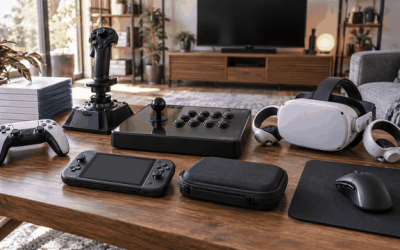
Integrating mixed reality into professional workflows has evolved from an experimental novelty into a core operational strategy across industries like medicine, engineering, architecture, and corporate training. As spatial computing hardware matures in 2026, organizations are moving past initial trials and investing in deployment-scale XR hardware. However, selecting the right mixed reality headset for professional development requires looking past flashy consumer marketing and focusing on metrics that directly impact productivity, safety, and training retention.
Choosing enterprise-grade hardware is vastly different from picking up a device for casual gaming. Professional environments demand rigorous data security, all-day comfort, precise spatial tracking, and seamless integration with existing software stacks. To make an informed purchasing decision, decision-makers must evaluate how specific hardware features align with their team’s daily operational realities and long-term deployment goals.
As an Amazon Associate we earn from qualifying purchases at no extra cost to you. Product prices and availability are accurate as of the date shown and are subject to change.

Prioritizing Optical Clarity and Passthrough Fidelity
For professional development use cases—such as reviewing 3D CAD models, practicing complex surgical procedures, or reading technical schematics—visual fidelity is paramount. Unlike consumer entertainment devices where slight motion blur or compression artifacts might go unnoticed, professional applications require razor-sharp text legibility and accurate color reproduction. Look for headsets featuring advanced optical stacks that minimize glare and chromatic aberration. High-resolution passthrough cameras are equally critical in mixed reality, as users need to interact with physical keyboards, notes, and colleagues without experiencing visual warping or latency in their peripheral view.
Evaluating Ergonomics and Weight Distribution
Professional training sessions and design reviews often span multiple hours, making physical comfort a make-or-break factor for hardware adoption. A poorly balanced headset causes neck strain and fatigue, abruptly cutting short productive work sessions. When assessing physical design, examine how the weight is distributed across the head strap system. Counterbalanced batteries, adjustable rigid frames, and easily swappable facial interfaces that accommodate prescription glasses or safety wear are essential. Never compromise on ergonomics for minor spec bumps; if a device is uncomfortable to wear, employees simply will not use it.
Demanding Enterprise-Grade Security and Privacy
Corporate networks and sensitive government or medical databases cannot risk vulnerabilities introduced by consumer-grade operating systems. Professional development hardware must offer robust enterprise security features, including managed device deployment, predictable firmware update schedules, and strict data privacy compliance. Verify whether the manufacturer allows offline or localized mode operations to prevent proprietary training data, biometric telemetry, and internal blueprints from being uploaded to external cloud servers without explicit organizational consent.
Assessing Software Ecosystem and Open Standards
A mixed reality headset is only as good as the software ecosystem supporting it. Before committing to a hardware platform, audit your organization’s current training pipelines and software tools. Does the headset natively support industry-standard development engines, CAD viewers, and remote collaboration suites? Look for devices that support open XR standards rather than closed proprietary gardens. Open ecosystems protect your hardware investment by ensuring that custom training applications built today can be ported to future hardware iterations without requiring a complete code rewrite.
Analyzing Tracking Precision and Input Modalities
Professional development often relies on muscle memory and precise spatial interaction. Whether your trainees are assembling a jet engine or learning emergency response protocols, sub-millimeter tracking accuracy is non-negotiable. Evaluate how well the headset handles both controller-based inputs and natural hand tracking. Reliable inside-out tracking that maintains stability even in brightly lit or complex office environments prevents frustrating tracking dropouts that break user immersion and derail training momentum.
Balancing Upfront Costs Versus Long-Term Value
Budget constraints are a reality for any organization, but evaluating hardware purely on sticker price is a false economy. Cheaper consumer headsets often lack the durability required for daily commercial use, resulting in higher replacement rates, lack of enterprise customer support, and hidden software licensing fees. Calculate the total cost of ownership, which includes warranty coverage, replacement parts like facial pads and straps, commercial licensing requirements, and expected hardware lifespan. Investing in robust enterprise-tier hardware usually yields a lower overall cost per use over a multi-year deployment cycle.
Related Guides
To explore specific hardware options currently dominating the market and compare enterprise feature sets side-by-side, check out our comprehensive guide on the Best Mixed Reality Headsets for Professional Development to find the ideal match for your team’s unique operational needs.
FAQ
Can consumer-grade mixed reality headsets be used for professional training?
While consumer headsets can handle basic proof-of-concept demos, they generally lack enterprise-tier security compliance, commercial warranties, and ruggedized build quality. For scalable professional development, dedicated enterprise hardware is strongly recommended to avoid data privacy vulnerabilities and rapid physical wear.
Why is passthrough quality so important for mixed reality professional tasks?
High-fidelity passthrough allows users to seamlessly blend digital assets with their physical workspace, enabling them to read notes, use physical tools, and communicate with coworkers without removing the headset. Poor passthrough introduces latency and distortion, which causes disorientation during precision tasks.
How does battery life impact professional mixed reality deployments?
Professional sessions often run continuously for hours, meaning standard battery limits can interrupt training flows. Enterprise deployments benefit from headsets featuring hot-swappable batteries, continuous power-over-cable tethering options, or efficient power management designed for heavy workloads.
What should organizations look for regarding data privacy compliance?
Organizations must ensure that eye-tracking, spatial mapping, and user telemetry data are stored securely and not harvested for advertising. Enterprise models typically feature dedicated privacy controls, offline deployment modes, and strict administrative data governance policies.