If you want 4K-class sharpness without needing a flagship graphics card for every game, the best answer in 2026 is either a high-refresh 1440p monitor, which asks far less of your GPU, or a dual-mode monitor that runs 4K at 240Hz and drops to a pixel-doubled 1080p mode at up to 480Hz for competitive games. The LG UltraGear 32GS95UE and Asus ROG Strix XG32UCWMG are the dual-mode models outlets name most often, while the newer 5K and 1440p dual-mode panels such as the LG UltraGear evo GM9 27GM950B and Asus ROG Strix XG27JCG aim at players who want the sharpness of 5K with a fast 1440p mode.
As an Amazon Associate we earn from qualifying purchases at no extra cost to you.



Our Top Picks
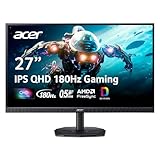
 Acer Nitro 27in QHD 2560x1440 IPS 180Hz Gaming27-inch8.28 x 24.2 x 18.14 Inches12.1 PoundsCheck on Amazon
 New! Sceptre Curved 34-inch Prime Gaming Monitor 344034 inches8.5 x 31.8 x 18 inches14 poundsCheck on Amazon
 ASUS TUF Gaming VG27AQL5A 27 Inch 1440p 210Hz14.4" x 24.2" x 2"8.5 x 24.2 x 21 inches15.2 PoundsCheck on Amazon

Top 3 picks at a glance
What this search really asks
People who search for a 1440p monitor for 4K gaming usually mean one of three things. Some want a 1440p screen that is easy to drive while still looking sharp, because a 4K game at high settings needs a strong graphics card. Others own a 4K-capable card and want a monitor that can run at 4K when a game allows it and at a lower resolution when they need frame rate. A third group wants a console or PC output at 4K sent to a 1440p display. The right monitor differs for each, so this guide groups products by how you play.
At a glance: monitors compared
| Monitor | Panel and size | Key stated specs | Best for | Limits |
|---|---|---|---|---|
| LG UltraGear 32GS95UE | 32-inch WOLED | 4K 240Hz, 1080p dual mode up to 480Hz | Players who want 4K and esports modes in one screen | Premium tier; OLED care such as static image habits |
| Asus ROG Strix XG32UCWMG | 32-inch WOLED | 4K 240Hz, 1080p up to 480Hz in dual mode (Tom’s Hardware) | Best 4K pick in Tom’s Hardware list | Premium tier; large desk space |
| MSI MPG 272URX | 26.5-inch QD-OLED | 4K 240Hz, HDMI 2.1 supports 4K up to 120Hz per RTINGS | Compact, very sharp 4K screen | PC Gamer notes brightness limits and high cost; no 1080p dual mode in the search results |
| LG UltraGear evo GM9 27GM950B | 27-inch, 5K | 165Hz at 5K, 330Hz at 1440p | Sharp text plus fast 1440p mode | Newer model; 5K demands a strong GPU at native resolution |
| Asus ROG Strix XG27JCG | 27-inch, 5K | 180Hz at 5K, 330Hz at 1440p | Similar 5K / 1440p approach | Newer model; fewer independent reviews so far |
| Mainstream 27-inch 1440p OLED or fast-IPS | 27-inch | 1440p at 240Hz or more depending on model | Easy-to-drive speed; PCWorld says some 1440p OLEDs cost less than the 4K parts | Lower pixel density than 4K |
Why 1440p is the sensible middle
A 1440p image has about 3.7 million pixels, compared with about 8.3 million at 4K. That means a graphics card has less than half the pixels to render per frame, so you can raise settings, enable ray tracing or hit higher frame rates. On a 27-inch screen, 1440p is sharp enough for most players, and it works with a mid-range card from the RTX 50 or Radeon RX 9000 families. A 4K display makes more sense on 32-inch screens, where pixel density would otherwise look soft.
Dual-mode monitors: two resolutions in one panel
Dual-mode monitors from LG and Asus list 4K at 240Hz and a lower mode that doubles the pixels at 1080p for up to 480Hz. PC Gamer rates the LG 32GS95UE’s HDR handling among the best it has seen, and Phandroid lists the 4K 240Hz plus 1080p 480Hz dual mode on its list. You switch modes when you change games. The benefit is flexibility: play single-player titles at 4K and competitive shooters at a lower, faster mode.
5K and 1440p dual-mode models
A newer group of monitors targets players who find 4K demanding. The LG UltraGear evo GM9 27GM950B and the Asus ROG Strix XG27JCG list 5K at around 165 to 180Hz and 1440p at up to 330Hz, according to the sources in this guide. The 5K panel is very sharp on a 27-inch screen, while the 1440p mode gives you an easier path to high frame rates. They are newer, so reviews are still accumulating.
OLED notes
- Brightness: PC Gamer notes the MSI 272URX is gorgeous but limited in brightness, which is typical of QD-OLED screens in bright rooms.
- Burn-in care: Makers publish care features and warranty terms for OLED panels. Read them before buying and avoid leaving static images on screen for long periods.
- Ports: Look for DisplayPort 1.4 or newer and HDMI 2.1. RTINGS notes the 272URX supports 4K up to 120Hz over HDMI.
- Console use: Consoles output 4K up to 120Hz over HDMI 2.1, which a 4K 240Hz monitor can accept.
Matching the monitor to your GPU
Mid-range graphics card
A 27-inch 1440p monitor at 165Hz to 240Hz is the best match. You will reach high frame rates in most games and keep the option to upgrade the card later.
High-end graphics card
A 4K 240Hz or dual-mode monitor lets the card show off, and the lower mode keeps esports titles fast.
Upscaling
Nvidia DLSS and AMD FSR let a card render at lower internal resolution and upscale to 4K, which narrows the gap. Support depends on the game.
Pick X if… decision table
| Pick this | If you… |
|---|---|
| 27-inch 1440p high-refresh monitor | Have a mid-range GPU and want smooth frame rates |
| LG 32GS95UE or Asus XG32UCWMG | Want 4K for single-player games and a fast mode for esports |
| MSI MPG 272URX | Want a compact, dense 4K QD-OLED screen |
| LG GM9 27GM950B or Asus XG27JCG | Want 5K sharpness with a 1440p fast mode |
Alternatives
- Standard 4K monitor at 144Hz: Cheaper than OLED and fine for single-player and console use.
- Ultrawide 1440p: A 3440×1440 monitor gives more width at similar GPU load to 1440p.
- Staying at 1440p and upscaling: If your card is older, a high-refresh 1440p panel with DLSS or FSR is a practical way to enjoy sharp images.
How to set up a 1440p or 4K monitor for the best result
Buying the panel is only half the job. Set the monitor to its maximum refresh rate in the operating system display settings, because many screens default to 60Hz until you change it. Turn on adaptive sync (G-Sync Compatible or FreeSync) in both the monitor menu and the graphics driver, and cap frame rate a few frames under the refresh rate so the screen stays inside its adaptive range. Keep the operating system scaling at a level that makes text comfortable: 4K on a 27-inch screen usually needs scaling, while 1440p at 27 inches is readable at native size.
When a game runs below the monitor’s native resolution, scaling quality matters. Integer scaling, which is how a 1080p mode maps cleanly onto a 4K panel, gives a crisper image than non-integer scaling. That is the reason makers advertise the 1080p mode of dual-mode monitors as a pixel-doubled mode. If you use upscaling features like Nvidia DLSS or AMD FSR, set the output to the monitor’s native resolution and let the upscaler handle the internal render size.
Screen size and viewing distance
Pixel density depends on both resolution and size. A 27-inch 1440p screen has a density that suits a typical desk distance of 60 to 80 centimeters. A 27-inch 4K or 5K screen looks finer but benefits mostly in text, fine detail and distant objects. A 32-inch 4K monitor has a density similar to a 27-inch 1440p screen at greater width, so the choice between them is partly a question of how much desk space you have and how close you sit. If you sit very close to a 32-inch panel, you may find the edges hard to see during fast games, which is one reason esports players favor smaller screens and the lower fast mode on dual-mode panels.
A note on sources and newer models
Several of the 5K and dual-mode models above are recent, and outlets such as Tom’s Hardware, PC Gamer, PCWorld, TFTCentral and Phandroid describe them with slightly different emphasis. Specifications in this guide are those the makers and those outlets report, so read the maker’s page for the exact refresh rates, ports and supported modes of the variant you intend to buy. Model numbers are close to each other, and a suffix can mean a different panel or a different set of connectors.
Frequently Asked Questions
Is 1440p or 4K better for gaming?
It depends on your graphics card and screen size. 1440p is easier to drive and looks sharp at 27 inches, while 4K looks better at 32 inches but requires a stronger GPU. Many players choose 1440p for speed.
What is a dual-mode monitor?
It has two resolution and refresh-rate modes, typically 4K at a high refresh and a pixel-doubled 1080p mode at an even higher refresh rate. You switch between them depending on the game.
Can a 1440p monitor display a 4K signal?
Yes, the monitor scales the input to its native resolution. The result can look softer than a native 4K screen but sharper than native 1080p. Rendering at a higher resolution than the panel can also improve image quality.
Do I need an RTX 50-series card for these monitors?
No, but demanding 4K gaming at high frame rates benefits from a high-end card. Mid-range cards work well at 1440p.
Is OLED safe for long gaming sessions?
OLED monitors are designed for gaming, and makers include protective features and warranty terms. Read the manual and avoid keeping static images on screen for long periods.
Which cable should I use?
Use DisplayPort 1.4 or newer for PC high-refresh modes and HDMI 2.1 for consoles. Use the cable supplied by the maker or one certified for the bandwidth.