The word “professional” does a lot of work in camera listings, and not all of it is earned. For a working photographer it means interchangeable lenses, manual control, dependable files that survive heavy editing, and a body that does not quit mid-wedding. For many sellers it just means a big megapixel number printed on a box. If you are searching for the best cameras for professional photography, the first job is separating cameras that can grow into paid work from cameras that only borrow the vocabulary.
This guide is for people stepping toward paid shoots on a limited kit: aspiring portrait and event shooters, side-hustle photographers, and students building a portfolio in 2026. The eight listings below include entry-level Canon DSLR kits and several compact cameras sold with professional-sounding titles. Everything here comes from the listed specs, and the honest takeaway is that the Canon kits are the more credible starting rigs, while the compacts are better seen as capable vlogging or travel cameras.
Our Top Picks


Top 3 picks at a glance
Quick Picks
As an Amazon Associate we earn from qualifying purchases at no extra cost to you.


| Product | Best for | Key spec from the title |
|---|---|---|
| Canon EOS Rebel T7 Lens Kit | First paid-work camera with a standard zoom | 24.1MP APS-C, EF-S 18-55mm, Wi-Fi |
| Canon EOS Rebel T7 Double Zoom Kit | Portrait and distant-subject coverage | EF-S 18-55mm and EF 75-300mm lenses |
| 5K 80MP Vlogging Camera | Flip-screen shooting with long zoom | 5K, 80MP, 270-degree flip screen, 18X zoom |
| Duluvulu 4K Digital Camera | Travel stills with spare power | 4K, 48MP, two batteries, 180-degree flip screen |
| NBD 8K Digital Camera | Compact with hot shoe for accessories | 8K, 64MP, 16X optical zoom, hot shoe |
| 8K 64MP Dual-Lens Camera | Long-reach zoom enthusiasts | Dual lens, 48X total zoom, 32GB card |
| 4K 56MP Autofocus Camera | Teens and beginners learning composition | 4K, 56MP, 16X zoom, lens hood |
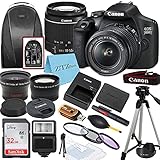
| Canon EOS 2000D Accessory Bundle | DSLR plus extras in one purchase | EF-S 18-55mm lens, 32GB card, 20-piece bundle |
How to Choose
Interchangeable lenses beat megapixel claims
A fixed-lens compact tops out at whatever the factory glass can do, no matter how many megapixels the listing claims. A DSLR or mirrorless body lets you add a fast prime for portraits, a wide zoom for events, or a telephoto for sports. For paid work, the lens ecosystem matters more than any pixel count. Ignore an 80MP or 8K label on a small sensor, because the sensor size limits what those pixels can actually resolve.
Sensor size and file quality
Look for an APS-C sensor or larger, and a body that offers manual exposure and RAW-style file options so clients’ images can be edited without falling apart. The 24.1 megapixel APS-C figure on the Canon kits sits in a normal professional-entry range. Compact cameras that list sensors only by resolution give you no way to judge noise, dynamic range, or low-light performance, which are what separate pro files from snapshots.
Control, handling, and accessories
A hot shoe lets you add a flash or wireless trigger, and a flip screen helps with low or high angles. Real working cameras also need dependable battery life: carry at least two charged batteries. Treat bundled extras such as tripods, cases, and filters with caution. A 20-piece bundle looks generous but includes items of mixed quality, so spend your money first on the body and lenses.
Where budget cameras cut corners
Entry cameras typically skimp on autofocus speed, burst rate, build, and dual card slots. A single-slot body is acceptable for portfolio work and casual shoots, but important events call for backups. Wi-Fi is handy for quick transfers to a phone, though it should never replace a proper card workflow. Weather sealing and fast continuous shooting usually belong to higher tiers and are rarely found on entry kits.
The 8 Best Options
Canon EOS Rebel T7 Lens Kit
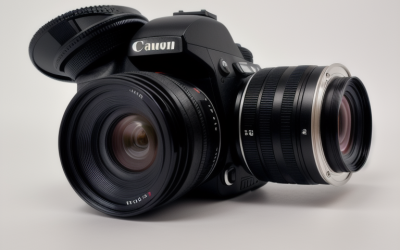
This Canon is a DSLR kit with an EF-S 18-55mm f/3.5-5.6 IS II lens, a 24.1 megapixel APS-C CMOS sensor, Full HD video, and built-in Wi-Fi, positioned for beginners. It is the most credible stepping stone here, since the lens mount lets you grow your kit over time, and a stabilized standard zoom is a sensible first lens for portraits, events, and travel.
- Strength: APS-C sensor and interchangeable lens system provide room to grow.
- Strength: built-in Wi-Fi makes sharing easier on location.
- Trade-off: the listing describes it as a beginner camera, and Full HD video is below the 4K that many hybrid shooters want.
Skip it if video is your main income or you need fast action autofocus, because a beginner-positioned DSLR with Full HD recording will feel limiting once paying clients start asking for 4K deliverables or sports coverage.
Canon EOS Rebel T7 Double Zoom Kit
The double zoom kit pairs the same 24.1MP APS-C body with an EF-S 18-55mm lens and an EF 75-300mm telephoto, along with Full HD video and Wi-Fi. That gives you wide-to-long coverage in a single box, which suits portraits, events, and children’s sports.
- Strength: two lenses cover everyday and longer-distance subjects.
- Strength: the same sensor and Wi-Fi as the single-lens kit.
- Trade-off: a 75-300mm kit lens is generally slower than premium telephotos, which limits low-light work.
Skip it if you want a single fast prime for portraits and would rather spend on better glass later. Buyers who mostly shoot indoors will find a 75-300mm zoom hard to use, since there is rarely enough room or light for it.
5K 80MP Vlogging Camera
This unbranded compact is listed as a 5K, 80MP camera with autofocus, WiFi, a 3-inch 270-degree flip screen, and 18X zoom, aimed at photography and YouTube. It is better read as a vlogging camera than as a professional tool. Large resolution numbers appear twice in the title, yet the sensor, the lens, and the brand go unnamed, which is the pattern to be careful with.
- Strength: a flip screen and WiFi suit self-recording and quick sharing.
- Strength: 18X zoom gives long reach in a small body.
- Trade-off: no sensor size or brand is listed, so image quality claims cannot be verified.
Skip it if clients will pay for your images, since a compact with unclear sensor details is a risk, and a failure on location gives you little recourse or support from an unnamed maker.
Duluvulu 4K Digital Camera
The Duluvulu is a 4K camera with a 48MP rating, autofocus, an SD card, two batteries, and a 3-inch 180-degree flip screen, aimed at vlogging. The second battery is a practical bonus for travel days, and the bundled card means you can start shooting without a separate purchase. A named brand also makes it easier to find manuals and support than with the unbranded listings.
- Strength: two batteries and a card are included for out-of-the-box use.
- Strength: autofocus and a flip screen are listed.
- Trade-off: it is a vlogging compact, not a lens-swapping body.
Skip it if you need to change lenses or use professional flash setups, because a fixed-lens compact cannot grow into a working kit the way a DSLR body can, and photographers who outgrow it will start over.
NBD 8K Digital Camera
This NBD kit lists 8K video, 64MP, 16X optical zoom, WiFi, a 180-degree flip screen, autofocus, and a hot shoe. The hot shoe stands out, since it allows a flash or microphone, and it is the closest thing to a working-photographer control among the compacts on this list. The all-in-one kit wording suggests a bundle of extras, though the title does not say which.
- Strength: the hot shoe allows external accessories.
- Strength: 16X optical zoom is listed, which is more meaningful than digital zoom.
- Trade-off: no sensor size is given, so the 8K and 64MP labels do not guarantee professional files.
Skip it if you need verified low-light performance or a known brand ecosystem, since neither can be judged from the title and the 8K label tells you little about indoor image quality.
8K 64MP Dual-Lens Camera
This camera is billed as a professional 8K, 64MP dual-lens model with 48X zoom, combining 16X optical and 3X digital, plus a flip screen, a 32GB TF card, and two batteries. Digital zoom degrades quality, so the optical figure matters more. The moon-shot wording in the title is an attention grab, and the result will depend entirely on the lens and sensor, neither of which is specified.
- Strength: a card and two batteries are included.
- Strength: 16X optical zoom is listed, with a dual-lens layout.
- Trade-off: the 48X figure leans on digital zoom, which reduces detail.
Skip it if image quality at long distance is your priority, because a camera that leans on digital zoom will lose fine detail the further you push it, and a real telephoto lens on a DSLR is the better path.
4K 56MP Autofocus Camera
This compact is a 4K, 56MP vlogging camera with autofocus, a 3-inch 180-degree flip screen, a lens hood, 16X zoom, and a 32GB card, with the title mentioning teens. It reads like a starter camera for learning composition, framing, and exposure basics before committing real money to a lens system. A lens hood is a small but useful extra on a compact for shooting in bright sun.
- Strength: a lens hood and card are included.
- Strength: easy autofocus operation suits learning.
- Trade-off: it is positioned for teens and travel, not paid assignments.
Skip it if you plan to take client work soon, because the title frames it for teens and travel, and the missing sensor detail leaves its professional potential unproven. Move to a DSLR kit if you want paying work in the near term.
Canon EOS 2000D Accessory Bundle
This listing bundles the Canon EOS 2000D (Rebel T7) DSLR with an EF-S 18-55mm lens, a SanDisk 32GB card, a tripod, a case, wide-angle lenses, and other accessories in a 20-piece package. It gives you a shooting kit in one order, which is attractive to anyone assembling gear for the first time and wanting a tripod, case, and card on day one.
- Strength: the same Canon DSLR platform as the other kits, with a card and case included.
- Strength: a tripod and extra lenses are bundled.
- Trade-off: third-party add-on lenses and accessories are usually lower quality than branded glass.
Skip it if you would rather choose your own lenses, since the pile of add-ons may include items you never use, and the money is better spent on one quality prime for portraits than on a stack of extras.
Which One Fits Your Situation
You want to start charging for portraits
The Canon EOS Rebel T7 Lens Kit gives you an APS-C sensor and a mount that supports better lenses later.
You shoot events or kids’ sports
The Canon EOS Rebel T7 Double Zoom Kit adds the 75-300mm telephoto for longer subjects.
You also vlog and travel light
The Duluvulu 4K Digital Camera pairs a flip screen with two batteries, a fair fit for a hobbyist with no paid-work needs.
You want everything in one order
The Canon EOS 2000D Accessory Bundle puts a DSLR, a card, and extras together, though the accessories deserve a closer look.
Common Mistakes
- Trusting megapixel and 8K labels on small-sensor compacts as proof of pro quality.
- Buying a huge accessory bundle instead of putting money into one good lens.
- Relying on digital zoom numbers like 48X.
- Skipping spare batteries and extra cards for paid shoots.
- Ignoring the lens mount, which locks in your future upgrade path.
Related guides
- How To Check Motherboard Vrm Temperature In Hwinfo
- How To Clean Quest 3 Lenses And Facial Interface
- Micro Sd Cards For Samsung Galaxy Phones
Frequently Asked Questions
Can an entry DSLR handle professional work?
Yes, for portraits, small events, and portfolio work, with the right lenses. Higher tiers add faster autofocus, dual card slots, and tougher bodies.
Are 8K compact cameras good for professional photos?
Not on resolution claims alone. Without a stated sensor size and lens quality, the video and megapixel numbers say little about final image quality.
Is optical or digital zoom better?
Optical zoom is better because it uses real lens movement. Digital zoom crops and enlarges the image, which loses detail.
Is a bundle with a tripod and extras necessary?
Not necessarily. A sturdy tripod and a single good lens usually outperform a pile of low-quality extras.