Our Top Picks
 Sony FE 24-70mm F2.8 GM Full-Frame Standard ZoomLens Only5.3 x 3.4 x 3.4 inches3 poundsCheck on Amazon
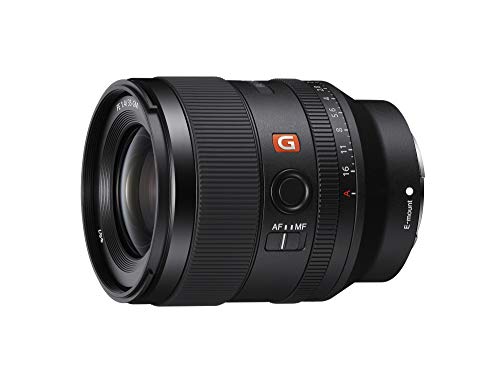 Sony FE 35mm f/1.4 GM Full-Frame Large-Aperture Wide35 mm6.77 x 5 x 5.51 Inches1.2 poundsCheck on Amazon
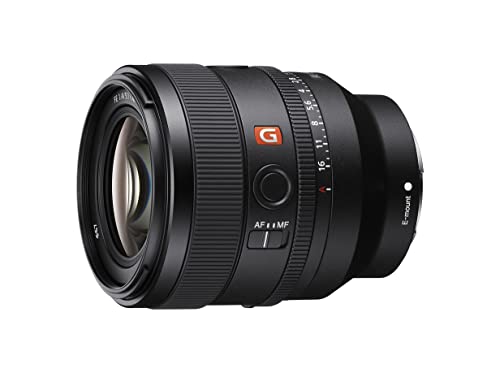
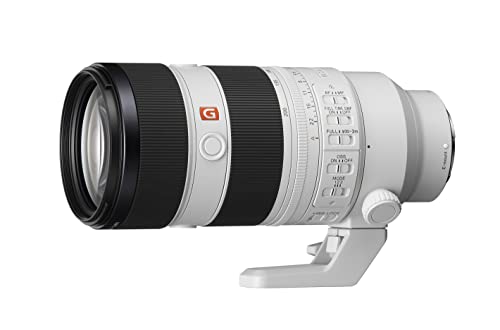
Top 3 picks at a glance

Quick Comparison
Every current G Master lens is sharp, well-corrected and built for professional use, so the differences that matter when you buy are focal length coverage, maximum aperture, weight, minimum focus distance and whether the lens stabilises itself. The table below maps each lens to the shooting style it serves best.
| Lens | Best for | Key specs | Price tier |
|---|---|---|---|
| Sony FE 24-70mm F2.8 GM | All-round events and reportage | 24–70mm, constant f/2.8, standard zoom, internal zoom design | Mid-range |
| Sony FE 50mm F1.4 GM | Portraits and low light on a sensible budget | 50mm prime, f/1.4, compact for its aperture, fast linear AF | Budget |
| Sony FE 35mm f/1.4 GM | Environmental portraits and documentary | 35mm prime, f/1.4, wide aperture, aperture ring with de-click | Budget |
| Sony FE 70-200mm F2.8 GM OSS II | Events, sport and stage from a distance | 70–200mm, constant f/2.8, optical stabilisation, lighter Mark II body | Premium |
| Sony FE 100mm F2.8 GM OSS Macro | Macro, product and detail work | 100mm macro, f/2.8, 1.4x maximum magnification, OSS | Budget |
| Sony FE 85mm f/1.4 GM II | Dedicated portrait work | 85mm prime, f/1.4, second-generation optics, fast AF | Mid-range |
| Sony FE 50-150 F2 GM | Video-first and fast event coverage | 50–150mm, constant f/2, constant-aperture telephoto zoom | Premium |
| Sony FE 100-400mm F4.5 GM OSS | Wildlife, travel telephoto and outdoor sport | 100–400mm, variable f/4.5–5.6, OSS, zoom to 400mm | Premium |
| Sony FE 28-70mm F2 GM | One-lens event and wedding coverage in low light | 28–70mm, constant f/2, standard zoom with fast aperture | Premium |
| Sony FE 24mm F1.4 GM | Astro, interiors and wide reportage | 24mm prime, f/1.4, compact wide, fast AF | Budget |
| Sony FE 16-35mm F2.8 GM II | Landscape, architecture and gimbal work | 16–35mm, constant f/2.8, second-generation compact ultrawide | Mid-range |
| Sony FE 50mm f/1.2 GM | Maximum-aperture portrait and available-light work | 50mm prime, f/1.2, large aperture, premium build | Mid-range |
How We Chose
This list is built from published specifications, category conventions and how each focal length behaves in practice, not from studio testing. The criteria were straightforward. First, category fit: a lens only earns a place if it does one job better than the alternatives around it, which is why there are three 50mm-class options and no filler. Second, aperture and light gathering, because f/2.8 versus f/2 versus f/1.4 changes which shutter speeds you can hold indoors without pushing ISO into noise. Third, weight and balance on a full-frame E-mount body, since a lens that is technically excellent but too heavy to carry for a six-hour event is not the right answer for that shooter. Fourth, close-focus ability and magnification, because minimum focus distance determines whether you can shoot a ring detail, a plate of food or a tight portrait without swapping glass. Fifth, stabilisation, which matters more at long focal lengths and for handheld video. Finally, upgrade path: we looked at whether a lens replaces two cheaper primes, whether it will still make sense when you move to a higher-resolution body, and whether its mount and autofocus generation keep pace with current bodies. Price tiers use general market ranges and shift often, so treat budget, mid-range and premium as relative positions rather than fixed numbers.
1. Sony FE 24-70mm F2.8 GM – Best for Events and All-Day Reportage
As an Amazon Associate we earn from qualifying purchases at no extra cost to you.
If you only own one G Master lens and you shoot unpredictable work, this is the safe answer. A constant f/2.8 standard zoom covers everything from a group shot at 24mm to a head-and-shoulders frame at 70mm without a lens change, which is exactly what you need when a ceremony, a conference or a press event will not pause for you. It suits wedding second shooters, photojournalists, corporate event photographers and anyone who would rather move their feet than swap bodies in a crowd.
- Focal range: 24–70mm, constant f/2.8 across the zoom
- Aperture: fast enough for indoor work at moderate ISO, and it holds exposure as you zoom
- Build: professional G Master construction with weather sealing
- Focus: linear-type autofocus motor suitable for stills and video
- Mount: Sony E-mount, full-frame coverage
Strengths
The single biggest advantage is decision speed. With one zoom you never miss a moment because the wrong prime was on the camera, and constant f/2.8 means your exposure settings do not change when you reframe. That consistency is worth more at a live event than an extra stop of light, because you can set your shutter and ISO once and concentrate on composition. The 24mm end covers group and venue shots, and 70mm is long enough to isolate a speaker or a couple without moving into the aisle.
Pros
- Covers the most-used focal lengths in one body
- Constant f/2.8 keeps exposure stable through the zoom range
- Fast enough for indoor events without changing lenses
- Weather-sealed build suited to long working days
- Pairs naturally with a fast prime as a second lens
Cons
- Heavier than a 35mm or 50mm prime of similar aperture
- Noticeably visible in tight spaces compared with a small prime
- At f/2.8 it cannot match an f/1.4 prime for subject separation
- Not the cheapest way to get your first fast standard lens
How it compares
Against the Sony FE 28-70mm F2 GM, the 24-70mm gives up one stop of light but adds 4mm at the wide end, which is the difference between fitting a full room in frame and stepping back into a wall. The 28-70mm is the better choice if your events are lit by candles and tungsten and you cannot use flash; the 24-70mm is the better choice if you need the wider framing more often than the extra stop. Against the 35mm f/1.4 GM, the zoom trades subject separation for coverage, so pair the two rather than choosing between them.
2. Sony FE 50mm F1.4 GM – Best for Portraits on a Sensible Budget
The 50mm f/1.4 GM is the lens to buy when you want G Master rendering and a wide aperture without paying the f/1.2 premium. It suits portrait photographers, couples and family shooters, and anyone building a first serious prime kit. On a full-frame body 50mm sits close to human perspective, so faces look natural and the working distance is comfortable both indoors and on the street.
- Focal length: 50mm, a natural-perspective prime
- Aperture: f/1.4, roughly one stop more light than an f/2 zoom
- Size: designed to stay compact for its aperture class
- Focus: fast, quiet autofocus suitable for stills and video
- Mount: Sony E-mount, full-frame coverage
Strengths
One stop of aperture is not a luxury at a reception. If a correctly exposed shot at f/2.8 needs ISO 6400, the same shot at f/1.4 needs roughly ISO 1600 at the same shutter speed, and that difference shows directly in noise and colour. The 50mm angle also lets you shoot a full-length portrait at conversational distance, which keeps your subject relaxed compared with a longer telephoto. For video, the wide aperture and quiet focus make it a natural interview and detail lens.
Pros
- f/1.4 light gathering for indoor and evening work
- Natural 50mm perspective with comfortable working distance
- Noticeably lighter than a fast standard zoom
- Strong subject separation for portraits
- Useful as both a stills and a video lens
Cons
- No zoom flexibility when space is tight
- Wider aperture means careful focus placement at close range
- Not a substitute for a dedicated macro or telephoto
- Overlaps with the 50mm f/1.2 GM if you already own that lens
How it compares
Compared with the Sony FE 50mm f/1.2 GM, the f/1.4 version gives up a fraction of a stop but is the more practical everyday choice for most shooters, since the f/1.2 mainly buys slightly creamier backgrounds and marginally better low-light headroom. Compared with the 35mm f/1.4 GM, the 50mm compresses faces more pleasantly and isolates subjects better, while the 35mm tells more of the surrounding story. Choose 50mm for faces, 35mm for places.
3. Sony FE 35mm f/1.4 GM – Best for Environmental Portraits and Documentary
A wide fast prime is the documentary photographer’s workhorse, and this is the sharpest expression of that idea in the G Master line. It suits street and travel shooters, wedding photojournalists, and portrait photographers who want context in the frame rather than a blurred backdrop. The 35mm field of view lets you stand close enough to interact with your subject while still showing where they are.
- Focal length: 35mm, classic wide-reportage angle
- Aperture: f/1.4, for low light and shallow depth of field
- Controls: aperture ring with a de-click option for video
- Focus: fast linear autofocus with quiet operation
- Mount: Sony E-mount, full-frame coverage
Strengths
The combination of f/1.4 and 35mm is unusually versatile. You can shoot a full table at a reception, a market scene at dusk, or a half-body portrait with the environment intact, all without changing lenses. The aperture ring is a genuine workflow benefit for hybrid shooters: click stops for stills, smooth de-clicked rotation for video, and no need to dive into menus when light changes. It is also small enough to keep on a camera all day without shoulder fatigue.
Pros
- Versatile wide angle that includes context
- f/1.4 aperture for available light and subject separation
- Aperture ring with de-click suits hybrid stills and video
- Compact and light enough for all-day carry
- Natural choice for street, travel and documentary work
Cons
- Facial distortion if you fill the frame at close range
- No zoom range when you cannot move position
- Less flattering for tight headshots than 85mm
- Wide apertures demand careful focus discipline
How it compares
Against the 50mm f/1.4 GM, this lens trades subject isolation for storytelling. A 35mm frame shows the room; a 50mm frame shows the person. Many documentary shooters carry both and treat the 35mm as the default and the 50mm as the portrait alternative. Against the 24mm f/1.4 GM, the 35mm is the kinder focal length for people — 24mm exaggerates features at close range, so reserve it for interiors, astro and wide establishing shots.
4. Sony FE 70-200mm F2.8 GM OSS II – Best for Sport, Stage and Event Reach
This is the lens that lets you work an event without being in the middle of it. A constant f/2.8 telephoto zoom covers press scrums, ceremony aisles, conference stages, indoor sport and theatre, where you cannot get close and the light will not wait. It suits event and wedding photographers who shoot from the back, journalists covering speeches and sport, and anyone who needs clean separation at distance.
- Focal range: 70–200mm, constant f/2.8
- Stabilisation: optical image stabilisation built into the lens
- Build: second-generation body with reduced weight versus the original
- Focus: fast autofocus designed for moving subjects
- Mount: Sony E-mount, full-frame coverage
Strengths
In a dim ceremony or a lit stage, f/2.8 plus in-lens stabilisation is the difference between a usable frame and a smeared one. Stabilisation becomes more valuable as focal length increases, because the same hand movement produces more visible blur at 200mm than at 70mm. The Mark II version’s reduced weight matters more than it sounds: a lighter telephoto means you can hand-hold through a long ceremony instead of propping yourself against a pillar, which directly affects how many keepers you bring home.
Pros
- Constant f/2.8 through the whole zoom range
- Optical stabilisation helps handheld work at 200mm
- Reaches across crowds, aisles and stages
- Lighter than the previous generation of the same lens
- Takes teleconverters for extra reach when needed
Cons
- Large and conspicuous compared with any prime on this list
- Premium tier pricing and a serious commitment to carry
- Not wide enough for group or venue shots on its own
- Overkill for portraits if you rarely shoot beyond 135mm
How it compares
Versus the Sony FE 100-400mm F4.5 GM OSS, the 70-200mm wins on aperture: f/2.8 at 200mm gathers far more light than a variable f/4.5–5.6 supertelephoto, which matters indoors and at dusk. The 100-400mm wins on reach and is the better outdoor wildlife and travel lens. If your work is indoors and fixed-distance, take the 70-200mm; if your work is outdoors and far away, take the 100-400mm.
5. Sony FE 100mm F2.8 GM OSS Macro – Best for Macro, Product and Detail Work

Macro is its own discipline, and this lens is the G Master answer to it. With 1.4x maximum magnification it goes beyond the standard 1:1 life-size ratio, which means a small object can fill the frame and then some. It suits product photographers, jewellers and watch shooters, food and still-life specialists, and portrait shooters who occasionally need extreme detail — rings, textures, insects, botanical work.
- Focal length: 100mm, a mid-telephoto macro working distance
- Aperture: f/2.8, useful for portraits as well as macro
- Magnification: 1.4x maximum, beyond life size
- Stabilisation: optical image stabilisation in the lens
- Mount: Sony E-mount, full-frame coverage
Strengths
The 100mm working distance is the practical hero here. At high magnification the lens-to-subject gap becomes tiny, and at very close range you shadow your own light or scare the subject. A 100mm macro keeps you far enough back to light the shot properly, which is why it is the standard choice for catalogue and jewellery work. The f/2.8 aperture also makes it a genuinely good short telephoto portrait lens, so it earns its place in a kit even on days you are not shooting macro.
Pros
- 1.4x magnification goes past standard 1:1 macro
- 100mm working distance keeps lights and hands out of the frame
- Stabilisation helps handheld close-up work
- Doubles as a capable portrait lens
- Compact relative to the telephoto zooms on this list
Cons
- Specialist tool; not a general-purpose walk-around lens
- Autofocus at extreme magnification is slow by nature
- Depth of field at macro distances is razor thin
- You may need a focus rail and dedicated lighting to use it fully
How it compares
Compared with the 85mm f/1.4 GM II, the macro gives up a large amount of aperture and background blur, so it is not the portrait lens to buy if portraits are the priority. But if you shoot products or details and only occasionally photograph people, the macro covers both jobs and the 85mm does not. It also pairs well with the 70-200mm for events where you want ring and dress-detail shots.
6. Sony FE 85mm f/1.4 GM II – Best for Dedicated Portrait Photography

If portraits are the job rather than part of it, this is the lens. An 85mm f/1.4 gives flattering compression, generous working distance and background separation that is hard to fake. It suits studio and location portrait photographers, headshot specialists, wedding portrait sessions and anyone shooting available-light character portraits.
- Focal length: 85mm, the classic portrait focal length
- Aperture: f/1.4 for shallow depth of field and low light
- Generation: second-generation GM optics
- Focus: fast autofocus for a large-aperture prime
- Mount: Sony E-mount, full-frame coverage
Strengths
The 85mm focal length flattens features slightly, which most people find more flattering than the perspective of a 35mm or 50mm lens at portrait distance. Combine that with f/1.4 and you can separate a subject from a busy background even in a cramped location. The f/1.4 aperture also means you can keep shutter speeds up in window light without raising ISO, which is exactly the situation most portrait work happens in. Its fast focus for its aperture class makes it usable for moving subjects, not just posed ones.
Pros
- Flattering 85mm perspective for faces
- f/1.4 aperture with strong background blur
- Fast autofocus for a large-aperture prime
- Comfortable working distance for relaxed subjects
- Second-generation optics and coatings
Cons
- Long working distance indoors; you may need to back into a wall
- Expensive relative to the 50mm f/1.4
- Too tight for full-length and environmental portraits in small rooms
- Not a general-purpose lens for events on its own
How it compares
Against the 50mm f/1.4 GM, the 85mm flatters faces more and separates subjects better, but forces you further back. In a small studio the 50mm is often the only one that fits, so the honest advice is to own the 50mm first and add the 85mm when your clients pay for portraits rather than events. Against the 100mm macro, the 85mm is the better people lens; against the 70-200mm, it wins on aperture and loses on flexibility.
7. Sony FE 50-150 F2 GM – Best for Fast Event Coverage and Video

A constant f/2 telephoto zoom is a genuinely unusual tool, and it exists to solve one problem: covering the most-used event and portrait focal lengths at an aperture close to prime territory, without changing lenses. It suits wedding photographers shooting as a single operator, video teams who need consistent exposure across a shot, and photojournalists working in dim venues.
- Focal range: 50–150mm, a portrait and event-friendly span
- Aperture: constant f/2 across the zoom, unusually fast for a telephoto zoom
- Coverage: 50mm group shots through 150mm compressed details in one lens
- Focus: fast autofocus suited to stills and video
- Mount: Sony E-mount, full-frame coverage
Strengths
Constant f/2 changes how you shoot a reception. You can frame a couple at 150mm for a tight, flattering image and then pull back to 50mm for the room without touching your exposure or lifting a second body. For video, constant aperture means you can zoom mid-shot without the image brightening or dimming, which is the single reason documentary videographers pay for constant-aperture zooms. It also replaces two fast primes in one barrel, so for some shooters it is cheaper in weight rather than in money.
Pros
- Constant f/2 across the whole zoom range
- Covers 50mm through 150mm without lens changes
- Exposure stays locked while zooming, ideal for video
- Replaces a fast 85mm and a fast 135mm in one lens
- Well suited to single-operator event work
Cons
- Premium tier price and substantial size
- Heavier than carrying a single fast prime
- Only f/2, so not a match for f/1.4 primes for extreme blur
- Does not cover wide angles, so a second lens is still required
How it compares
Versus the 70-200mm F2.8 GM OSS II, this lens is one stop faster and starts wider at 50mm, but gives up 50mm of reach at the long end and the in-lens stabilisation that helps at 200mm. If you shoot handheld at long focal lengths, the 70-200mm is easier; if you shoot in the dark and rarely need 200mm, the f/2 zoom is the stronger tool. Against the 85mm f/1.4 GM II, it trades a stop of aperture for framing flexibility.
8. Sony FE 100-400mm F4.5 GM OSS – Best for Wildlife and Outdoor Telephoto

When your subject will not let you approach, reach is everything. A 100-400mm supertelephoto zoom covers wildlife, birds at moderate distance, outdoor sport, aviation and compressed landscape compositions. It suits travelling nature photographers, safari and field shooters, and sports photographers working in daylight.
- Focal range: 100–400mm, variable f/4.5–5.6
- Stabilisation: optical image stabilisation for handheld telephoto work
- Build: G Master construction aimed at outdoor use
- Reach: extends to 400mm, and further with teleconverters
- Mount: Sony E-mount, full-frame coverage
Strengths
400mm at the long end gives you four times the reach of a 100mm lens, which in practice means photographing a bird on a branch rather than a speck in the frame. The 100mm starting point keeps it usable for larger animals and people at a distance, so it is a one-lens outdoor telephoto rather than a specialist 600mm prime. Stabilisation is essential at this focal length: the same hand tremor that is invisible at 50mm becomes clearly visible at 400mm, so in-lens OSS is not a bonus here, it is the feature that makes handheld shooting possible at all.
Pros
- 400mm reach for wildlife and distant sport
- Stabilisation makes handheld telephoto work viable
- 100mm wide end keeps it usable for larger subjects
- Compact enough to travel with compared with long primes
- Teleconverter support extends reach further
Cons
- Variable f/4.5–5.6 means less light than an f/2.8 telephoto
- Long end is dim for dawn and dusk wildlife work
- Premium tier pricing
- Not a portrait or event lens for indoor use
How it compares
Against the 70-200mm F2.8 GM OSS II, this lens doubles the reach but loses more than a stop of light at the long end. Outdoors in good light the 100-400mm is the better wildlife lens; indoors or at dusk the 70-200mm is the only one of the two that will hold a fast enough shutter speed. Against the 50-150mm f/2, they barely overlap — one is a light-gathering event lens, the other a daylight reach lens.
9. Sony FE 28-70mm F2 GM – Best for One-Lens Wedding and Event Coverage

A standard zoom at constant f/2 is the closest thing to a universal low-light lens. It suits wedding photographers who work in dim venues, documentary shooters who cannot use flash, and event photographers who want prime-level light gathering with zoom flexibility. The 28–70mm span covers group shots through tight portraits, and the f/2 aperture keeps ISO down when the room is dark.
- Focal range: 28–70mm, a standard-to-short-telephoto span
- Aperture: constant f/2, one stop faster than a typical f/2.8 zoom
- Coverage: reportage through head-and-shoulders framing
- Focus: fast autofocus for stills and video
- Mount: Sony E-mount, full-frame coverage
Strengths
The arithmetic of f/2 versus f/2.8 is simple: one stop less light needed, which generally means halving your ISO at the same shutter speed. In a candlelit reception, that is the difference between a clean image and one you have to work hard on in post. It also gives slightly shallower depth of field than an f/2.8 zoom, which helps separate a couple from a cluttered background without switching to a prime. Carrying one fast standard zoom instead of two primes also means fewer lens changes in a dusty or crowded environment.
Pros
- Constant f/2 aperture for genuinely dim venues
- Zoom flexibility with prime-like low-light capability
- Covers group shots through close portraits
- Fewer lens changes than a two-prime kit
- Consistent exposure while zooming, good for video
Cons
- Premium tier price
- Starts at 28mm, so not wide enough for tight interiors
- Heavier than a 35mm or 50mm prime
- Still cannot match f/1.4 primes for extreme subject separation
How it compares
Versus the 24-70mm F2.8 GM, this lens trades 4mm of wide angle for one stop of light. If you shoot dark venues, the f/2 is worth more; if you shoot tight rooms and groups, the 24mm is worth more. Versus the 35mm f/1.4 GM, the zoom is slower but far more flexible, and the two make an excellent pair for a wedding day — the zoom on one body, the fast prime on the other.
10. Sony FE 24mm F1.4 GM – Best for Astrophotography, Interiors and Wide Reportage
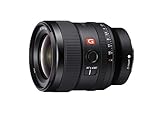
A fast 24mm prime is the specialist wide lens. It suits night-sky photographers, architectural and interior shooters, and documentary photographers who need to work in very tight spaces. It is also a natural gimbal and vlogging lens, because a wide field of view forgives small movements.
- Focal length: 24mm, a wide angle with modest distortion
- Aperture: f/1.4, unusually fast for a wide prime
- Size: compact for its aperture and coverage
- Focus: fast autofocus suitable for stills and video
- Mount: Sony E-mount, full-frame coverage
Strengths
The case for this lens is arithmetic. Wide lenses and fast apertures rarely combine, and f/1.4 at 24mm lets you shoot the night sky at usable shutter speeds without pushing ISO to the point where noise destroys star colour. For interiors, f/1.4 means you can shoot a restaurant or a museum room handheld without flash, which is often the only way to get permission to photograph it. It is also small enough to carry alongside a standard zoom without noticing.
Pros
- f/1.4 aperture in a wide-angle prime
- Strong for astrophotography and dim interiors
- Compact and light for its coverage
- Fast autofocus for video and gimbal work
- Useful in tight spaces where nothing longer will fit
Cons
- Not flattering for close portraits
- Wide-angle perspective exaggerates distortion if you are careless
- Too wide for most event coverage as a main lens
- Requires careful framing to avoid empty foregrounds
How it compares
Against the 16-35mm F2.8 GM II, the 24mm wins clearly on aperture — f/1.4 versus f/2.8 is two stops — which is why it is the astro choice, while the zoom wins on versatility and goes much wider. Against the 35mm f/1.4 GM, the 24mm includes more scene and suits tighter rooms, but it distorts faces at close range, so it is the lens for places and the 35mm is the lens for people.
11. Sony FE 16-35mm F2.8 GM II – Best for Landscape, Architecture and Gimbal Work
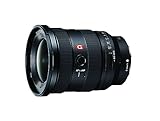
An ultrawide constant-aperture zoom is the standard landscape and architecture tool, and the second-generation version is the current G Master answer. It suits landscape photographers, interior and architectural shooters, real estate work and any video production that needs a stabiliser-friendly wide zoom.
- Focal range: 16–35mm, constant f/2.8
- Aperture: fast enough for interiors and evening landscapes
- Generation: second-generation GM ultrawide zoom
- Build: compact for an ultrawide zoom, suited to gimbals
- Mount: Sony E-mount, full-frame coverage
Strengths
16mm is dramatically wider than 24mm, and that matters most in interiors and tight landscapes where you cannot step back. Constant f/2.8 is not primarily about depth of field at this focal length; it is about letting enough light in during blue hour and dim interiors that you can keep the shutter fast enough to avoid blur, and it keeps exposure consistent as you zoom, which matters for video. A compact ultrawide zoom is also the lens that balances best on a gimbal, where a long heavy telephoto would overwhelm the motors.
Pros
- 16mm coverage for interiors and wide landscapes
- Constant f/2.8 for blue hour and indoor work
- Compact and well balanced on gimbals
- Second-generation optics for edge-to-edge sharpness
- Reliable single-lens answer for architecture
Cons
- Not fast enough for serious astrophotography compared with the 24mm f/1.4
- Ultrawide perspective requires discipline to use well
- Mid-range to premium pricing
- Not a people lens for tight portraits
How it compares
Against the 24mm f/1.4 GM, the zoom is two stops slower but far more flexible and much wider. If you shoot night skies seriously, own the 24mm; if you shoot interiors, landscapes and video, own the zoom. Against the 24-70mm F2.8 GM, the two overlap only at 24-35mm, and most landscapers carry both so they can go from 16mm to 70mm without a gap.
12. Sony FE 50mm f/1.2 GM – Best for Maximum-Aperture Portrait Rendering

This is the no-compromise 50mm. The f/1.2 aperture is the point: it produces the shallowest depth of field and the smoothest background rendering available in a standard prime, and it gathers slightly more light than f/1.4. It suits portrait photographers whose signature is very shallow focus, available-light shooters, and anyone who wants the flagship 50mm for its rendering rather than its size.
- Focal length: 50mm, standard prime perspective
- Aperture: f/1.2, the widest in the G Master 50mm class
- Build: premium construction and large front element
- Focus: fast autofocus for a very large aperture
- Mount: Sony E-mount, full-frame coverage
Strengths
The reason to choose f/1.2 over f/1.4 is not really the light — it is the look. At very wide apertures the out-of-focus areas render more smoothly and the transition from sharp to soft becomes gentler, which is the signature that portrait clients respond to. You also gain a small amount of low-light headroom, useful when you cannot add light. For a photographer whose work is judged on subject separation and background quality, that rendering is the product.
Pros
- Widest aperture in the 50mm G Master class
- Distinctive smooth background rendering
- Slightly better low-light performance than f/1.4
- Excellent subject isolation
- Flagship build and optics
Cons
- Significantly larger and heavier than the 50mm f/1.4 GM
- Depth of field at f/1.2 is unforgiving on eyes and focus
- Diminishing returns compared with the f/1.4 for many shooters
- Premium price for a single focal length
How it compares
Against the 50mm f/1.4 GM, the difference is measured in rendering and weight rather than usability. If you shoot portraits at wide apertures all day and your work depends on that look, the f/1.2 justifies itself; if you shoot a mix of events, travel and portraits, the f/1.4 is the more practical lens and you will rarely miss the extra third of a stop. Against the 85mm f/1.4 GM II, the 50mm gives you a closer working distance and more context, while the 85mm flatters faces more.
How to Choose
Start with the constraints, not the specifications. There are four that actually decide the purchase: how much light you have, how far away your subject is, how much weight you will carry, and whether you shoot stills, video or both. Work through them in that order and the choice usually makes itself.
Step 1: Match aperture to your light
Aperture determines the shutter speed and ISO you can use. The relationship is a halving: each full stop of aperture either halves your ISO or doubles your shutter speed at the same exposure. That means f/1.4 needs roughly a quarter of the ISO that f/2.8 does at the same shutter speed, and f/2 needs half of f/2.8. In practice, if a dimly lit reception forces ISO 6400 at f/2.8, the same shot at f/1.4 lands near ISO 1600 — a visible difference in noise and colour, not a theoretical one. If most of your work is in daylight or with flash, aperture is mainly a depth-of-field decision and you can comfortably buy a constant f/2.8 zoom.
Step 2: Match focal length to your working distance
Focal length is really a statement about how far you will stand from your subject. For a head-and-shoulders frame on a full-frame body, a 50mm lens puts you roughly an arm’s length away, an 85mm lens about two paces, and a 135mm to 150mm lens across a room. Indoors, where walls limit you, that favours 35mm and 50mm. In a church, a conference hall or a sports venue where you cannot approach, it favours 70mm and longer. Ask yourself where your feet will actually be, and pick the focal length that frames your subject from there. If you cannot answer that question, buy a zoom first and let your own shooting habits tell you which prime to add later.
Step 3: Decide how much weight is acceptable
Weight is not a comfort issue, it is a keeper-rate issue. A heavy lens leads to shorter shooting sessions, more camera shake at the end of a long day, and a tendency to leave the lens at home. As a rough guide, a compact prime in the 24mm to 50mm class is a light, all-day lens; a fast standard zoom sits in the middle; and a constant-aperture telephoto like a 70-200mm f/2.8 is a deliberate choice you carry for a specific purpose. If you shoot six-hour events, weigh your kit and decide honestly whether you will still be holding it at hour five.
Step 4: Choose prime versus zoom by how predictable your work is
Primes win on aperture, size and usually sharpness. Zooms win on speed of reaction. If you know exactly what you are shooting and can control distance — studio portraits, product shots, astro — primes are the better tools and often cheaper for the aperture you get. If your subject moves and you cannot control distance — weddings, conferences, sport — a zoom will get the shot you would otherwise miss. For event and wedding work the strongest practical kit is usually one fast zoom on one body and one fast prime on the other, covering both flexibility and low light.
Step 5: Check minimum focus distance and magnification
Minimum focus distance decides whether a lens can shoot detail at all. Standard zooms and long primes typically cannot focus close enough to fill the frame with a ring, a flower or a plate of food — that is the macro lens’s job, and the 100mm macro’s 1.4x magnification goes beyond the usual life-size 1:1 ratio. If your work involves product, jewellery, food or detail shots at any frequency, budget for a macro rather than trying to work around the limitation with a longer lens and cropping.
Step 6: Decide whether you need stabilisation in the lens
In-lens optical stabilisation matters most as focal length increases, because hand movement is magnified along with the subject. It is a significant help for handheld telephoto work such as a 70-200mm or a 100-400mm, and useful for handheld macro, where the depth of field at close range is very thin. It matters least for a wide prime used for landscape on a tripod, where you will switch it off anyway, and for short lenses used at fast shutter speeds. If your body has in-body stabilisation, in-lens stabilisation is not redundant at long focal lengths — the two systems are designed to work together.
Step 7: Plan the two-lens kit, not the single lens
Most shooters end up happier with a considered pair than with one expensive lens. A practical pairing rule is to separate by job rather than by focal length. For weddings and events: a fast standard zoom plus a fast telephoto prime, which covers dim rooms and flattering portraits. For landscapes: an ultrawide zoom plus a macro or a short telephoto, which covers wide scenes and foreground detail. For portraits: an 85mm plus a 35mm, which covers tight faces and environmental frames. For wildlife: a 100-400mm plus a wide prime for habitat and travel shots. Choosing the second lens before you buy the first stops you from spending twice on overlapping focal lengths.
Step 8: Plan for the body you will own in three years
G Master glass outlives camera bodies, and higher-resolution sensors put more demand on edge sharpness and autofocus precision. If you expect to move to a higher-resolution body, favour the newer generation of each lens where one exists, since second-generation designs typically improve edge performance, autofocus speed and weight at the same time. If you shoot mostly video, prioritise constant-aperture zooms, quiet autofocus and a de-clickable aperture ring, because exposure shifts during a zoom or a click on the audio track are far more disruptive in video than in stills.
Frequently Asked Questions
Is a G Master lens worth it over the cheaper Sony alternatives?
The main gains are a wider maximum aperture, better edge-to-edge sharpness at wide apertures, faster and quieter autofocus, and more robust weather-sealed construction. You notice them most in low light, in fast-moving coverage and at the edges of the frame with high-resolution bodies. For daylight shooting at moderate apertures the difference is smaller, so if your work is well lit and mostly shared online, a non-GM lens can serve you well.
What is the single best G Master lens for a first-time buyer?
For most people the Sony FE 24-70mm F2.8 GM is the safest first purchase, because it covers the focal lengths used in the majority of photographs and holds a constant f/2.8 across the range. If your interest is specifically portraits rather than general work, the 50mm f/1.4 GM is the more rewarding first lens. If you shoot mostly outdoors in daylight and need reach, start with the 100-400mm instead.
Which G Master lens is best for video?
Constant-aperture zooms are the natural choice because exposure does not shift when you zoom, and the 50-150mm f/2 and the 28-70mm f/2 are the strongest examples, with the 16-35mm f/2.8 GM II favoured for wide gimbal work. The prime lenses are excellent too, particularly those with an aperture ring that can be de-clicked for smooth manual exposure changes. Quiet autofocus matters more than aperture if you record audio on camera.
Do I really need f/1.4, or is f/1.8 or f/2 enough?
It depends entirely on your light. The practical difference between f/1.4 and f/2.8 is roughly a quarter of the ISO at the same shutter speed, which is decisive in dim venues and marginal in daylight. If you shoot mostly outdoors, with flash, or on a tripod, you will rarely see the benefit. If you shoot weddings, concerts or available-light portraits, the wider aperture pays for itself in usable frames.
Can I use these lenses on an APS-C Sony body?
Yes. G Master lenses use the Sony E-mount, the same mount as Sony’s APS-C bodies, so they mount and autofocus normally. On an APS-C sensor the field of view is cropped, so a 50mm lens frames like roughly a 75mm lens, and you use only the central part of the image circle, which is typically the sharpest area. The trade-off is that the lenses are larger and heavier than dedicated APS-C glass.
How much difference does lens stabilisation make for handheld telephoto shooting?
It is close to essential at long focal lengths, because hand movement is magnified along with the subject — the same tremor that is invisible at 50mm becomes obvious at 400mm. Stabilisation lets you hold a slower shutter speed while keeping the image clean, and it also steadies the viewfinder image, which helps you keep a small subject framed. For short focal lengths used at fast shutter speeds it matters much less.
What is the best G Master lens for astrophotography?
The Sony FE 24mm F1.4 GM is the standout, because a wide field of view captures the Milky Way while the f/1.4 aperture lets in enough light to keep exposure times and ISO under control. The 16-35mm f/2.8 GM II is a workable alternative if you need the wider framing more than the extra light. Long exposures on a tracking mount change the equation, but for single-frame night-sky shots, aperture and angle matter most.
Should I buy a prime or a zoom as my second G Master lens?
Buy the opposite of what you already own. If your first lens is a standard zoom, add a fast prime to handle low light and shallow depth of field, such as the 35mm f/1.4 or 85mm f/1.4. If your first lens is a prime, add a zoom to cover the situations where you cannot move, such as a 70-200mm f/2.8 or a 16-35mm f/2.8. This avoids two lenses that do the same job.
Final Recommendation by Shooter
Wedding and event photographers: start with the Sony FE 24-70mm F2.8 GM and add the Sony FE 85mm f/1.4 GM II or the Sony FE 28-70mm F2 GM for dark rooms. Portrait specialists: the Sony FE 85mm f/1.4 GM II if faces are your business, the Sony FE 50mm f/1.4 GM if you want one flexible prime, and the Sony FE 50mm f/1.2 GM if shallow-focus rendering is your signature. Landscape and architecture shooters: the Sony FE 16-35mm F2.8 GM II as the primary lens, with the Sony FE 24mm F1.4 GM for night skies. Video-first creators: the Sony FE 50-150 F2 GM for interviews and reach, or the 16-35mm f/2.8 GM II for gimbal work. Product and detail shooters: the Sony FE 100mm F2.8 GM OSS Macro. Wildlife and outdoor sport: the Sony FE 100-400mm F4.5 GM OSS. Indoor sport and stage: the Sony FE 70-200mm F2.8 GM OSS II. Documentary and street: the Sony FE 35mm f/1.4 GM. Buy the lens that matches the light you actually work in, and the focal length that matches where your feet can stand.