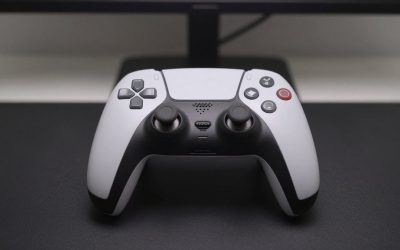
Thumb grips look like the simplest accessory you can buy for a controller, and that is exactly why so many people get them wrong. Gamers grab a three-pack of silicone caps, stretch them over their analog sticks, and wonder why their aim feels worse than before. The problem usually comes down to two variables that most listings barely explain: texture and height. Get those right and a $8 set of grips can genuinely tighten your tracking in shooters and reduce thumb fatigue in long sessions. Get them wrong and you have added a squishy, inconsistent layer between your thumb and the stick.
This guide walks through how to choose thumb grips texture and height for accuracy in a way you can actually act on. The products referenced below — including popular sets like the Skull & Co. Skin/CQC/FPS trio and the NEWDERY anti-slip silicone caps — are examples of what is on the market, not endorsements. The point is to teach you what the specs mean so any listing makes sense within a minute of reading it.
As an Amazon Associate we earn from qualifying purchases at no extra cost to you.
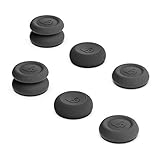


Three common mistakes to avoid before we start. First, buying grips that are too tall for the game you play — a 5 mm concave tower is great for precision sniping and terrible for fast flicks in fighting games. Second, confusing soft silicone texture with grip: ultra-soft caps feel nice for ten minutes, then compress and smear under sweat. Third, ignoring fit diameter. Most caps are molded for specific stick stems, and a loose fit on a 6 mm Switch Pro stick means wobble that destroys the accuracy you were chasing.
Our Top Picks


Top 3 picks at a glance
Decide These 3 Things First
Before comparing any products, answer these three questions. They narrow the field faster than any review.
1. What genres do you play most? Fast shooters and action games favor low-profile grips (roughly 1.5 to 3 mm of added height) with a wide contact radius. Precision-heavy games — sniping, tactical shooters, flight sims — benefit from taller convex caps in the 3.5 to 5 mm range. If you play a mix, modular sets like Skull & Co.’s three-pair kits let you swap heights per game.
2. What is your thumb size? Measure across the pad of your thumb at its widest point. Under 18 mm and low, wide caps work fine; 18 to 22 mm suits standard concave caps; over 22 mm and you want convex designs with an enlarged radius — Skull & Co.’s CQC Elite, for example, adds roughly 25% to the contact radius, which matters more than the height number suggests.
3. Do your hands sweat? If yes, prioritize micro-textured or rubberized surfaces over smooth glossy silicone. Smooth caps feel grippy when dry and become slick within an hour of play. If your hands stay dry, smoother silicone is quieter and gentler on the thumb crease.
Height: The Single Biggest Accuracy Variable
Height changes your effective input arc. A taller stick means the same thumb travel produces more degrees of stick deflection, which lets you make finer adjustments — this is why pro shooters on controller often use extended sticks. But taller is not automatically better.
Practical ranges: low-profile caps add about 1.5 to 2 mm and keep the stock feel, ideal for twitchy games where you need fast full-deflection flicks. Mid-height caps around 3 to 3.5 mm (like the CQC-style designs) split the difference and are the safe default for mixed play. Tall caps at 4.5 to 5.5 mm maximize micro-adjustment but increase travel distance to full input, which can cost you in close-quarters fights.
Start at mid-height. If your tracking in aim trainers or the game’s practice range improves but flicks feel sluggish, drop 1 to 1.5 mm. If you overshoot targets constantly, go up. Most people land between 2 and 3.5 mm and never need to leave that band.
Texture: Concave, Convex, and Surface Finish
Shape and surface finish work together, so evaluate them as one factor. Concave caps cradle the thumb pad — better for sustained tracking and the default on most sets. Convex/domed caps concentrate pressure at a point — better for precise flicks, and taller domed caps mimic the extended sticks pro controller players use.
Surface finish matters more than most buyers expect. Look for micro-dot or honeycomb texturing, which maintains grip when the surface is damp. Fully smooth silicone is the worst performer for sweaty hands — it can lose meaningful traction within a single session. Rubberized TPU coatings grip better than raw silicone but wear faster; if you play 15+ hours a week, expect a rubberized coating to smooth out in roughly 4 to 6 months, while molded-in texture lasts much longer because it is part of the material rather than a coating.
One warning on texture: extremely aggressive stippling (sharp pyramid patterns) feels great in a store and chews through the thumb crease over multi-hour sessions. Medium texture density — dots spaced under 1 mm apart, low profile — is the sweet spot for most hands.
Size and Fit: The Spec Everyone Skips
Analog stick stems vary more than people assume. Switch and Switch Pro sticks run roughly 6 mm in stem diameter; Xbox and PlayStation sticks are around 6.5 to 7 mm with wider mushroom tops near 11 to 12 mm. A cap molded for one platform will either fight to seat or sit loose on another.
Check the listing for a stated inner diameter or platform compatibility, and favor caps with an internal ridge or locking skirt — a design that wraps under the stick rim. Skull & Co.’s sets, for instance, are molded per-platform (separate SKUs for Switch Pro/PS versus Xbox), and that is the right approach. Universal “fits all” caps stretch over everything and wobble on everything. A properly seated cap should not rotate or lift at the edge when you push the stick hard to one direction; test this immediately, because a half-millimeter of play translates into visible cursor or crosshair jitter.
Construction and Comfort Over Long Sessions
Material quality shows up in two places: compression set and edge finish. Cheap silicone compresses permanently — after a couple months the cap feels thinner and squishier in the center. Better compounds rebound within seconds when you press them. The edge where the cap meets the stick matters for comfort: a rolled or chamfered edge disappears under your thumb, while a raw cut edge creates a pressure line across the thumb crease after 60 to 90 minutes.
Weight is negligible — caps run 0.5 to 2 g each and will not affect stick return springs. Thickness at the contact surface does matter: anything over 3 mm of soft material adds a mushy, delayed feel to inputs. Harder compounds or thinner caps preserve the crisp centering of the stock stick.
Price Tiers: What Each Dollar Buys
Budget ($5–10): This is where nearly all worthwhile thumb grips live, which is unusual for gaming accessories. Sets like the NEWDERY anti-slip silicone caps or a Skull & Co. three-pair kit sit at around $7 to around $9 and include multiple heights and textures. Molded silicone, decent fit, no meaningful warranty beyond a basic return window.
Mid-range ($10–20): You gain better compound quality, platform-specific molds, and sometimes carrying cases. Justifiable if you log heavy hours, but the accuracy difference versus budget sets is small.
Premium ($20+): Machined aluminum or hybrid metal-rubber caps. Real drawback: metal gets cold and slick, can scuff the stick well, and adds 3 to 8 g. Only worth it if you specifically want a rigid feel; for pure accuracy-per-dollar, the $8–10 tier wins.
Spec Checklist
| Spec | Budget ($5–10) | Mid ($10–20) | Premium ($20+) |
|---|---|---|---|
| Height options per set | 2–3 (e.g., 1.5 / 3 / 5 mm) | 2–3, more precise tolerances | Usually 1 fixed height |
| Texture | Molded micro-dots or smooth silicone | Refined texture + rubberized options | Machined or rubber-over-metal |
| Fit | Platform-specific or stretch-fit | Platform-specific molds | Set-screw or press-fit, model-specific |
| Material | Silicone, 0.5–2 g per cap | Higher-grade silicone/TPU | Aluminum hybrid, 3–8 g per cap |
| Best for | Most buyers, multi-game players | Heavy daily players | Rigid-feel enthusiasts |
| Warranty/returns | Basic 30-day return | 30–90 days | Often 1 year |
Red Flags
“Universal fit” claims with no inner diameter listed. If the listing cannot tell you the stem diameter it targets, assume wobble.
No height specification at all. If a set does not state added height in millimeters, you are guessing — and height is the main variable you are shopping for.
Caps that require soap, heat, or tools to install. A correct fit stretches on with thumb pressure in under a minute. Forced installation means the compound will tear or overstress the stick.
Ultra-glossy smooth surfaces marketed as “anti-slip.” Glossy silicone is the slipperiest finish available once hands warm up.
listings with only renders, no photos of the actual underside skirt or inner ridge. The fit geometry hides underneath — if they will not show it, that is where the compromise is.
FAQ
Do taller thumb grips actually improve aim?
They improve fine control by increasing input resolution — the same thumb movement deflects the stick further. Whether that translates to better aim depends on the game: precision and tracking-heavy play usually benefits, while fast flick-centric play may suffer from the longer travel to full input. Test in a practice range rather than ranked.
Will thumb grips wear out my analog sticks?
Properly fitted silicone caps are gentle — softer than a thumb directly on plastic. The risks are grit trapped between cap and stick (inspect and clean monthly) and metal caps, which can scuff the stick well over time. Pull the caps off occasionally and wipe both surfaces.
How do I know which height to start with?
Start mid-height, around 3 mm. Most modular sets include low, mid, and tall options, so you can A/B them in the same session. If flicks feel slow, go lower; if you overshoot fine adjustments, go taller. Budget about 3 to 5 sessions before committing — early impressions are noisy.
Are cheap sets worth it, or should I spend more?
Unlike most gaming gear, thumb grips peak early on the price curve. A around $7 to around $9 set with platform-specific molding and multiple heights covers 90% of buyers. Premium options only make sense if you want a rigid, metal feel — and you should try a budget set first to learn your preferred texture and height before locking in.
Related guides
- Best Free MMOs on Steam: Subscription Limits, Pay-to-Win and Time Cost (2026)
- Best Free Horror Games on Steam: How to Pick One That Fits Your PC and Your Nerves (2026)
- Black Frame Insertion vs VRR: Which Smoothness Feature Should You Use?
- Best Webcams for Streaming: 11 Listings Compared by Resolution, Focus and Light (2026)