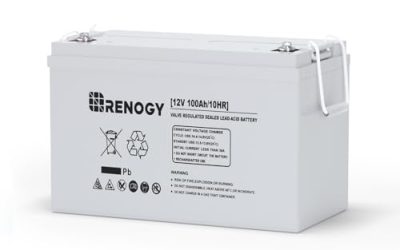
Switching a boat to lithium is mostly a decision about weight, usable capacity, and what happens in cold, wet conditions. A lead-acid battery in a bass boat or a pontoon is heavy, sags as it discharges, and wants to be topped up before storage. A lithium iron phosphate (LiFePO4) marine battery stays lighter, holds a steadier voltage under load, and is rated for far more cycles, which is why trolling-motor owners and offshore anglers keep moving to it. The catch is that a battery that works in a camper may not be protected, sealed, or sized the way a boat needs.
This guide is for anglers running trolling motors, owners of small cruisers who want to replace house batteries, and boaters building a 24V system for a larger electric motor. The picks below are all LiFePO4, mostly 12V 100Ah in Group 31 or Group 24 cases, with one 24V unit and one two-pack. The comparison covers protection features, waterproofing, monitoring, cycle claims, and expandability, based strictly on what each listing states. Whatever you buy, confirm that your charger has a lithium profile and that the case fits your tray before you commit in 2026.
Our Top Picks
 Litime 12V 100Ah Trolling Motor LiFePO4 Battery forPack of 113 x 6.77 x 8.5 inches22.2 PoundsCheck on Amazon


Top 3 picks at a glance
Quick Picks
As an Amazon Associate we earn from qualifying purchases at no extra cost to you.





| Product | Best for | Key spec from the title |
|---|---|---|
| 12V 100Ah Group 31 (RV and trolling motor) | Expandable 12V banks | 100A BMS, 1280Wh, 15000+ cycles, 4P4S to 20.48kWh |
| 12V 100Ah Group 31 (smart BMS) | Low-temperature protection | Built-in 100A smart BMS, 1280Wh, 15000+ cycles |
| 2-Pack 12V 100Ah BIC Group 31 | Two-battery setups | 100A BMS, 1.28kWh each, 15000+ cycles |
| Litime 12V 100Ah (Bluetooth) | Monitoring and wet decks | Bluetooth, IP65 waterproof, Group 31 |
| Dyness 24V 100Ah | 24V trolling and house systems | 2560Wh, smart 100A BMS, 4000+ cycles, 10-year lifetime |
| Litime 12V 100Ah (RV and Yacht) | Boat, RV, and yacht flexibility | Group 31, 100A BMS, 15000 cycles, IP65 waterproof |
| 12V 100Ah Group 24 | Smaller battery compartments | Group 24 case, 1280Wh, 100A BMS, 4P4S expansion |
| BUKNUWO 12V 100Ah (Bluetooth) | Trolling motor and off-grid | Bluetooth, 15000+ cycles, 12.8V 100A |
How to Choose
Voltage: 12V versus 24V systems
Match battery voltage to your trolling motor or inverter. A 12V motor uses one battery, while a 24V motor needs two 12V batteries in series or a single 24V unit such as the Dyness, which lists 2560Wh of capacity. Higher voltage cuts current for the same power, which means thinner wire and less heat. Many 12V LiFePO4 titles mention 4P4S or 4P2S layouts, meaning batteries can be joined in parallel for more capacity and in series for more voltage up to the listed limit.
BMS rating and low-temperature protection
The battery management system protects against overcharge, over-discharge, and overcurrent. A 100A BMS handles a continuous load of around 100 amps, which is enough for many trolling motors but should be compared with your motor’s maximum draw. Low-temperature protection or cutoff, named on several titles, stops charging when the cells are too cold, protecting them in early-season or cold-water use. Do not assume a battery has this feature unless it is stated.
Waterproofing, monitoring, and mounting
Marine use means spray, humidity, and bilge moisture. An IP65 rating, listed on the Litime titles, means the case is dust-tight and resists water jets, which is better than an unrated battery but is not the same as being submersible. Bluetooth, on the Litime and BUKNUWO, lets you check state of charge from your phone without opening a hatch. Check Group 31 or Group 24 dimensions against your tray and tie-downs before ordering.
Cycle claims and capacity
Cycle figures such as 15000 or 4000 describe the manufacturer’s claim under specific conditions, often a partial depth of discharge, so treat them as comparative rather than literal. Capacity in watt-hours is easier to compare than amp-hours: 1280Wh for a 12V 100Ah battery. Total runtime depends on the load, so divide watt-hours by the watts your motor and electronics draw, then leave a margin.
The 8 Best Options
12V 100Ah Group 31 (RV and trolling motor)
A Group 31 LiFePO4 battery listing a 100A BMS, 1280Wh, 15000+ deep cycles, and expansion to 20.48kWh in a 4P4S configuration, with low-temperature cutoff. It suits anglers who might add a second or third battery later.
- Strength: expansion support lets the bank grow with your needs.
- Strength: low-temperature cutoff is listed.
- Trade-off: no waterproof rating appears in the title.
Skip it if the battery will sit in an exposed location without a protected compartment. Marine use of a battery without a stated IP rating calls for a dry, ventilated, secured mounting spot. For a fishing boat that stays under cover, or an RV-style install inside a cabin, that is easy to arrange, and the expansion option is useful as your electronics grow.
12V 100Ah Group 31 (smart BMS)
Another Group 31 12V 100Ah LiFePO4 unit with a built-in 100A smart BMS, 15000+ cycles, 1280Wh, and low-temperature protection. It matches the first unit on core specs and fits the same boat and RV roles.
- Strength: smart BMS and low-temperature protection are both named.
- Strength: same 1280Wh capacity as the other 12V 100Ah options.
- Trade-off: the title is cut off, so the full use cases are unclear.
Skip it if you need explicit marine, waterproof, or Bluetooth details. Read the complete listing before buying and confirm it is intended for marine use. The smart BMS wording suggests built-in monitoring or communication features, but the title does not say how, so check whether you need an app or display to see charge level.
2-Pack 12V 100Ah BIC Group 31
A set of two 12V 100Ah LiFePO4 batteries in BIC Group 31 cases, each with a 100A BMS, 1.28kWh capacity, and 15000+ cycle claim, described for RV and marine use. It suits a 24V trolling motor build or a boat with a bigger house bank.
- Strength: two matching batteries arrive together for a 24V or parallel setup.
- Strength: 100A BMS in each battery.
- Trade-off: more weight and space to plan for than a single battery.
Skip it if you only need one battery. Matched pairs are convenient for series wiring, but both must fit in the compartment. Two 100Ah units also give you 2.56kWh in total when wired in parallel, a good fit for anglers who fish long days with a fish finder, lights, and a livewell pump running together.
Litime 12V 100Ah (Bluetooth)
A trolling motor LiFePO4 battery for marine, boat, and yacht use with Bluetooth, Group 31 sizing, a 15000-cycle claim, low-temperature protection, and an IP65 waterproof rating. It is aimed at boaters who like to check charge level from their phone.
- Strength: IP65 waterproof rating and Bluetooth monitoring.
- Strength: marine and trolling motor use are named directly.
- Trade-off: the title states no BMS current rating.
Skip it if you do not want to use a phone app. For most boat owners, built-in monitoring is a genuine convenience, because a battery tucked under a console or in a front deck compartment is awkward to check, and knowing the charge before you leave the ramp avoids an unpleasant paddle back.
Dyness 24V 100Ah
A 24V 100Ah LiFePO4 battery for marine, RV, and solar with 2560Wh, a smart 100A BMS, a 4000+ cycle claim, and a ten-year lifetime. It fits a larger electric trolling motor or a 24V house system.
- Strength: single 24V battery removes the need for two 12V units.
- Strength: 2560Wh of capacity in one pack.
- Trade-off: its 4000+ cycle claim is lower than the 15000 cycles on 12V options.
Skip it if your motor and equipment run on 12V. Do not mix voltages in one bank. Its ten-year lifetime and 4P2S layout wording point toward a long-term installation, so it suits a boat you plan to keep rather than a temporary setup.
Litime 12V 100Ah (RV and Yacht)
A second Litime listing in Group 31 for marine, boat, RV, and yacht use, listing a 100A BMS, a 15000-cycle claim, low-temperature protection, and IP65 waterproofing. It is a slightly broader-purpose version of the Bluetooth model.
- Strength: 100A BMS and IP65 waterproofing are both listed.
- Strength: broad use cases from trolling motors to yachts.
- Trade-off: Bluetooth is not mentioned in this title.
Skip it if you want phone monitoring. If you do not care about an app, this spec set is straightforward. It is also a reasonable pick for a mixed-use owner who takes the same battery from the boat to a camper, thanks to the RV and yacht wording in the title.
12V 100Ah Group 24
A smaller Group 24 case LiFePO4 battery with 1280Wh, a 100A BMS, low-temperature cutoff, and 4P4S expansion, meant for RVs and trolling motors. It suits boats with tighter battery compartments where Group 31 will not fit.
- Strength: compact Group 24 case.
- Strength: expandable with 4P4S support.
- Trade-off: no waterproof rating is mentioned.
Skip it if your tray is built for Group 31. Measure before choosing.
BUKNUWO 12V 100Ah (Bluetooth)
A 12.8V 100Ah LiFePO4 battery with Bluetooth, a 15000+ cycle claim, and use cases that include trolling motors, off-grid, boats, RVs, marine, and solar. It is built for owners who want one battery to cover boat and home solar.
- Strength: Bluetooth monitoring is included.
- Strength: wide use list includes marine and solar.
- Trade-off: the title is cut off before key details such as BMS rating.
Skip it if you need a confirmed IP rating. Check the full listing for size and protection specs.
Which One Fits Your Situation
You run a 12V trolling motor on a fishing boat
The Litime 12V 100Ah (Bluetooth) combines IP65 waterproofing with phone monitoring and names trolling motor use directly.
You have a 24V motor or a large house bank
The Dyness 24V 100Ah gives 2560Wh in one pack, while the 2-Pack BIC Group 31 provides two matched 12V batteries to wire in series.
Your battery compartment is tight
The 12V 100Ah Group 24 is a smaller case with expansion support.
You want to grow the bank over time
The 12V 100Ah Group 31 for RV and trolling motors lists expansion up to 20.48kWh in a 4P4S layout.
Common Mistakes
- Using a lead-acid charger profile, which can undercharge or stress a LiFePO4 battery.
- Ignoring group size and discovering the battery does not fit the tray.
- Assuming every lithium battery has low-temperature protection or waterproofing.
- Mixing batteries of different voltage or capacity in one bank.
- Comparing cycle claims without noting the discharge depth behind them.
Related guides
- How To Clean Quest 3 Lenses And Facial Interface
- Vr Facial Interfaces For Glasses Wearers
- Micro Sd Cards For Samsung Galaxy Phones
Frequently Asked Questions
Is lithium safe on a boat?
LiFePO4 is a stable lithium chemistry, and a built-in BMS adds protection. You still need correct charging, secure mounting, and ventilation.
Does IP65 mean waterproof?
It means dust-tight and resistant to water jets, which suits splash exposure. It does not mean the battery can be submerged.
What does 4P4S mean?
It describes wiring four batteries in parallel and four in series to scale capacity and voltage. Titles use it to show how far the system can expand.
Can I use a lithium battery with my existing charger?
Only if the charger has a lithium profile. Otherwise it may not charge fully or safely, so check before installing.