Most action cameras make you decide where to point the lens before the moment happens. A 360 camera flips that: it records the whole sphere around you, and you choose the framing afterward. That is the real decision behind a search for the best 360 cameras. You are not just picking a resolution number, you are picking how much editing flexibility, low-light capability, and stabilization you want in a pocket-sized body.
This guide is for riders, travelers, vloggers, and anyone who wants to capture a scene without a camera operator. The eight models below span 5.7K entry points to 8K flagships, so the field splits cleanly by how much sensor size, lens durability, and software polish you need as of 2026. Everything here is judged from the listed specs, so use it to narrow the field, then confirm the details on the spec sheet that matters most to you.
Our Top Picks


Top 3 picks at a glance
Quick Picks
As an Amazon Associate we earn from qualifying purchases at no extra cost to you.



| Product | Best for | Key spec from the title |
|---|---|---|
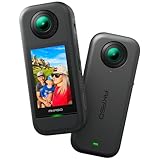
| Insta360 X3 | Waterproof 5.7K shooting with a big touchscreen | 5.7K 360 Active HDR, 2.29″ touchscreen |
| Insta360 X5 | Low-light and rugged use | 8K 360, replaceable lens, 3-hour battery |
| Insta360 X6 Essentials Bundle | Buyers who want the newest sensor generation plus extras | 8K, dual 1/1.1″ sensors, triple AI chip |
| Insta360 X4 Air Starter Bundle | Carrying light all day | Lightweight 165g, 8K, replaceable lenses |
| AKASO 360 Motorcycle Combo | Riders who want a mount-ready kit | 5.7K 360 video, 1/2″ 48MP sensors |
| AKASO 360 Standard Combo | Entry into 360 video | 5.7K 360, 72MP 360 photo |
| Insta360 X6 | Camera-only purchase of the newest line | 8K, 1/1.1″ sensors, Replaceable Lens 2.0 |
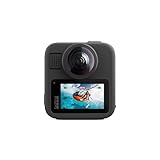
| GoPro MAX2 | One body for 360 and traditional shooting | Spherical 8K, 29MP 360 photos |
How to Choose
Resolution tier and what it means
A 360 camera spreads its pixels across the entire sphere, so the flat video you export is a small slice of the headline number. A 5.7K 360 file reframes to roughly 1080p-class output, while 8K gives you cleaner 4K reframes. Photo megapixels follow the same logic: a 72MP 360 still sounds enormous, but it is stretched across a full sphere. If your final videos are going to a phone screen, 5.7K is enough. If you plan to crop aggressively, or want sharp 4K clips from a single recording, step up to 8K.
Sensor size and low light
Sensor size matters more at dusk than at noon. Models listing 1/1.1-inch sensors sit in a different class from the 1/2-inch sensors on the AKASO kits, and the titles say as much. Bright daytime scenes hide the difference. Evening rides, indoor events, and night city walks expose it. If you shoot mostly in daylight, do not pay extra for sensor size you will not use.
Lens protection and durability
Bulging lenses on a 360 camera are the first thing to scratch. Look for replaceable lens designs, since a cracked lens becomes a cheap swap instead of a dead camera. Also check the waterproof wording: some titles list bare-body waterproofing, which still leaves ports and mounts to worry about. A protective guard or case is wise regardless of the rating. Battery life is the other durability factor, so look for a listed runtime and plan on a spare for long days.
Selfie stick effect, stabilization, and editing
The invisible selfie stick effect removes the pole from the stitched image, so it looks like the camera floats. It is a headline feature on several of these models. Stabilization names such as FlowState, HyperSmooth, and SuperSmooth all aim at the same thing, but ignore marketing adjectives and focus on whether the software lets you level the horizon. Budget models cut corners most often in app polish and stitching quality, so a lower-priced kit may need more manual cleanup of the seams.
The 8 Best Options
Insta360 X3
The X3 title lists 5.7K 360 Active HDR video, a 4K single-lens mode, waterproofing, FlowState stabilization, and a 2.29-inch touchscreen. That combination suits someone who wants flexibility without paying for the newest 8K sensors. Active HDR is aimed at scenes with bright sky and dark shadows, which is common on bike paths, beaches, and city streets.
- Strength: the large touchscreen is listed, which helps with framing and menu changes on the go.
- Strength: a single-lens 4K mode means it can double as a regular action camera.
- Trade-off: 5.7K tops out below the 8K models on this list, so heavy cropping gets soft sooner.
Skip it if low-light performance is your priority or if you want the extra pixel headroom of 8K for aggressive cropping and reframing later.
Insta360 X5
The X5 title promises waterproof 8K 360 capture, leading low light, an invisible selfie stick effect, a rugged and replaceable lens, and a 3-hour battery. It reads like a camera designed for people who actually use it outdoors, where rain, sand, and bumps are routine rather than rare. Buyers who liked the earlier X3 formula but wanted more resolution and better dusk footage are the obvious audience.
- Strength: the replaceable lens lowers the risk of a scratch ending the camera’s life.
- Strength: the 3-hour battery claim is among the longer figures here.
- Trade-off: it sits in the premium tier, and bundled extras may cost more still.
Skip it if you only shoot occasionally in good light and do not need 8K, because a cheaper 5.7K model would cover those clips while leaving more of the budget for mounts, memory cards, and a spare battery.
Insta360 X6 Essentials Bundle
The X6 Essentials Bundle lists 8K, two custom square 1/1.1-inch sensors, a triple AI chip, and Replaceable Lens 2.0. The bundle wording suggests accessories included, which reduces the first-week shopping list. The triple AI chip wording points to on-device processing for stabilization, stitching, and subject tracking, though the title does not spell out which tasks it handles.
- Strength: dual large sensors point to stronger low-light potential.
- Strength: the bundle format means less piecing together of mounts and protection.
- Trade-off: bundles raise the entry cost versus the bare camera.
Skip it if you already own mounts and cases from an earlier model, because the bundle then duplicates gear you have, and the camera-only X6 gets you the same imaging core for less.
Insta360 X4 Air Starter Bundle
The X4 Air Starter Bundle emphasizes a lightweight 165g body, 8K recording, the invisible selfie stick effect, and replaceable lenses. Weight is the story here: it is easier to carry for a full day of walking, hanging off a bag strap, or clipping to a jacket without feeling like extra gear.
- Strength: the 165g figure makes it comfortable to wear on a chest mount or hold overhead.
- Strength: “shoot first and frame later” fits casual travel footage.
- Trade-off: the title does not highlight the larger sensors found on the X6 models.
Skip it if you want the strongest sensor available, since the title leads with weight and portability rather than the large dual sensors that the newer X6 listings promote, and heavy low-light shooters will notice the gap.
AKASO 360 Motorcycle Combo
This AKASO kit pairs 5.7K 360 video and 360 SuperSmooth stabilization with 1/2-inch 48MP sensors, an invisible selfie stick effect, and 72MP 360 photos. The motorcycle label signals bundled mounts for riders, which matters because mount quality decides whether footage stays steady at speed.
- Strength: the kit is aimed at riding, so mounting hardware is part of the idea.
- Strength: 72MP 360 photos are listed for stills.
- Trade-off: 1/2-inch sensors are smaller than those on the Insta360 X6 models.
Skip it if you want a cleaner low-light look, a premium editing app, or the long crop headroom of an 8K file, since this kit is positioned at the 5.7K tier and uses smaller sensors than the flagship Insta360 models.
AKASO 360 Standard Combo
The Standard Combo shares the 5.7K 360 video, 1/2-inch 48MP sensors, SuperSmooth stabilization, and 72MP 360 photo wording, but without the motorcycle bundle label. It is the simpler way into 360 video for someone who is not sure yet how often the camera will leave the drawer.
- Strength: the same core imaging specs as the motorcycle version in a plainer package.
- Strength: invisible selfie stick effect is listed.
- Trade-off: it is a 5.7K camera, so it will not match the 8K models for crop headroom.
Skip it if you plan to ride with it and need mounts included, because that is exactly what the motorcycle version packages, and you would otherwise have to source handlebar or helmet hardware yourself afterward.
Insta360 X6
The standalone X6 lists 8K 360, dual custom square 1/1.1-inch sensors, a triple AI chip, and Replaceable Lens 2.0. It is the same imaging core as the Essentials Bundle without the extras. That makes it the cleaner choice if you already own cards, batteries, and mounts from another 360 camera.
- Strength: large sensors and an AI chip point to a modern processing pipeline.
- Strength: the replaceable lens design reduces replacement cost after a scratch.
- Trade-off: you buy mounts, cards, and protection separately, which raises the real cost beyond the camera itself.
Skip it if you want everything in one box, since mounts, cards, and protective gear are separate purchases with this listing and add to the final spend.
GoPro MAX2
The GoPro MAX2 is described as both a 360 and a traditional waterproof action camera, with a touch screen, spherical 8K video, 29MP 360 photos, replaceable lenses, and HyperSmooth stabilization. That dual-mode design is its main appeal: one purchase covers immersive sphere footage when you want it and a conventional forward-facing clip when you do not.
- Strength: it can switch between 360 and standard action footage.
- Strength: easily replaceable lenses are listed.
- Trade-off: it is a premium-tier purchase, and 29MP stills trail the 72MP figure on the AKASO kits.
Skip it if you only want 360 footage and would never use a conventional action mode, because you would be paying premium-tier money for flexibility you never touch, and a pure 360 model would serve you just as well.
Which One Fits Your Situation
You ride a motorcycle or bike
The AKASO 360 Motorcycle Combo is the most direct match, since it is built around a mount-ready kit and stabilization. If you want a stronger sensor, the Insta360 X5 is the step up.
You travel light
The Insta360 X4 Air Starter Bundle puts weight first at 165g, which is easy to carry from morning to night.
You want one camera for everything
The GoPro MAX2 handles 360 and traditional action shooting in a single body, which cuts down on gear.
You want the strongest low-light pick
The Insta360 X6 or X6 Essentials Bundle lists dual 1/1.1-inch sensors, the biggest sensor specification on the page. Pick the bundle if you need accessories as well.
Common Mistakes
- Treating 8K as an automatic upgrade without considering how much cropping you plan to do.
- Ignoring lens protection and relying on waterproof ratings alone.
- Buying a camera-only listing without budgeting for a mount, card, and spare battery.
- Assuming every “invisible selfie stick” claim produces the same seamless result.
- Skipping the editing app: a fast stitch and reframe workflow often decides whether you keep using the camera.
Related guides
- How To Check Motherboard Vrm Temperature In Hwinfo
- How To Clean Quest 3 Lenses And Facial Interface
- Micro Sd Cards For Samsung Galaxy Phones
Frequently Asked Questions
Is 5.7K enough for a 360 camera?
For social clips and phone viewing, yes. If you plan to crop tightly or deliver at 4K, 8K models give more room.
Is a replaceable lens necessary?
It is worth having if you use the camera outdoors. The bulging lenses are exposed, and a replaceable design means a scratch does not end the camera.
What is the invisible selfie stick effect?
The stitching software removes the pole from the final image, so the camera looks like it is floating. Results depend on how well the cameras are matched and aligned.
Can a 360 camera replace a normal action camera?
Some can. The GoPro MAX2 and Insta360 X3 list traditional single-lens modes, but pure 360 models are built for reframing instead.