Our Short List of 3
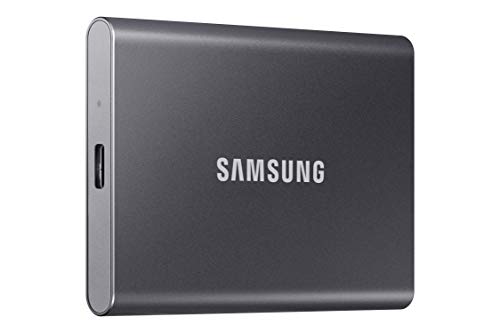
- Capacity: 1TB
- Drive type: Portable SSD
- Interface: USB 3.2 Gen 2
- Read speed: Up to 1,050 MB/s
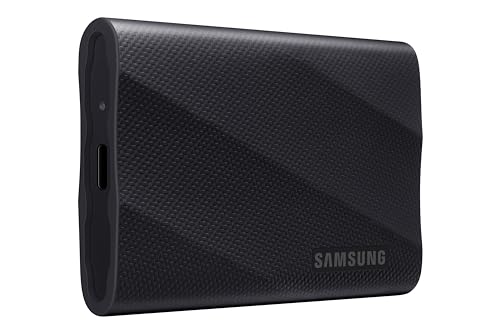
- Capacity: 1TB
- Drive type: Portable SSD
- Interface: USB 3.2 Gen 2×2, 20Gbps
- Read speed: Up to 2,000 MB/s

- Capacity: 1TB
- Drive type: Portable SSD
- Interface: USB 3.2 Gen 2, USB-C
- Read speed: Up to 1,050 MB/s
All 4 Picks at a Glance
| Product | Specs | Action |
|---|---|---|
| Samsung T7 Portable SSD 1TB |
| Check price on Amazon |
| Samsung T9 Portable SSD 1TB |
| Check price on Amazon |
| Crucial X9 Portable SSD 1TB |
| Check price on Amazon |
 WD My Passport Portable Hard Drive 4TB |
| Check price on Amazon |
A gaming PC fills up fast. Modern games regularly take tens of gigabytes each, VR titles add large asset packs and recorded footage, and a single season of clips and screenshots can swallow whatever space is left. When the internal drive runs low, an external storage device is the simplest fix: plug it in, move the library, and keep playing without deleting games to make room for the next one.
External storage devices come in two broad families, and the difference matters more than the brand on the box. Portable solid state drives, or SSDs, have no moving parts, copy files quickly, and survive being carried in a bag. Portable hard drives hold far more capacity for a smaller outlay, but they copy more slowly and need gentler handling. The right choice depends on the job: a fast SSD suits active game libraries and VR recordings, while a roomy hard drive suits backups and a deep archive of titles played less often.
This guide compares five external storage devices that fit gaming PCs and VR setups, from a compact everyday SSD to a rugged outdoor-ready drive and a high-capacity hard drive. Every pick below is a complete external drive that connects over USB and works with Windows PCs.
As an Amazon Associate, we earn from qualifying purchases.
Our Top Picks
Top 3 picks at a glance
Table of Contents
- Quick Answer
- Our Top Picks
- Samsung T7 Portable SSD 1TB
- Samsung T7 Shield Portable SSD 1TB
- Samsung T9 Portable SSD 1TB
- Crucial X9 Portable SSD 1TB
- WD My Passport Portable Hard Drive 4TB
- How to Choose
- Who Should Skip
- Frequently Asked Questions
- Final Verdict
- Product and ASIN Reference
Quick Answer
For most gaming PC and VR players, the Samsung T7 1TB is the best external storage device, pairing fast transfers with a pocketable aluminum body. Players who need rugged protection should pick the T7 Shield, editors chasing top speed should pick the T9, and anyone storing a large library on a smaller outlay should pick the high-capacity WD My Passport hard drive.
Our Top Picks
The five drives below cover the main ways gamers use external storage: fast everyday play, rough travel, top-speed editing, light carry, and bulk archiving. Each one is a self-contained external drive with its own enclosure and cable, so there is nothing extra to buy before it works. Read the short notes first, then check the specs to match a drive to the job.
Samsung T7 Portable SSD 1TB
- Capacity: 1TB
- Drive type: Portable SSD
- Interface: USB 3.2 Gen 2
- Read speed: Up to 1,050 MB/s
The Samsung T7 1TB is the best all-round external storage device in this guide, and the easiest recommendation for most gaming PCs. It reads at up to 1,050 MB per second over a standard USB 3.2 Gen 2 port, which is fast enough to copy a large game in a fraction of the time a hard drive needs, and to load games stored on the drive without long waits. The aluminum unibody is slim enough to slip into a pocket or a laptop sleeve, and it is rated to survive falls from up to 6 feet, so it tolerates the knocks of a daily bag.
One terabyte holds a solid rotation of current games alongside VR titles and recordings. The drive works with Windows PCs, Mac computers, consoles, and Android devices, and it draws power from the USB port, so no separate power adapter is needed. Password protection with hardware encryption keeps the contents unreadable if the drive is lost, which matters when a library also holds personal files. For a player who wants one drive that does everything well, this is the pick.
Samsung T7 Shield Portable SSD 1TB
The Samsung T7 Shield 1TB is the rugged member of the T7 family, built for players who carry a drive to LAN events, friends’ houses, and outdoor sessions. It matches the standard T7 with read speeds up to 1,050 MB per second and write speeds up to 1,000 MB per second, so there is no speed penalty for the tougher shell. The difference is the rubberized outer casing, which seals the drive against dust and water jets with an IP65 rating and is rated for drops from up to 3 meters.
That protection makes the T7 Shield the right pick when a drive lives in a backpack with cables, controllers, and metal gear, or travels to dusty and damp places. It connects over USB 3.2 Gen 2 with the cables included in the box, including a USB-C to USB-A cable for older ports, and it works with Windows PCs, Mac computers, consoles, and Android devices. Hardware encryption with password access is built in, and the drive needs no external power. Players who treat gear roughly will get more life out of this drive than out of a bare aluminum one.
Specs
- Capacity: 1TB
- Drive type: Portable SSD
- Interface: USB 3.2 Gen 2
- Read speed: Up to 1,050 MB/s
- Write speed: Up to 1,000 MB/s
- Dimensions: 3.5 x 2.3 x 0.5 inches
- Weight: 3.5 ounces
- Body: Rubberized rugged shell
- Ingress rating: IP65 dust and water resistant
- Drop resistance: Up to 3 meters
- Encryption: AES 256-bit hardware encryption with password protection
- Warranty: 3 years
- Tier: Mid-range
Samsung T9 Portable SSD 1TB
- Capacity: 1TB
- Drive type: Portable SSD
- Interface: USB 3.2 Gen 2×2, 20Gbps
- Read speed: Up to 2,000 MB/s
The Samsung T9 1TB is the fastest drive in this guide and the premium pick for players who move very large files often. It uses a USB 3.2 Gen 2×2 connection rated at 20 gigabits per second, with read and write speeds up to 2,000 MB per second, roughly double the ceiling of the 10 gigabit drives here. That speed shows up when copying a full game library, moving hours of VR recordings, or editing video directly from the drive. A compatible Gen 2×2 port is needed to reach the top figure; on a standard 10 gigabit port the drive still works, at that port’s lower ceiling.
The T9 pairs speed with practical protection. Its textured body resists drops, and hardware encryption with password access keeps stored games and footage private. The drive is a little larger and heavier than the T7, at 3.5 x 2.4 x 0.6 inches and 4.3 ounces, but it remains pocketable and bus-powered. A five-year warranty backs it for long-term use. This is the drive for creators who feel the limit of a 10 gigabit connection every week.
Crucial X9 Portable SSD 1TB
- Capacity: 1TB
- Drive type: Portable SSD
- Interface: USB 3.2 Gen 2, USB-C
- Read speed: Up to 1,050 MB/s
The Crucial X9 1TB is the lightest and smallest drive in this guide, and the budget pick for players who want SSD speed without a large outlay. It reads at up to 1,050 MB per second over USB 3.2 Gen 2, matching the T7 on transfer speed, in a body that measures 2.6 x 2.0 x 0.4 inches and weighs 1.1 ounces. That size makes it easy to forget in a pocket, a controller case, or a VR headset bag, which is exactly the point for a drive that travels everywhere.
The X9 is built for simple plug-and-play use across Windows, Mac, Android, PlayStation, and Xbox, so the same drive can hold PC games, console captures, and phone backups. It is rated drop resistant up to 2 meters, giving it reasonable protection for everyday carry despite its plain plastic body. There is no hardware encryption here, so players who store sensitive files should weigh that trade-off. For pure speed at the lowest tier in this guide, the X9 is hard to beat.
WD My Passport Portable Hard Drive 4TB
- Capacity: 4TB
- Drive type: Portable hard drive
- Interface: USB 3.0
- Form factor: 2.5 inches
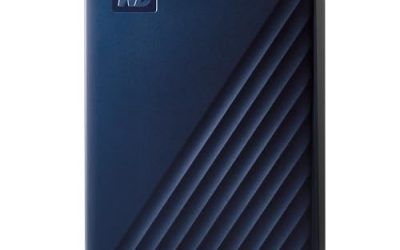
The WD My Passport 4TB is the only hard drive in this guide, and it earns its place on capacity alone. Four terabytes holds a deep library of installed games, years of VR recordings, and full system backups in one place, at a far smaller outlay per terabyte than any SSD here. It connects over USB 3.0 and draws power from the port, so it works on a desk or in a bag without an adapter, and it is ready to use with Windows PCs, Mac computers, and gaming consoles.
The trade-off is speed. As a mechanical hard drive with spinning platters, it copies large files more slowly than the SSDs in this guide, and it should not be dropped or shaken while running. For archiving games that are not played every day, for backups, and for media libraries, that slower speed rarely matters. Password protection with 256-bit AES hardware encryption and included backup software add security and convenience. Players who need room above all else should start here.
How to Choose
Start with capacity. A single terabyte holds a rotating set of current games plus VR content, but players with large libraries, or who record hours of footage, will fill it within a year. Two terabytes is comfortable for most, and four terabytes suits archivists and households sharing one drive. Buying more capacity than the current need is usually the right call, because game sizes keep growing.
Next, match the interface to the ports on the computer. A USB 3.2 Gen 2 port, rated at 10 gigabits per second, is the common standard on modern gaming PCs and laptops, and drives rated up to 1,050 MB per second will reach their full speed on it. A USB 3.2 Gen 2×2 port, rated at 20 gigabits per second, is rarer and is needed to unlock the 2,000 MB per second ceiling of drives like the T9. Check the port labels on the PC before paying for speed the machine cannot deliver, and remember that the cable matters: the bundled USB-C cable is the right one to keep with the drive.
Think about where the drive will live. A drive that stays on a desk can be a larger hard drive, where capacity matters more than toughness. A drive that travels in a bag should be an SSD, because it has no moving parts and tolerates knocks, and a rubberized or sealed body adds real protection against drops, dust, and spills. Ingress ratings describe sealing: an IP65 rating means the body keeps out dust and resists water jets, which covers rain and spilled drinks. Drop ratings describe the height the maker rates the drive to survive.
Encryption is worth weighing when the drive leaves the house. Hardware encryption with password access keeps games, saves, and personal files unreadable if the drive is lost or stolen. Not every drive offers it, and the budget pick in this guide omits it, so players who carry sensitive material should choose a drive that includes it. Backup software is a useful extra for a drive that will hold irreplaceable footage or documents, since it can copy files on a schedule without manual effort.
Finally, consider what the drive will actually do. Active game libraries and VR recordings benefit from SSD speed, because loading and copying happen constantly. Archives, backups, and media collections are fine on a hard drive, where capacity is cheap and speed matters less. Many players end up with both: a fast SSD for the games in rotation and a roomy hard drive for everything else.
Who Should Skip
External storage is not the answer for every storage problem. Players whose internal drive still has plenty of free space gain nothing from adding an external drive. Those chasing the fastest possible load times should look at an internal NVMe SSD, which connects directly to the motherboard and outpaces any USB drive, rather than expecting an external drive to match it.
A portable hard drive is the wrong pick for anyone who needs fast transfers every day, or who will carry the drive while it is running. Mechanical drives copy more slowly and are vulnerable to knocks while spinning, so editors and players who move large files constantly should choose an SSD. Likewise, a premium 20 gigabit SSD is wasted on a computer with only standard 10 gigabit ports, since the drive will run at the port’s lower ceiling.
Players who need shared storage across a home network should skip portable drives entirely and look at network storage instead, which several computers can reach at once. And anyone storing the only copy of irreplaceable files on a single external drive should add a second backup, because no single drive, SSD or hard drive, is a safe home for files that exist nowhere else.
Frequently Asked Questions
Can I play games directly from an external SSD?
Yes, in most cases. Games installed on a fast external SSD over USB 3.2 Gen 2 generally load well, and many players run their libraries from one. Older or less demanding titles run with little difference from an internal drive, while the newest titles may load a little more slowly than from an internal NVMe SSD. A portable hard drive works for storing games, but loading from it is noticeably slower, so it suits archiving better than active play.
Is an external SSD fast enough for VR recordings?
Yes. VR recordings are large video files, and a portable SSD rated at 1,050 MB per second or faster absorbs them easily during capture and copies them quickly afterward. The rugged picks in this guide are a good match for VR because they tolerate being carried with a headset and controllers. A hard drive can store recordings, but copying hours of footage to it takes far longer.
How much external storage do I need for a gaming PC?
One terabyte covers a rotating set of current games and some recordings, and it is the right starting point for most players. Those with large libraries, or who keep many VR titles installed at once, should consider two terabytes or more. Archivists and players who also back up a whole system will get the most value from a four-terabyte hard drive, where capacity is the priority and speed matters less.
Do external storage devices work with consoles as well as PCs?
Most do. The drives in this guide work with Windows PCs and also connect to PlayStation and Xbox consoles, where they can store games and media. Console rules vary by model and by game, and some newer console titles must run from internal storage, so check the console maker’s guidance before moving a library. A drive that works across PC and console is useful for players who game on both.
Final Verdict
The best external storage device for most gaming PC and VR players is the Samsung T7 1TB, because it balances speed, size, toughness, and encryption in a drive that fits any bag. Players who carry a drive through rough conditions should step up to the T7 Shield, which adds a sealed rubber shell and a higher drop rating at the same speed. Creators and editors who move huge files every week will feel the difference of the Samsung T9, the only drive here that reaches 2,000 MB per second on a matching port. The Crucial X9 is the smart budget pick for a light, fast drive, and the WD My Passport 4TB is the right answer when capacity matters more than speed. Whichever drive fits the job, keep a second copy of anything irreplaceable, and the library will be safe as well as spacious.
Product and ASIN Reference
| Product | ASIN |
|---|---|
| Samsung T7 Portable SSD 1TB | B0874XN4D8 |
| Samsung T7 Shield Portable SSD 1TB | B09VLK9W3S |
| Samsung T9 Portable SSD 1TB | B0CHFSWM2P |
| Crucial X9 Portable SSD 1TB | B0CGW1FQV4 |
| WD My Passport Portable Hard Drive 4TB | B01LQQH86A |
Related guides
More from Amazon
Programs that pair well with the guide above. Offers and eligibility are set by Amazon and may change.
Free shipping on eligible items, Prime Video and more. Eligible new members can start with a free trial.
Start a Prime free trialAd-free music streaming. Eligible new subscribers can start with a free trial.
Try Music Unlimited freeA Prime membership for ages 18-24 with a trial period. Eligibility is set by Amazon.
See Prime for Young AdultsAudiobooks and podcasts to listen to on the go. Eligible new members can start with a free trial.
Try Audible freeAs an Amazon Associate we earn from qualifying purchases.